Late-Impressionists:
Henri Lebasque
(1865-1937)
painter of joy and light
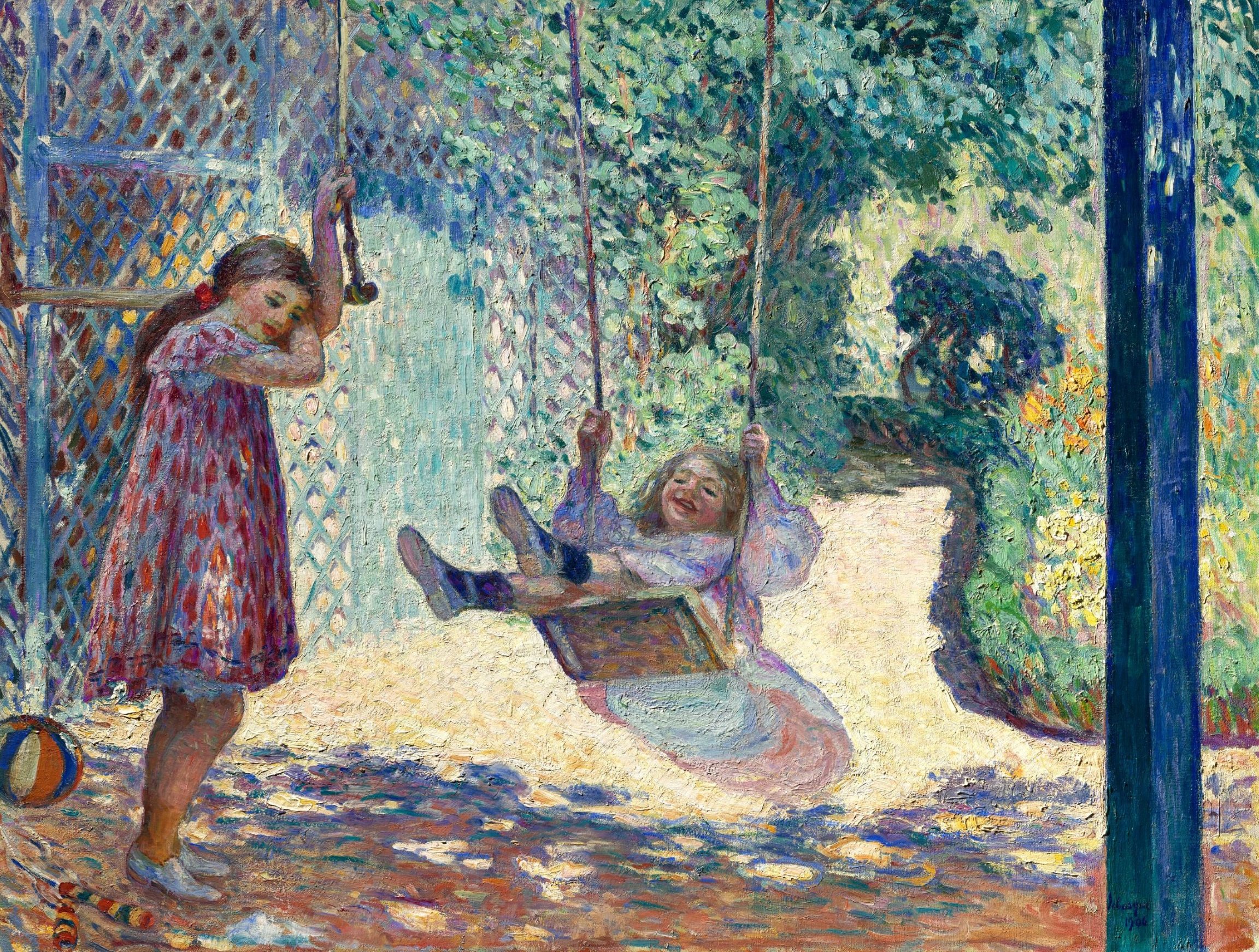
Henri Lebasque, a late-Impressionist and Intimist:
Henri Lebasque is mostly presented as a post-impressionist. But typical for Post-Impressionism is a distancing from Impressionism (and developing towards modernism) and that is not the case with Henri Lebasque. Till 1908 Lebasque overall used an impressionist painting style*. He sometimes used elements of a neo-impressionist brushstroke, but mostly his brushstroke was more spontaneously, like that of the impressionists. Sometimes (in studies) Lebasque used more bold colours and wild brushstrokes, like within Fauvist paintings, but mostly he maintained a connection with the natural colouring of his objects.
He mostly depicted his family members in and around the many houses he dwelled in. In that sence you could say he was an Intimist, see art-movements.
Paul Vitry, in his biography (1928), called Lebasque a ‘painter of Joy and Light’ (R492,p48).
Note*: after 1907 often his paint is thinned and more smoothly spread, with more emphasize on line and composition, with a more stylish appearance. Though he kept using elements of the impressionist painting style, the use of this style isn’t dominant anymore. So, the emphasize in this page are his works up to 1907.

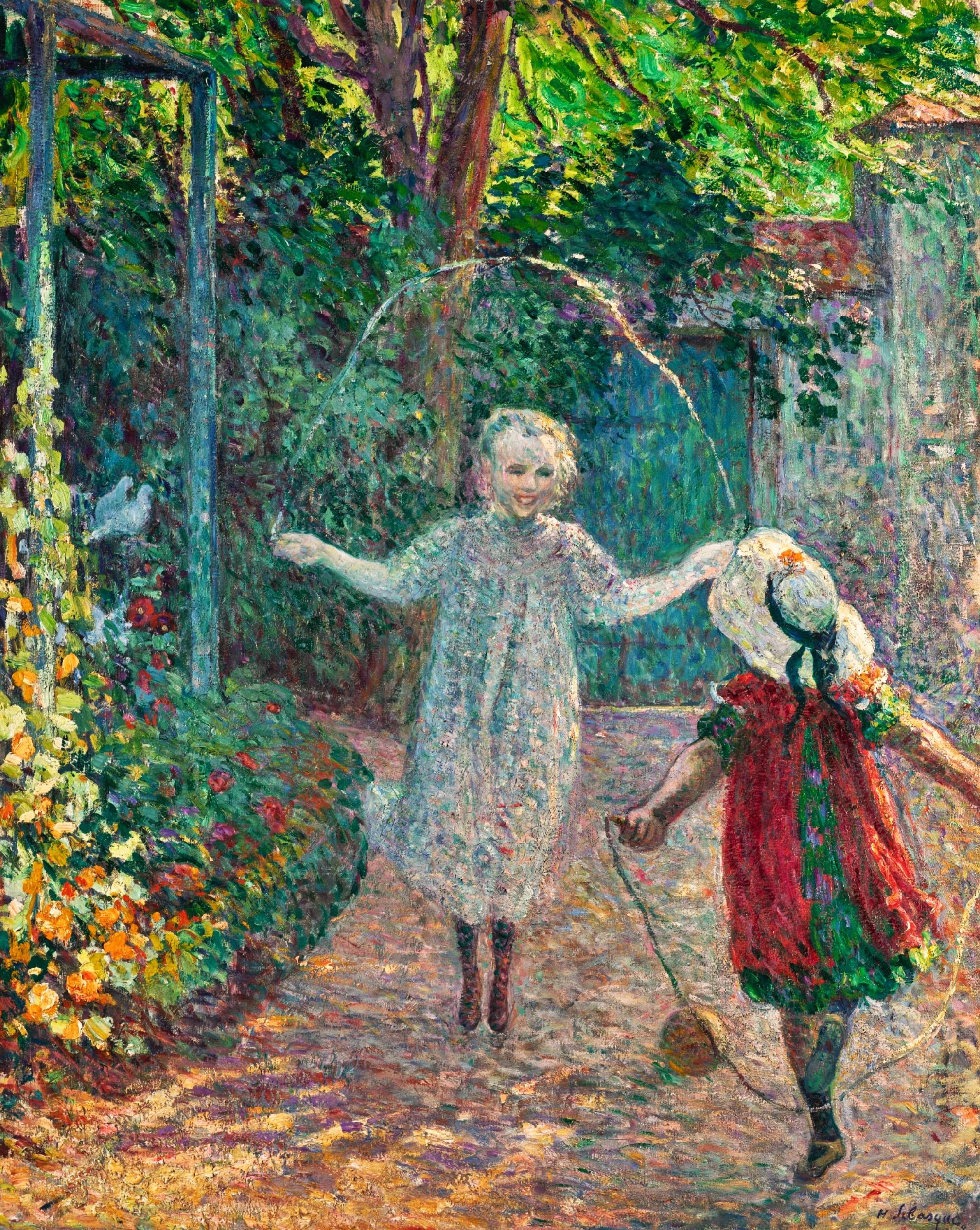

Lebasque, his family life:
Joseph-Henri-Baptiste Lebasque (iR79) was born 1865/09/25 in Champigné (iR468; R307,p7) in the Maine-et-Loire department, about 280km south-west of Paris (iR468; iR9), which largely corresponds the former province Anjou (iR4). His father was a timber merchant (R307,p7+378;R484,p11) and / or a ’tonnelier’ (=barrel maker) (iR4).
18??: start relationship with Catherine (Ella) Fischer, born 1871/03/04 in Plobsheim in the Alsace (iR468; iR79)
1895/06/27: marriage with Catherine Fischer.
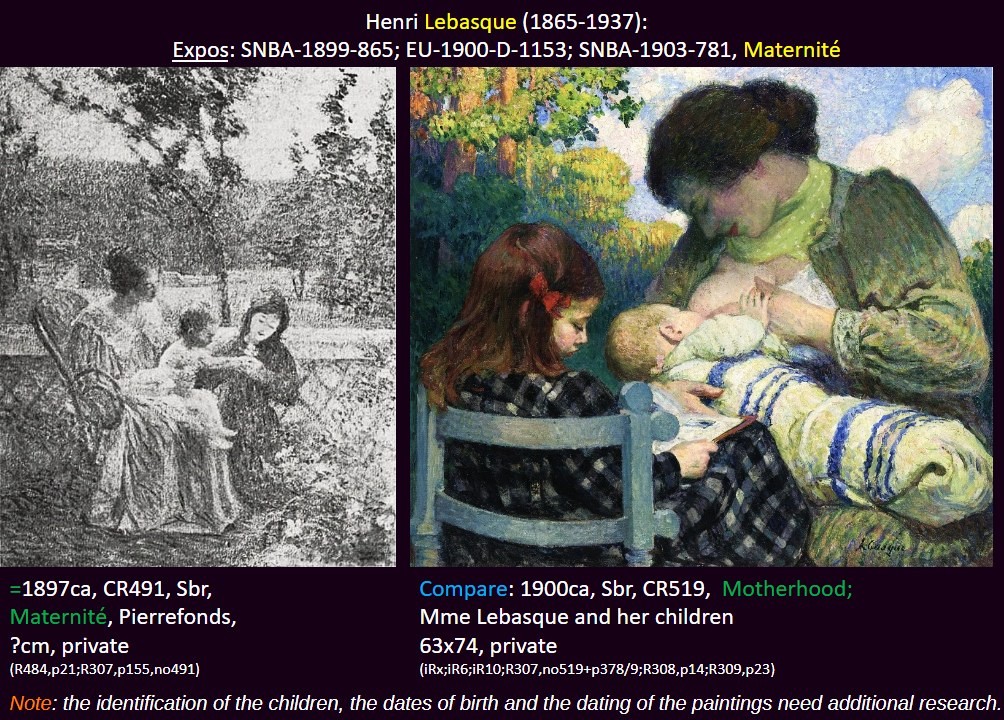
Note: there is confusion on the date of birth of his children.
According to geneanet Marthe was born 1895/02/20; she would die 1989/05/19 (iR79).
But, Marthe herself mentioned in an interview 1985 that she was born 1894 (R492,p112), which Bazetoux affirms (R307,p7) and denies (R307,p378).
Geneanet indicates that Hélène, mostly called Nono*, was born in 1901 (iR79).
But, Bazatoux dates CR491 (Maternité Pierrefonds) to 1897, depicting a girl with the features of Marthe, clearly older than 2 or 3 years old and an older baby, which can’t be Nono. It was exhibited in 1899 and depicts a scene probably made in the Summer, so it can’t be younger than 1898. Bazetoux dates CR519, Maternité to 1900, depicting Mme Lebasque feeding a baby probably in the Summer. The girl can well be Marthe, but was the baby Nono? Has there been another baby? More research is needed.
1907: Henri Matisse portrayed one of his daughters; it is said to be Nono (M23; R492,no15;R484,p68), but she was then (probably) 6 years old; I think it is more likely Marthe, then (probably) 12 years old. But, as pointed out, the dates of birth are not clear.
1912/07/27 birth of their son Pierre during a stay in Vézillon; he would die 1994/05/06 (iR79; R307,p14).
1915ca, Henri depicts Marthe painting (CR603; iR155; iR17)
1919: Marthe marries the painter Carlos Reymond.
1924: Nono married Jacques Lenoble.
1925: Nono gives birth to her daughter Perrette (see CR1317).
1930: Henri Lebasque depicts his son Pierre busy making a sculpture after a model (CR1327=iR24).
1937/08/06 Henri Lebasque died of a heart attack in Le Cannet and is burried there on a graveyard (iR9).
His wife outlived him (R294,p114).
1937: Formation of the ‘Société des Amis d’Henri Lebasque’ by Vuillard, Bonnard, Dunoyer de Segonzac, Georges Rouault and others (R492,p16+111).
Note*: Marthe and Nono seemed to have looked quite the same. Identification sometimes is hard. The young woman in CR1214↓↓ is identified as Nono, but the identical woman in CR1215 and 1216 as Marthe (R307,CR1214-1216;R492,p49;R308,p46); Marthe claimed in 1967 that CR1214 depicted her sister Nono (iR17); if this is true the woman in CR1215 and 1216 probably also is Nono.
Main sources: R307,p378-380; R492,p109-111; iR79;

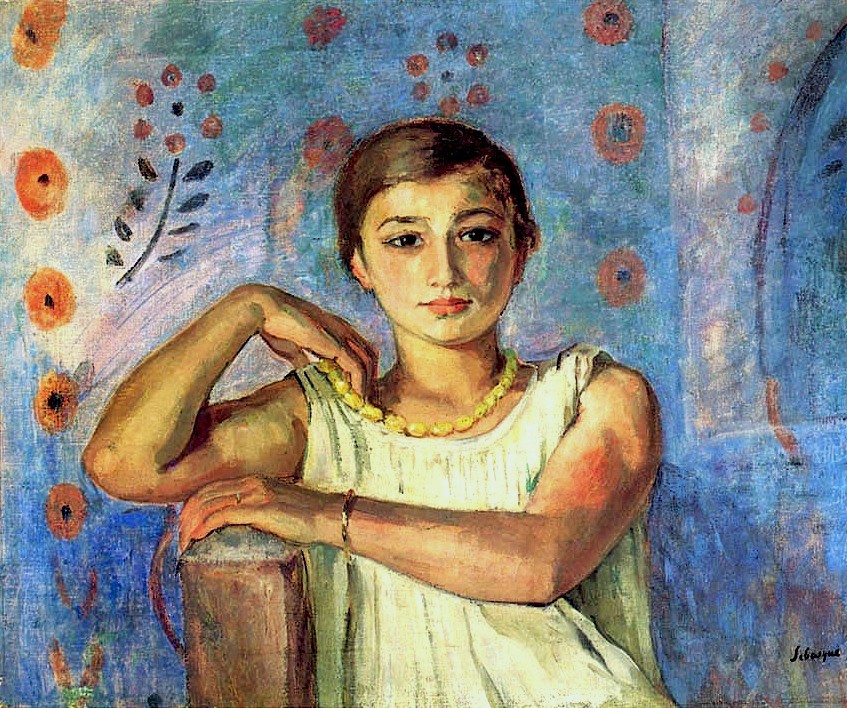
Lebasque, an Intimiste:
The most frequent theme that Henri Lebasque depicted was the members of his family in and around the various houses where they stayed or closeby in landscapes. He did so throughout his life. So, maybe more than an late-Impressionist you could call Lesbasque an Intimist (see art-movements). As the 1986 catalogue described: “Intimism, a term which best describes Lebasque’s paintings, refers to the close domestic subject matter, supremaly realized by Bonnard and Vuillard… in such a way that he appeals to a larger sense of family gathering and devotion.” (R492,p12)


Portraits:
Henri Lebasque painted many portraits, partly as a commission. The Catalogue Raisonné renders 318 paintings listed as portraits (R307,nos. 474-791). But, most of them are figure paintings. Many of them depict members of his family, often painting in or around a house. Again an example of Lebasque being an Intimist↑.


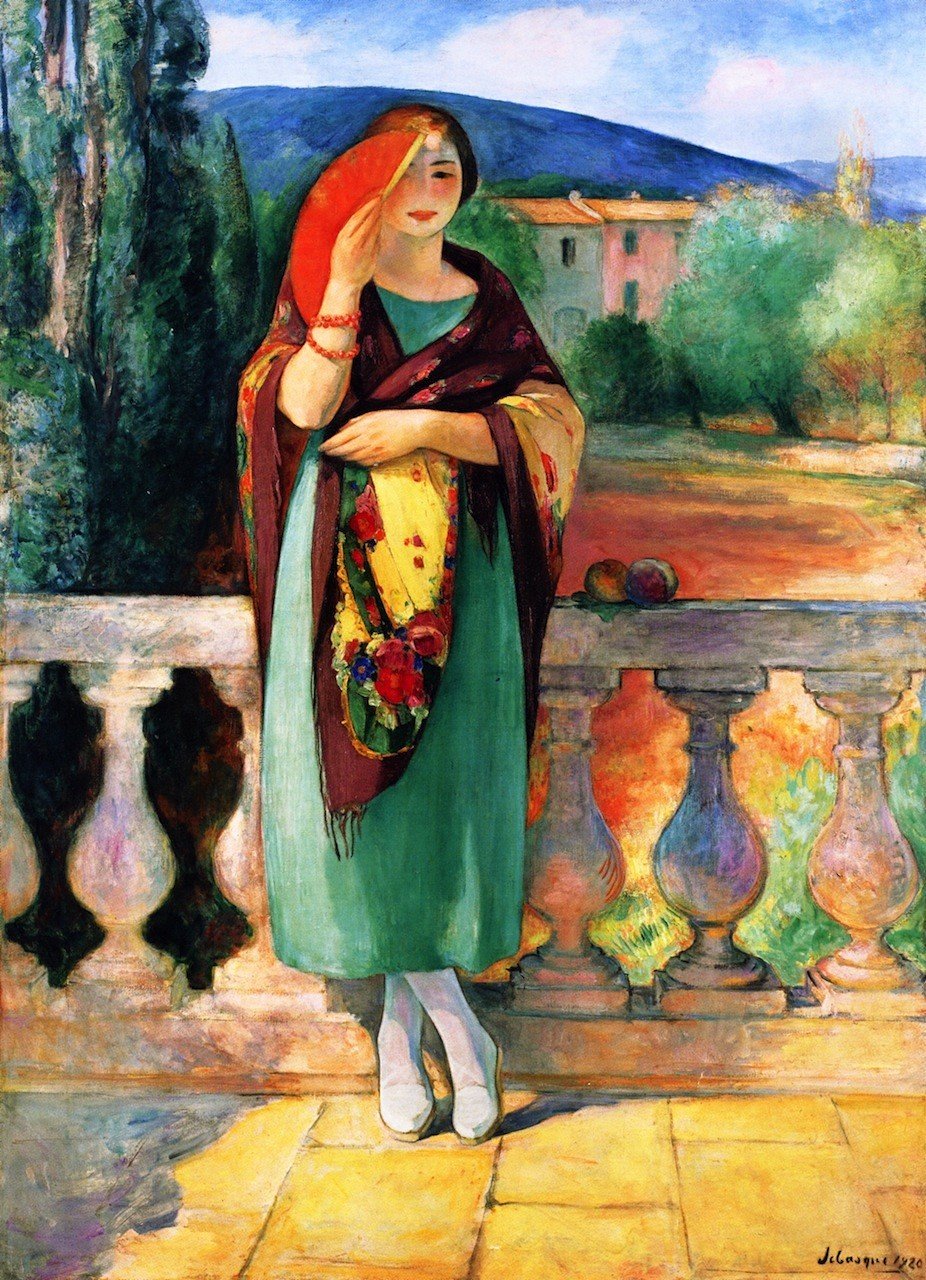
Lebasque, his education:
Lebasque studied at the École des Beaux-Arts in Angers, the capital of the Maine-et-Loire department, 24km south of Champigné (iR468).
In 1884 he receives a scholarship for the École des Beaux-Arts in Paris, where he arrives 1885/05.
His study is interrupted for health reasons* (R492,p13+109).
1886/87 Lebasque follows evening lessons with Truphème and Colarossi.
In the meanwhile, to earn his money, he assisted in decorative mural paintings (of Puvis de Chavannes) for the Panthéon (R492,p14;R307,p7).
Later he becomes a pupil in the studio of Léon Bonnat, which he would soon give up to go and paint en-plein-air (R307,p7).
Note*: Lesbasque suffered from rheumatism.
Lebasque at exhibitions:
Henri Lebasque took part in many exhibitions, starting with regional exhibitions in Angers in 1889, he namely exhibited at the Henri Lebasque exhibited at the Salon des Indépendants from 1893-1926, the Salon de la Société Nationale des Beaux-Arts from 1896-1922 and the Salon d’Automne from 1903-1936. He is mentioned as one of the founders of the latter and also in 1923 of the Salon des Tuileries* (R492,p16+18).
With the help of the art-dealer Georges Petit several of his paintings were shown at international exhibitions (R492,p16).
See for an extended overview at the bottom of this page**. (R307,p362-370; R285,p1027-1029; iR1)
Note*: Lesbasque didn’t stop exhibiting at the Salon d’Automne and the Salon des Tuileries (iR4) didn’t replace the Salon de la Société Nationale des Beaux-Arts (iR4), as Bazetoux wrongly writes (R307,p380).
Note**: mostly he exhibits as Henri, but sometimes as Joseph, Joseph-Henri, Joseph-Henry, J.-H.
Contacts and influences:
In 1888 Lebasque meets Pierre Lagarde.
In 1893 contacts with Signac and Luce, who influence him with neo-impressionists ideas.
In 1893 also contacts with Les Nabis.
1893: a brief collaboration with Jean Grave for his anarchist journal ‘Le Père Peinard’ (R307,p7; iR4).
From 1894-1903 contacts with Camille Pissarro.
1903: probably contact with Henri Matisse; Matisse portrayed a daughter of him in 1907 (M23; R492,no15); the only correspondance known is from 1918 (R492,p34).
1906 contact with Manguin (Villa Demière in Saint-Tropez↓).
1906 contact with Rouault. Georges Rouault portrayed Lebasque in 1917 (R492,pl24)
1910ca: Lebasque portrays the wife of Armand Guillaumin (=CR771).
1924-1930: lives in Le Cannet, close to Pierre Bonnard, who installs here in 1925.
1930 onwards frequent contacts with Dunoyer de Segonzac.
Development:
Can one discern a development in the painting style of Henri Lebasque?
To do so, one needs to know when paintings were made. Some paintings are dated, this helps*. Most paintings are not dated on the canvas. I namely follow the dating of the Catalogue Raisonné of 2008. But, the later (not well documented) books of Tsaneva, sometimes render other datings. The daughters Marthe and Nono (who look quite the same) are sometimes mixed up. The locations** can render some indication, but there is a lack of a well documentated complete overview of the locations that Lebasque did visit. It is, for example, well possible that during the time that he spend the summer in for example Saint-Tropez, he also made trips to other locations. There are many locations known that Lebasque visited, see below, but the dating of the paintings that Lebasque made here vary very strongly. So, or he returned at these locations very often, or he later made paintings in his studio after sketches and memories, or the datings need to be revised***.
Apart from these obstacles can we discern a development in the painting style?
Except from some early works, we see that Henri Lebasque used bright colours.
In his early works up to 1907 he namely used an impressionist painting style, using juxtapposed, short brushstokes with thicker paint. Or as Vitry described it ’the principle of the division of tone, spreading the sensation of light into multiple vibrations’ (R484,p22). After 1908 Lebasque (mostly) thins his paint and applies it more smoothly. Léon Rosenthal (1912) called his works a fusion of ‘impressionist processes and methods derived from Cézanne‘ (R492,p16)
Some sources state that ‘His time in South of France (1906 onwards) would lead to a radical transformation in Lebasque’s paintings, changing his colour palette forever.’ (iR3); I don’t recognize this change in his paintings.
After 1914/1917 he often used large areas of flat colour, simplified the layout, used a thicker lining and and sometimes left out the details in the portrayel of faces (R492,p14+18+20+46;R307,p19+27). He was more interested in design and composition (R492,p17) and used a decorative style (R307,33). The figures are rendered more large (R307,p27).
After settling in Le Cannet in 1924, Bazetoux writes ‘The light of the Midi… led Lebasque to completely transform his palette; his canvases are now bathed in light and colour, and his brushstrokes have become broader’ (R307,pR380); I don’t recognize this change in his paintings.
Lebasque never restricted himself to one school (R484,p22). His paintings can be caracterised as rendering ‘an atmosphere of radiant clarity and blissful harmony’ (R307,p10) and as landscapes full of harmony and poetry, with a natural grace, rendering the joy of life (R307,p17).
Note*: But, it always is possible that paintings are dated afterwards in connection with an exposition or a sale.
Note**: Not all locations are identified. Except for the title, the Catalogue Raisonné doesn’t render additional information.
Note***: I think a thoroughly revised edition of the 2008 Catalogue Raisonné is highly requested. A more consequent order of dating and location is highly desirable. On the other hand I am very greatfull to Denise Bazetoux for her first attempt!

Henri Lebasque, a late impressionist:
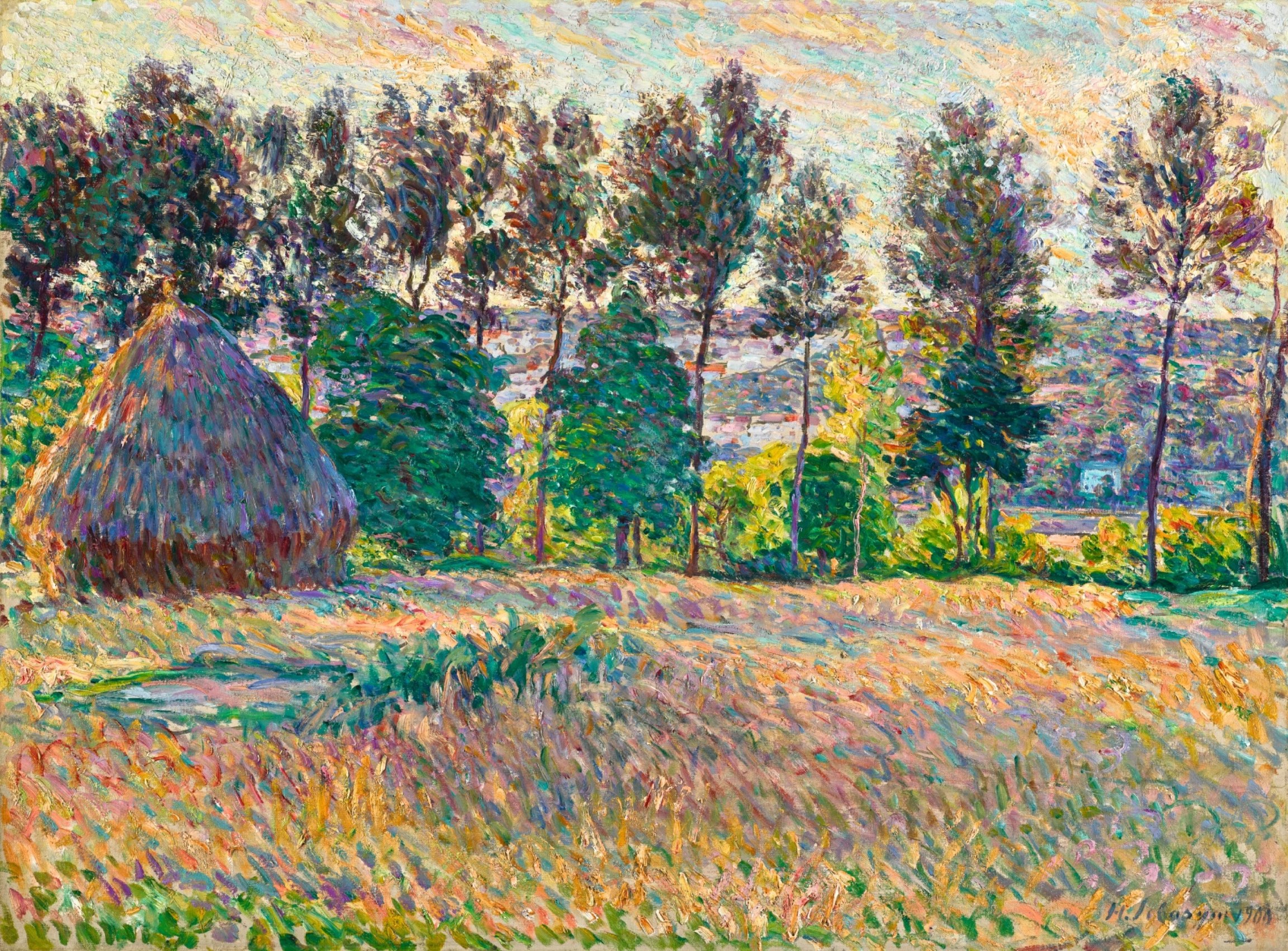
Henri Lebasque is mostly presented as a post-impressionist. But typical for Post-Impressionism is a distancing from Impressionism (and developing towards modernism) and that is not the case with Henri Lebasque. I would say that Lebasque overall used an impressionist painting style*. He sometimes used elements of a neo-impressionist brushstroke, but mostly his brushstroke was more spontaneously, like that of the impressionists. Sometimes he used more bold colours, but he never left the natural colouring of his objects, like within Fauvist paintings.
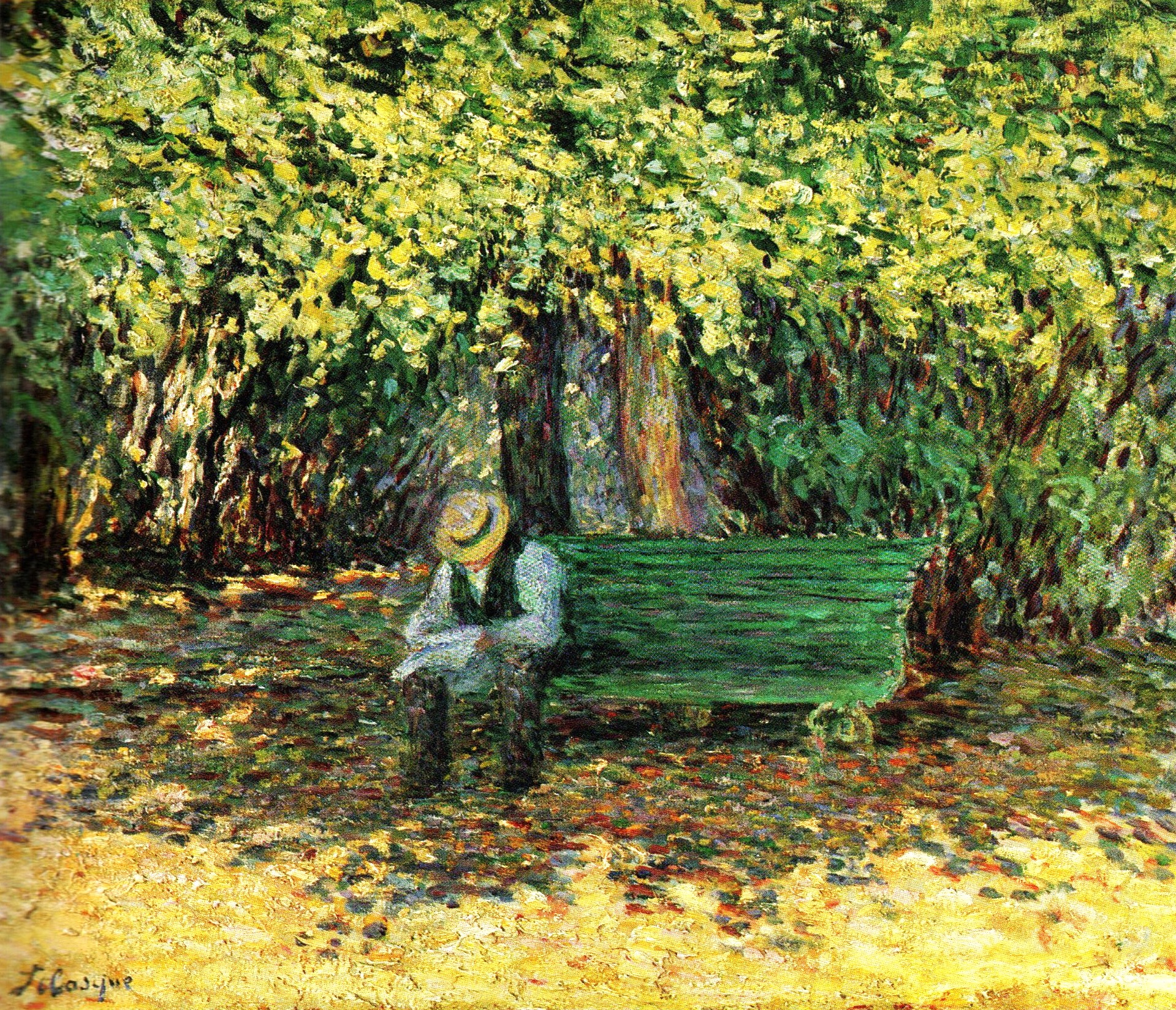
Lebasque often depicted specific locations and often painted en-plein-air**. The influence of atmospherical conditions is often rendered and till 1908 regularly part of the title of the painting. Lebasque often depicted the play of light and shadow and the (leaves) filtered light. He also depicted seasons, weather conditions (like mist, see CR263↓) and the time of day (like sunset, see CR37=iR6). He also used complementary colours (in the shading) (R492,p14) and juxtaposed brushstrokes.
Note*: Though he kept using elements of the impressionist painting style, after 1907 the use of this style isn’t dominant anymore. So, the emphasize on this page is till 1908. See above for his development.
Note**: Lebasque also made many studies. Maybe he finished many pictures in his studio in Paris↓. Lebasque made many travels↓, but the dating suggest that he finished several paintings later on.

Champigné and surroundings, 1885-1900:
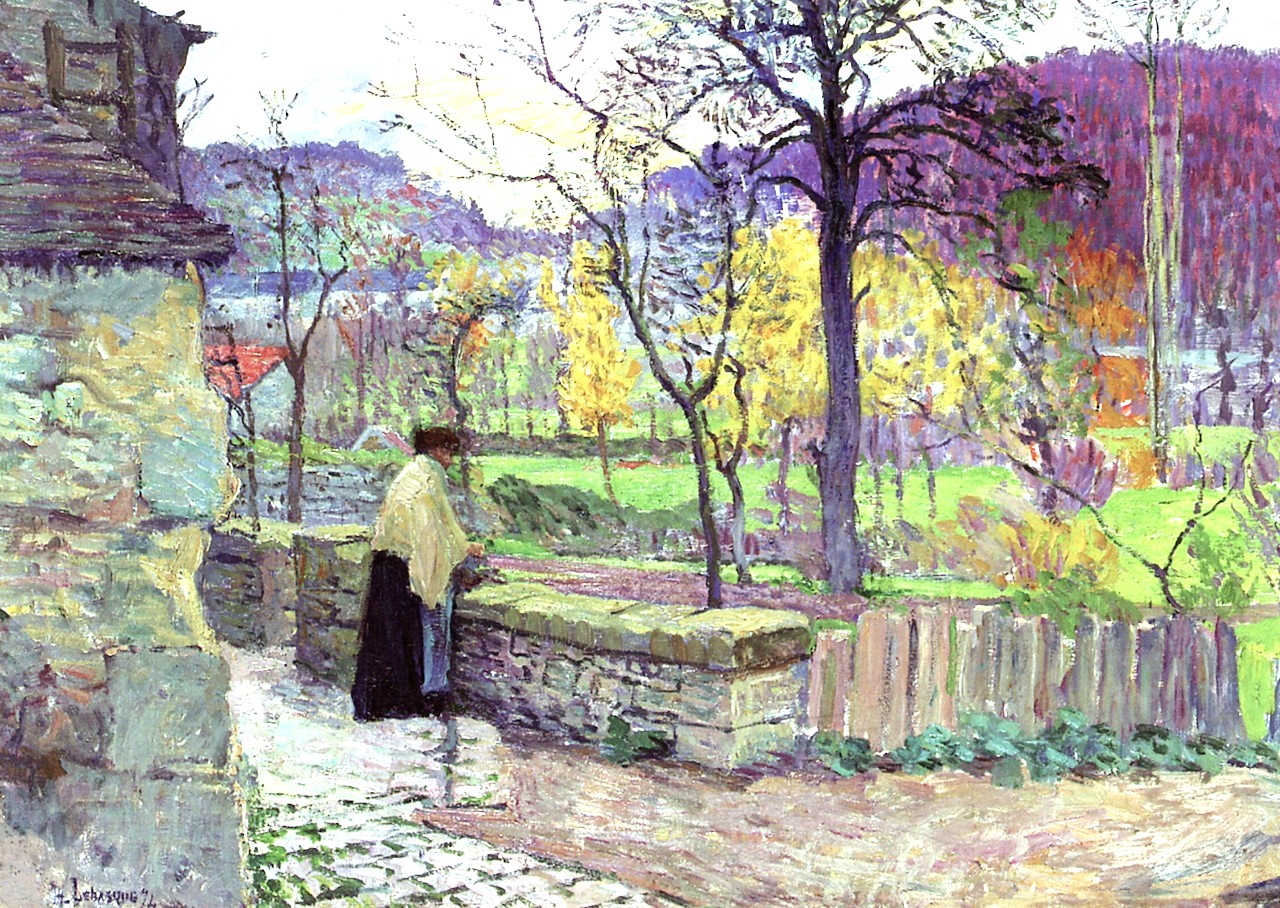
Henri Lebasque (iR79) was born 1865/09/25 in Champigné (iR468; iR4) in the Maine-et-Loire department (iR468; iR9) in the region Pays de Loire, about 280km south-west of Paris. His father was a timber merchant. Henri studied at the Lycée d’Angers (iR4) and at the école des Beaux-Arts d’Angers (iR4), 26km to the south (iR9). 1885 he went to Paris, but Henri would return at least up to 1900, when his mother died.
In the Catalogue Raisonné Bazetoux renders 49 paintings made in Champigné and surroundings (R307,no1-49).
Paris and surroundings, 1893-1905:
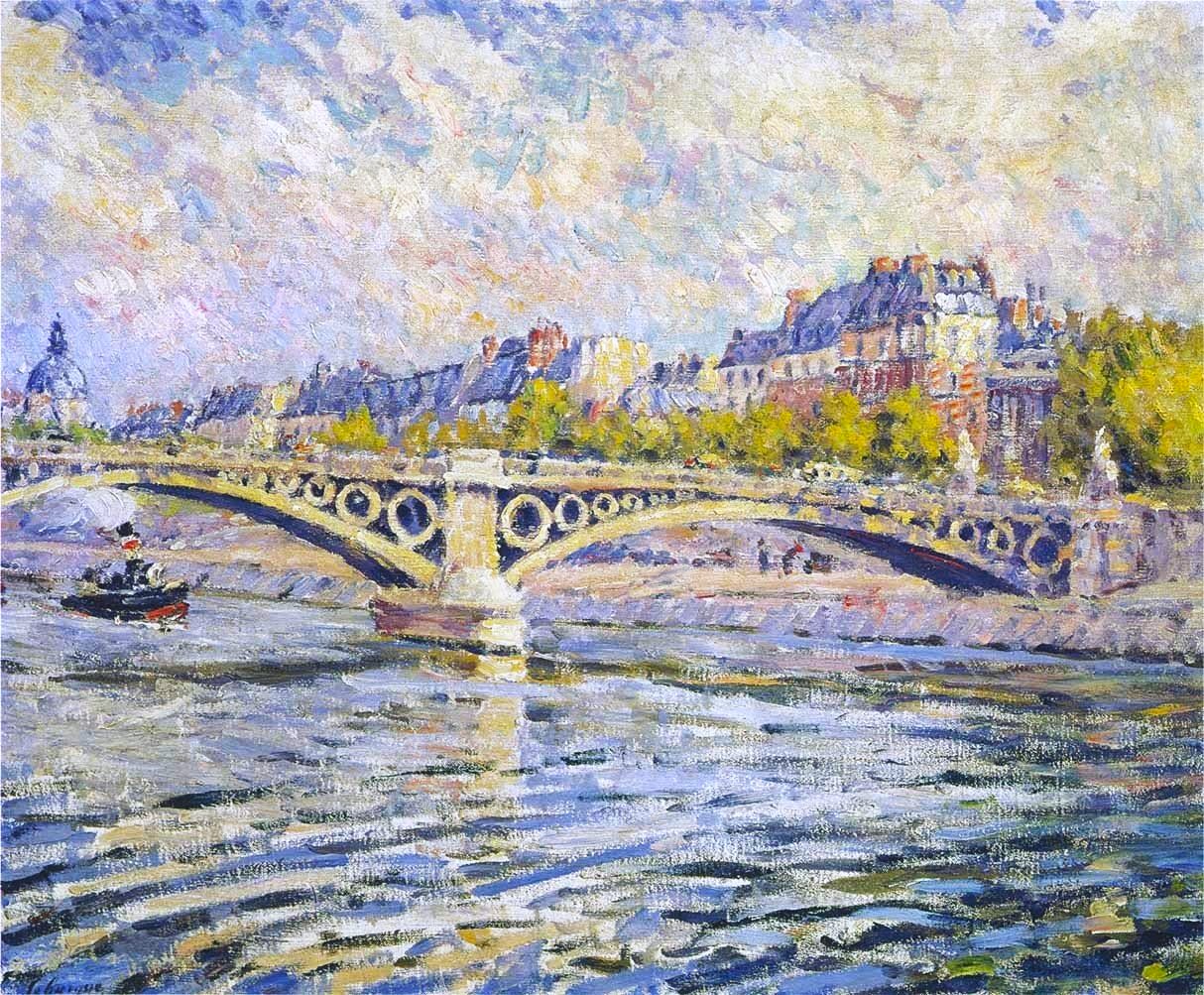
Since 1885 he lived at various addresses in Paris, also after his marriage in 1895.
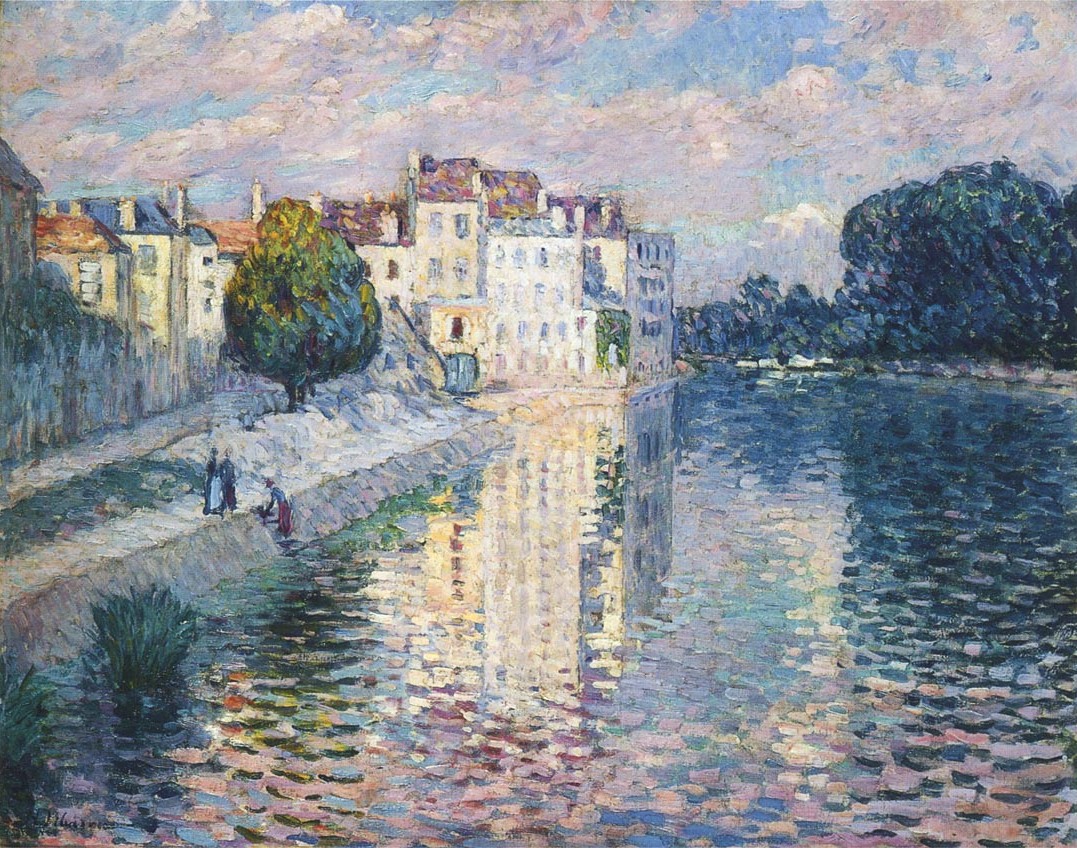
Between 1901 and 1906 he lived eased of Paris along the Marne↓, but he returned to Paris. And though he settled in Le Cannet in 1924 in 1930 he still had an appartement in Paris.
But, he hardly depicted Paris. He just depicted a bridge (CR347) and the Parc Monceau (CR344+345; iR9).
He also painted in the surroundings of Paris (CR338 +339) and namely in Saint-Cloud, just west of Paris (CR340-343; iR9; iR468).
In the Catalogue Raisonné Bazetoux renders just 18 paintings made in Paris and it’s surroundings (the Île-de-France; iR468; iR9); most of them are dated between 1893 and 1905, with the exeption of CR351 (ca.1920-22) and CR352 (1910). (R307,CR335-352)
I wonder what Lebasque did all the time he was in Paris, apart from his many journeys? Paint portraits and still lifes? Finish the paintings he started en-plein-air?

Along the Marne, 1901-1906:
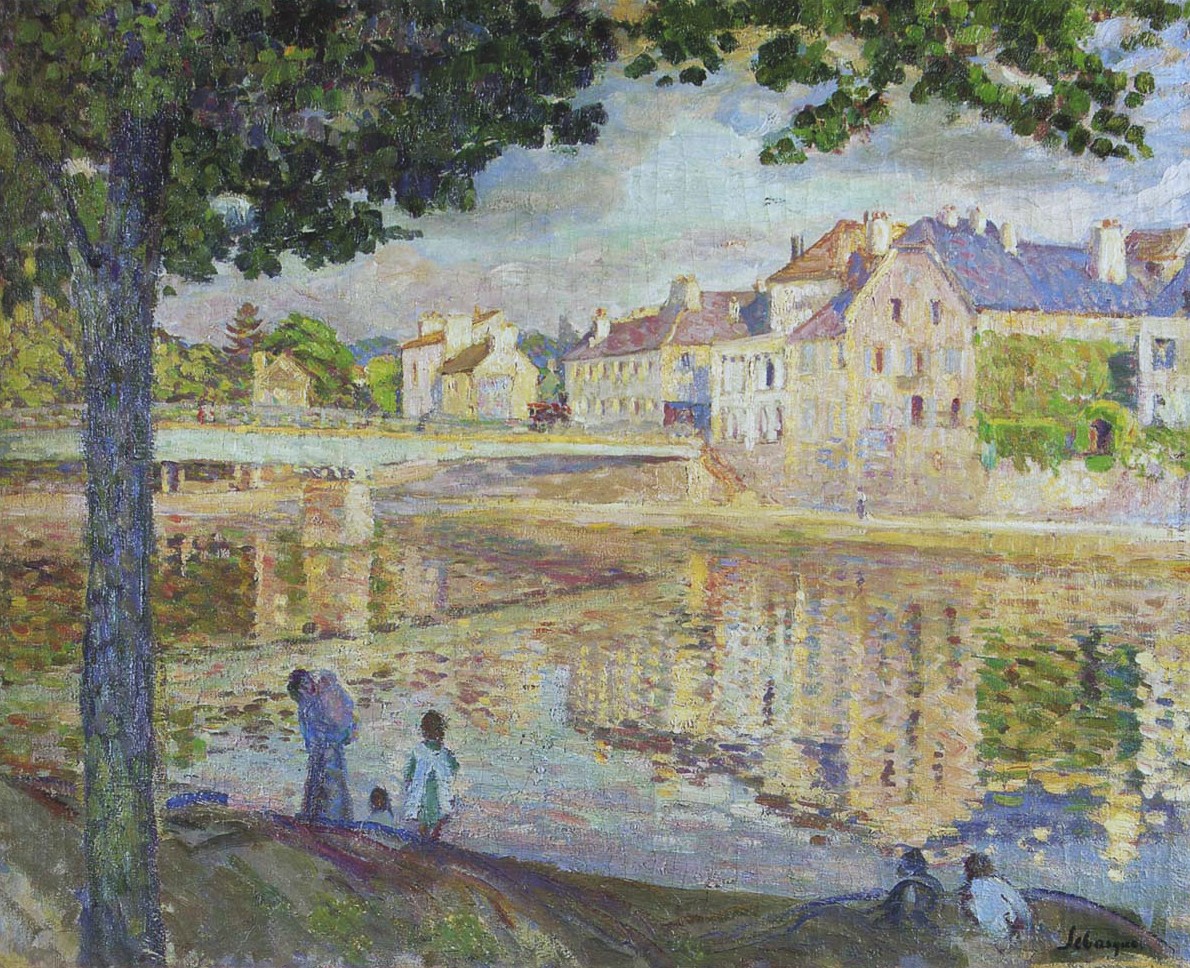
In 1901 Henri Lebasque moved to Montévrain, 34km east of Paris (iR468; iR9; iR4).
Here his daughter Hélène (Nono) was born.
In 1904 Lebasque moved to Lagny, just west of Montévrain (iR468).
In 1905 he moved to 18 quai Bizeau, Pomponne, just north of Lagny on the other bank of the Marne (iR9; iR468; iR4; R285,p1028).
All located in the department Seine-et-Marne and the region Île-de-France.
Lebasque also painted in the surroundings. He depicted many village scenes (namely streets), parcs and river views.
In 1906 he moved again to Paris.

Early travels, 1893-1910:
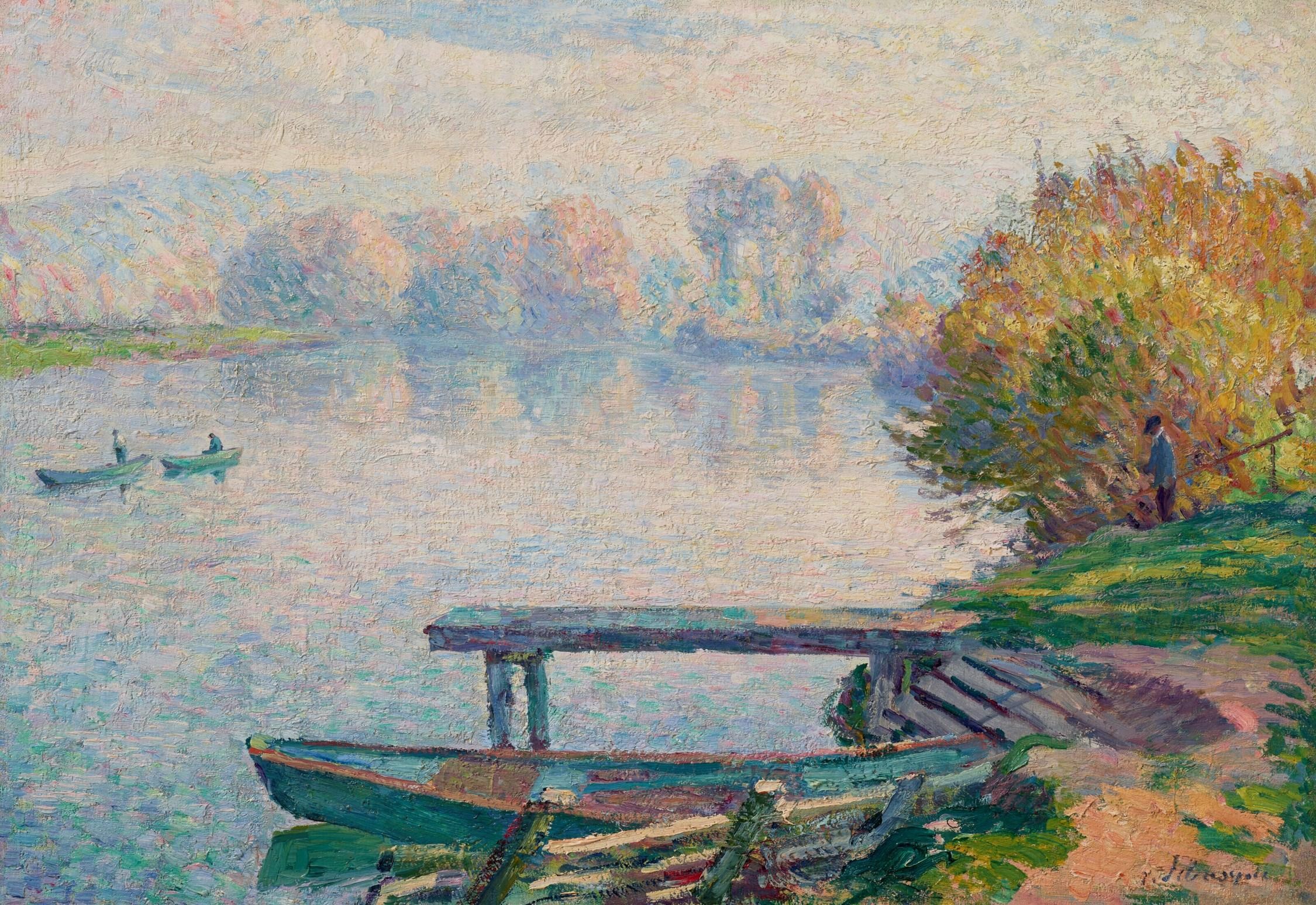
Henri Lebasque made many travels. In the earlier years between 1893-1910 namely in Britanny, the surroundings of Compiègne and Saint-Tropez↓.
Brittanny 1, 1893-1903:
Henri Lebasque (and his family) made several trips to Britanny. We can discern two periods. The first from 1893-1903 (R307,CR285-319). In these years he namely painted in Le Yaudet, in the north-west of Britanny, a small hamlet that is part of the commune Ploulec’h, just west of Lannion (iR468; iR9; iR4).
Surroundings Compiègne, 1897-1910:
Shortly after their marriage 1895/06/02 Henri and Catherine are vacationing in Pierrefonds, near Compiègne, 88km north-east of Paris, and 16km east-south of Compiègne (iR468; iR9; iR9; iR4; R307,p378). Probably earlier, at the invitation of Dr. Lagarde, they rented a house in Rethondes, 11km north of Pierrefonds (iR9; R307,p8) In the summer of 1907 Lebasque stayed in Vieux-Moulin, 16km east-south of Compiègne (iR468; iR9; iR4). Both located in the l’Oise department, in the region Hauts-de-France. Other painters proceeded him: Corot; Paul Huet; Eugène Isabey; Théodore Rousseau;
In the Catalogue Raisonné Bazetoux renders 48 paintings made in the surroundings of Compiègne (R307,CR98-145).
Lebasque namely depicted forests and lakes in these surroundings.

Lebasque in Saint-Tropez, 1906+1907:
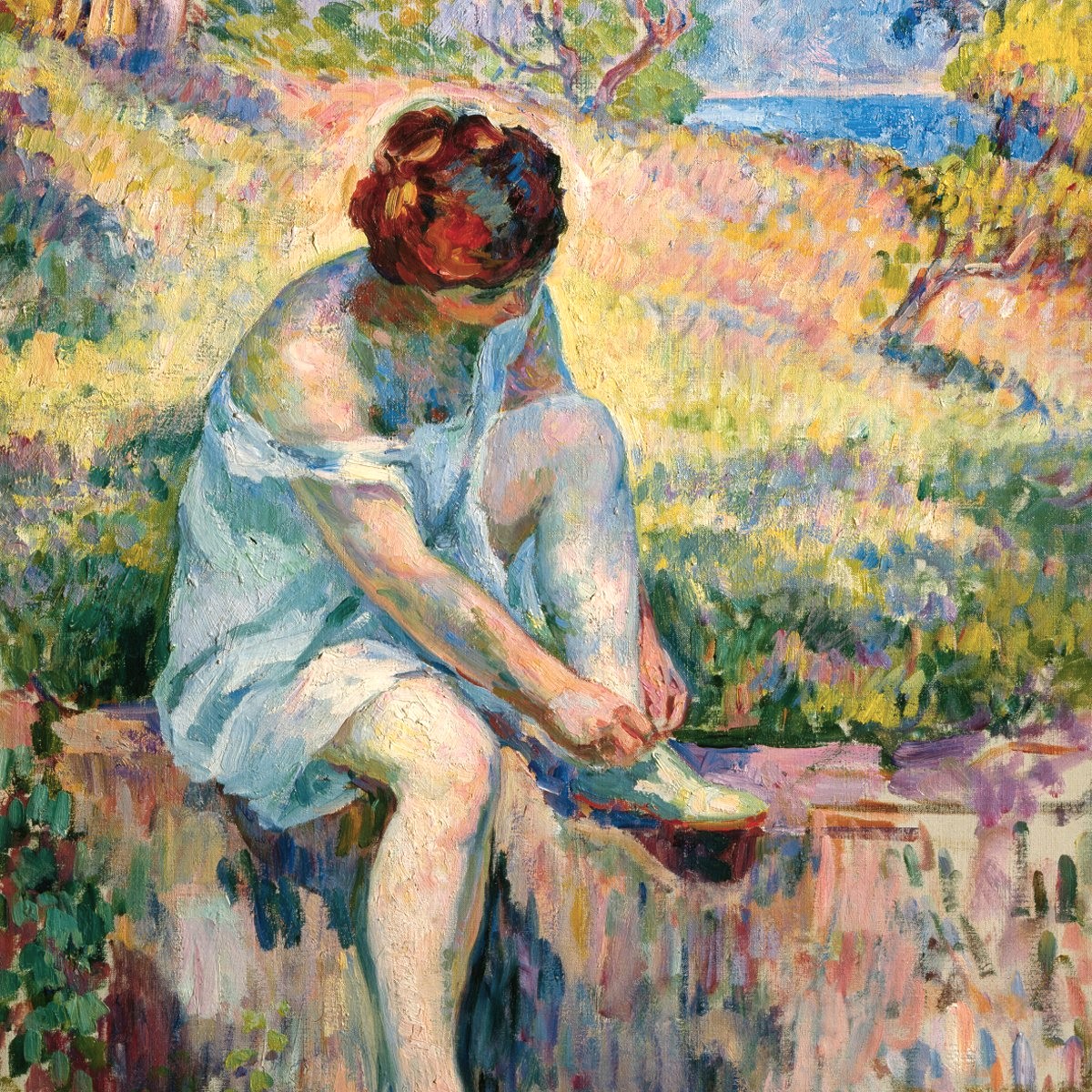
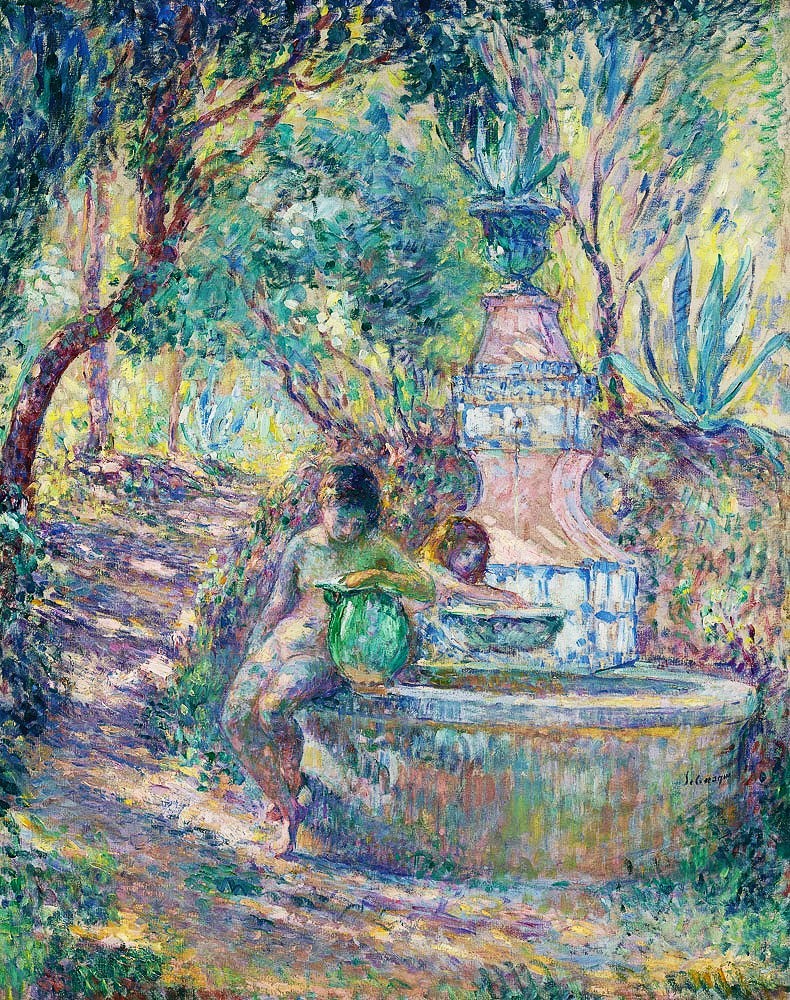
Henri Lebasque first discovered the Mediterranean coast in 1906, when he stayed in Saint-Tropez (iR468; iR9) in the Villa Demière, with a parc of twelve hectares, in which Manguin earlier stayed (R484,p62). He did so from May till September 1906 and probably also in 1907 (see CR1123-1182). In later years he would return more often, maybe even up to 1930 (R307,CR1183-1218 +1376 +1428).
In these years Lebasque also made some other trips, including to Vence, 85km north-east of Saint-Tropez (iR9; see R307,CR1365+1366+1371).

Later travels, 1910+:
In his later years Henri Lebasque also made many travels. In the surroundings of Les Andelys; in the region Pays de Loire, along the Atlantique coast; again in Brittany and along the Mediterranean coast.
Les Andelys and surroundings, 1912-1921:
Henri Lebasque made a trip to Vézillon, 4km south of Les Andelys: in 1912 +1913 +1915 (iR468; iR9; iR4; R307,p379).
Les Andelys, 37km south-east of Rouen, in 1920/21 (iR468; iR9; iR4; R307,p380)
Both in the department l’Eure and the region Normandie.
Lebasque also depicted the Château Gaillard (iR9; iR4).
In the Catalogue Raisonné Bazetoux renders 35 paintings (R307,CR364-398):
Lebasque namely depicted riverviews.
Other artists that painted here are: Paul Signac; Maxime Maufra;
Pays de Loire, 1917-1922:
Henri Lebasque painted (during holidays) in the region Pays de Loire, along the Atlantique coast. He did so in the years 1917 – 1922. He namely painted in:
Saint-Jean de Monts, in the department La Vendée, namely in 1917 (iR468; iR9; iR4);
Île-d’Yeu, an island in the Bay of Biscay, just west of Saint-Jean de Monts, namely in the summer of 1919 (iR468; iR9; iR4);
and Préfailles, a bit to the north, in the department Loire-Atlantique, in the summer of 1922 (iR468; iR9; iR4).
In the Catalogue Raisonné Bazetoux renders 75 paintings (R307,CR399-473).
Lebasque namely depicted beach scenes, sea views (from his rented villa) and harbour views (often from a window).
Brittanny 2, 1920-1925:
In the years 1920-1925 Henri Lebasque painted again in Britanny. This time in Morgat, a small seaside resort in the most west of Brittany at the baye of Douarnenez, part of the commune of Crozon in the department Finistère. He was invited by the sculptor Lenoble, whose son Jacques would marry his daughter Nono in 1924 (iR468; iR9; iR4; R307,CR320-334).


Lebasque, trips in the Midi, 1908-1923:
Henri Lebasque started his travels along the Mediterranean coast in Saint-Tropez in 1906↑. But, he also dwelled and painted at other locations during long and frequent stays.
In the Catalogue Raisonné Bazetoux renders 348 paintings made in the Midi (R307,CR1123-1470).
Lebasque painted in Sainte-Maxime, just north of Saint-Tropez (iR468), namely in 1914 (R307,p11;R492,p110). But, the paintings are dated between 1908-1918 (R307,CR1219-1276).
And in Le Pradet (iR468), 9km east of Toulon, from 1911-1923 (CR1330-1368).
In the summer of 1911 Lebasque stayed in Sanary, just west of Toulon (iR9; iR468) and visited Manguin; he made some works in these surroundings (see CR1260 +1382-1385).
Lebasque also depicted many beach scenes at various locations (CR1261-1276 +1386-1393+1399-1456).


Lebasque in Le Cannet, 1924-1937:
Lebasque lived in Le Cannet from 1924 till his death in 1937. Le Cannet lies 62km north-east of Saint-Tropez (iR468; iR9) and just north of Cannes.
First he lived in the villa Beau-Site, close to Pierre Bonnard, who came to live here in 1925. In 1930 Lebasque buys a house at the rue des Danys (iR9; R307,p380)
The Catalogue Raisonné renders 52 works made in Le Cannet and surroundings, made between 1920-1931 (R307,CR1277-1328).
From here he made several trips along the Mediterranean coast.
Lebasque also made many beach scenes, namely at the beach in Cannes, just 3km south of Le Cannet (see CR1424+1430+1435+1441+1443+1455).

Nudes:
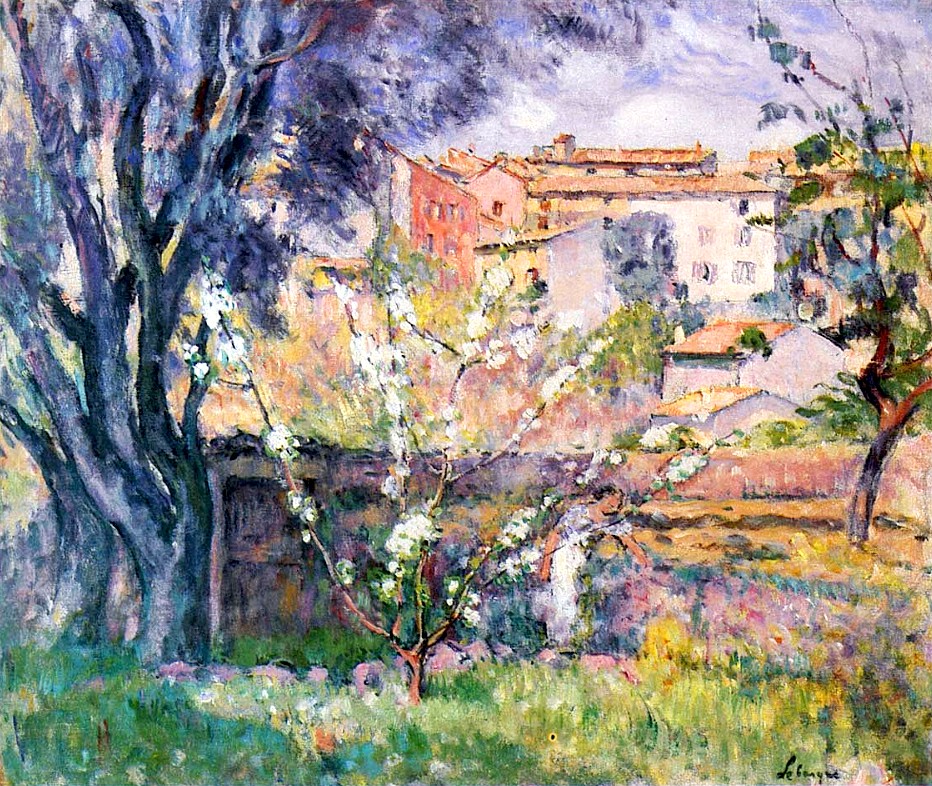
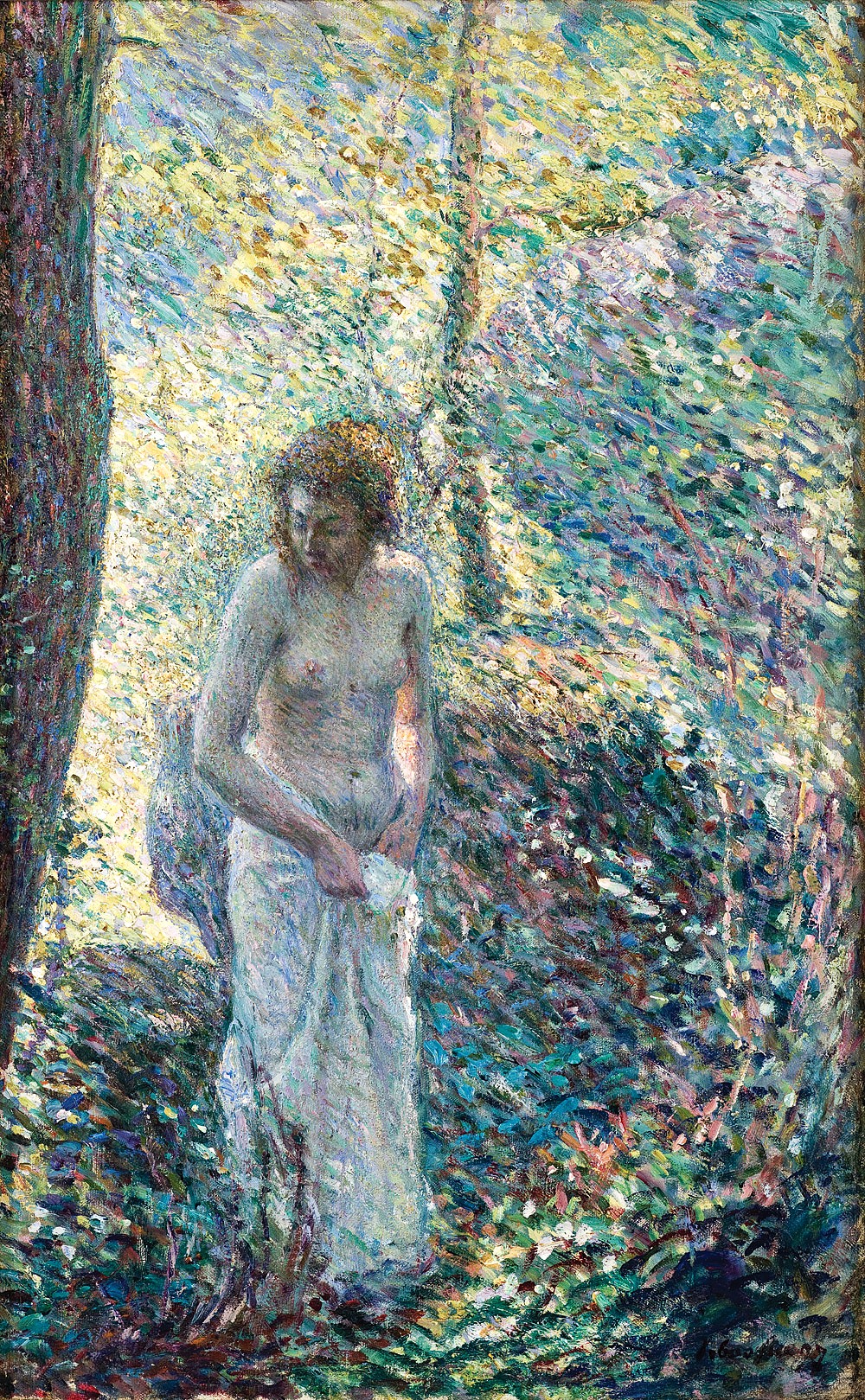
Henri Lebasque painted many nudes. The Catalogue Raisonné renders 200 paintings (R307,nos. 923-1122).
First his nudes are more rare and merge in the landscape*, including his own children. Sometimes the figures are more large in the foreground.
1925 onwards the nudes become a dominant theme, painted prominently (mostly) in interiors (R307,p30+380).
In his beach scenes, around 1920 onwards, he also depicted many nudes (CR1407-1452).
In his decorative compositions the nudes were also quite dominant (CR1472-1529).
Note*: see CR106 +314 +923 +1006/8/9/10 +1084/6 +1171/2/5/7 +1224 +1324.


Still lifes:
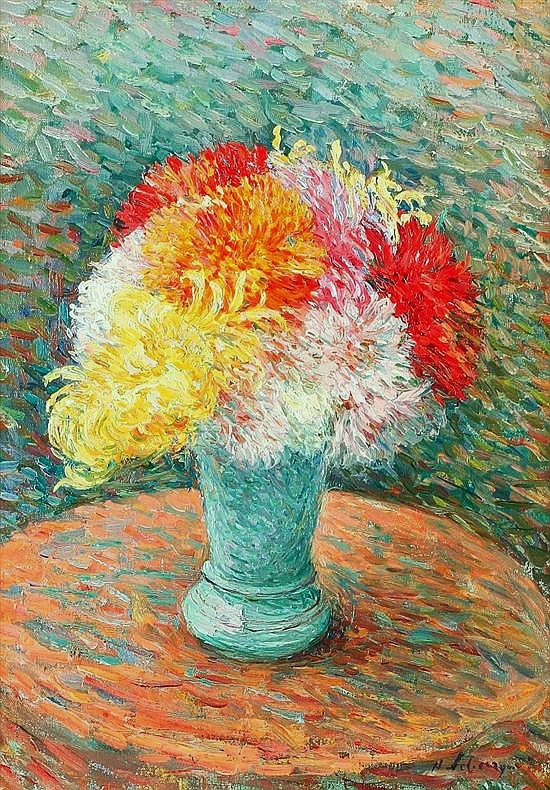
Henri Lebasque painted many still lifes. The Catalogue Raisonné renders 131 paintings (R307,nos. 792-922). The problem is that (almost) none of them are dated on the canvas. Lebasque exhibited some still lifes* throughout his life, but most are not identified. He namely depicted flowers.
Note*: Angers-1889-164; Angers-1890-1891; SNBA-1904-728; 22SdI-1906-2891; 24SdI-1908-3619; 6SdA-1908-1163 (=?? CR879 or 883); 6SdA-1908-1166; Druet-1910-23; Zurich-1913-1225; MdAD-1914; BJ1916-41; Grand Palais-1919-1926bis; MdAD-1920-136 (=?? CR520); Rabat-1921-32 (=?? CR807); SNAB-1922-593; Sd Tuileries-1924-901; SdA-1925-802 +803; GP1927-66 +73 +74 (=!? CR879) +? 82; Pittsburgh-1928-192 (=CR873=awarded); Cleveland-1929-192; Chicago-1929-192; Pittsburgh-1930-232 (=CR852); DR1931-21 +22; SdA-1935-971; SdA-1936-786; Amsterdam-1936-23; (R307,p362-370)


Recognition:
Henri Lebasque received little negative criticism. He is praised for the delicate sense of light and his charming domestic scenes. (R492,p14) Paul Jamot reviewed (1906) ‘Among the best landscapists of the Société Nationale, M. Henri Lebasque is the most frankly ‘impressionist’ (R492,p25).
1899: positive reviews on his exhibited ‘Baigneuses’ (=SNBA-1899-866) (R307,p362+379+CR106)
1900: wins a bronze medal at the Decennial exhibition of the Exposition Universelle in 1900 (R307,p362+CR106).
1911/10/20: appointed as Chevallier in the Légion d’Honneur (iR79).
1922: wins a 3rd class medal at the Carnegie International exhibition in Pittsburgh (R307,p366+CR398; R492,p111).
1925/07: appointed as Officier in the Légion d’Honneur (iR79).
1928: Paul Vitry, after writing several articles, published a biography on Henri Lebasque.
1928: wins the Garden Club Prize ($300) at the Carnegie International exhibition in Pittsburgh for his painting Fleurs (no.192) (R492,p111+368+CR873)
Note: the commissions and acquisitions mentions here below, also can be seen as a form of recognition.

Commissions and acquisitions:
Since 1900 contacts with Comte Isaac de Camondo (1851-1911), who bought some of his works (R307,p379;R492,p117); Lebasque portrayed his son Paul (CR543=iR14) and maybe also Isaac himself (iR6).
Dr. Brocq bought some paintings of Lebasque and left his entire collection to the Museum of Angers (R492,p114+117;R307,p9).
Frédéric Manaut bought several paintings; Lebasque portrayed his wife (R492,p117).
SNBA-1903-777, Le goûter sur l’herbe (=CR76) is bought by the state and now in the MBA in Angers (iR6).
From 1904-1933 a contract with Georges Petit, which becomes exclusive in 1918 (R307,p379+380).
1907: CR1132 was bought by the State after the solo-exhibition at Georges Petit (R307,CR1132).
1912: the state bought CR1177, le bain des nymphes exhibited that year (SNBA-1912-805) and owned by M. Manaut (R307,CR290;R484,p72).
From 1914-17 he worked for ‘des Peintres aux Armées’ and contributed to the war effort through lithographs and posters (R307,p17+379+CR353-363;R492,p110).
1921: CR936 = SNBA-1921-764, Le repos du modèle was acquired by the state (R307,CR936;R492,p111; =M1).
Note: for commissions on applied and decorative art, see below.
Applied and decorative art:
Henri Lebasque was not only a painter. He made many decorative panels (R484,p185-205).
In 1886/1887 he painted borders for murals of Puvis de Chavannes under the direction of Achille Cesbron.
In 1899 Dr. Tapret commissioned Lebasque to make some murals for his house in Dammartin-sur-Tigreaux (R492,p117;R307,p8+CR1473; iR468).
For the the Exposition Universelle of 1900 he made frescoes.
Since 1906 he attributed painted designs for ceramics for the potter André Mettey (1871-1921); this was a commission of the art-dealer Vollard (R307,p379; R492,p20+110+118; iR17; iR17); he worked together wih Denis, Rouault, Vallotton and de Vlaminck (R307,p21;R484,p188).
Since 1906 he received orders to design contemporary images for tapestry (on carton) for Aubusson Tapestry works (R307,p379;R492,p110).
1910: commission from M. Pilon to paint murals for decoration of his house in Nantes (R492,p110+118; CR1474+1475=iR24).
1911: made decorations with the architect Dervaux for an exhibition in Brussels (R492,p110).
1911ca: made murals for the house of M. Templier in Paris (R492,p118).
1912: commissioned by Salignac to make decorations for the Opéra.
1912/1913: Zacharie Astruc* commissioned him to make decorative panels for the Direction des Beaux-Arts, rue de Valois and for the Salon des Dames of the théâtre des Champs-Élysées (R307,CR1481+1499). He worked together with Maurice Denis (R492,p85).
1914: Lebasque makes lithographs and posters with as topic World War I.
1914: makes murals for the Hôtel Wattignies / Wattigny in Paris.
1914: commissions for the Château de Drouilly at Franqueville in Normandie (iR468;R492,p118).
1914: commission for the Hôtel Chouard in Paris, together with the architect Dervaux.
1916: murals for the salon of the Transatlantic Paris (R492,p118).
1917: decorative panels for the entrance hall of the Direction des Beaux-Arts at the rue de Valois, called La Poésie (Daphnis et Chloé); L’Archéologie; L’Offrande au Jardin; La musique et la danse (R307,CR1503+1506+1512+1524)
The Catalogue Raisonné renders 67 decorative compositions, of which most are preparatory studies (R307,nos.1471-1537), depicting allegoric themes in imaginary landscapes.
Note*: this is not the Zacharie Astruc who joined the 1st ‘impressionist’ exposition in 1874; he died in 1907.

Other techniques:
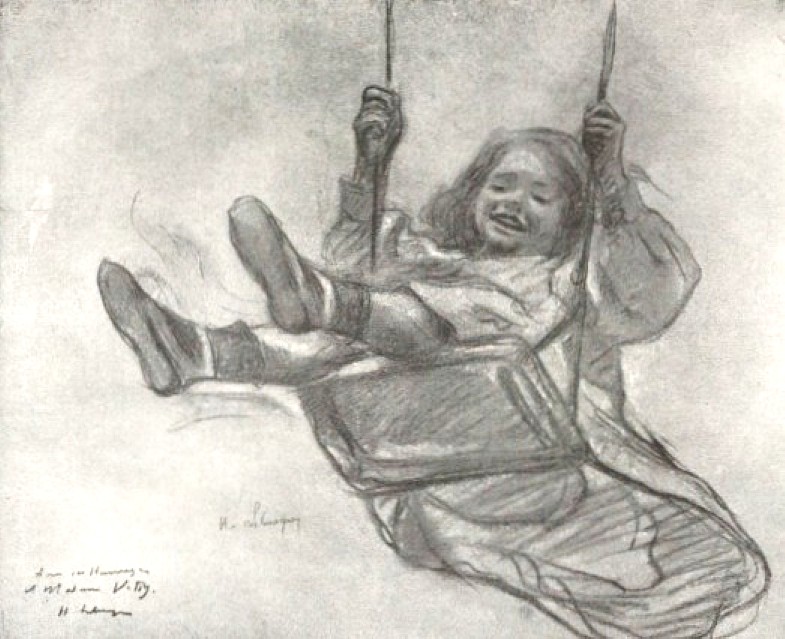
Henri Lebasque made several drawings, watercolours and pastels. Also as preparation for his paintings.
The 1986 catalogue renders 18 watercolours (R492,no53-70), 1 pastel (R492,no71) and 11 drawings (R492,no72-82).
Lebasque, background info:
Introduction:
Here below you will find background info on Henri Lebasque.
First you will find an overview of the places where Lebasque lived and to which he travelled.
Secondly you will find more detailed overviews of the locations Lebasque depicted and in which years from the Catalogue Raisonné.
Lebasque, his dwelling places:
Henri-Joseph Lebasque was born 1865/09/25 in Champigné (iR468) in the Maine-et-Loire department (iR468; iR9), about 280km south-west of Paris.
Since 1885 he lived at various addresses in Paris and elsewhere. The exact dates are not always clear.
In 1895 he married. Also he and his family moved quite often and again the exact dates are not always clear.
In 1895 he settled in Paris at 82 avenue de Clichy (iR9; R285,p1027).
In 1896 they moved to 12 rue de la Jonquière in Paris (iR9; R285,p1028).
1899 lived at 10 rue La Fontaine, close to Signac.
1901, moved to Montévrain, east of Paris (iR468; R285,p1028).
1904, moved to Lagny, just west of Montévrain (iR468; R307,p379; see CR84-89 +146-284).
1905: 18 quai Bizeau, Pomponne, near Lagny (iR9; iR468; R285,p1028).
1906: 36 boulevard de Clichy in Paris (iR9; iR468; R285,p1028).
1907: 15 avenue Perrichont, Paris (in the former village of Auteuil) (iR9; iR468; R285,p1029; R307,p379+14).
He still lived here in 1914 (R285,p1029)
1924-1930: lived in Le Cannet in the villa Beau-Site (see CR1317), just north of Cannes, at the mediterranean coast, 62km north-east of Saint-Tropez (iR468; iR9).
1930: buys a house at rue des Danys in Le Cannet (iR468; iR9); see CR1328.
1930: also has an appartement in Paris at the avenue Fantin-Latour (iR9; R307,p380).
Travels:
Henri Lebasque made many travels within France:
to Pierrefonds, near Compiègne, north of Paris, in 1895 (iR468);
Vieux-Moulin, near Compiègne, in the summer of 1907 (iR468);
Dammartin-sur-Tigeaux, just east of Paris, in 1899 +1925 (iR468);
Plobsheim, in the Alsace, where his wife was born, in 1906 (iR468);
Vieillevie in the department Cantal in the Auvergne, in the summer of 1910 (iR468; iR9)
Vézillon, in the arrondissement Les Andelys: in 1912 +1913 +1915 (iR468; iR9; R484,p94).
Les Andelys, 37km south-east of Rouen, in 1920/21 (iR468; iR9)
Yaudet in the north-west of Britanny in 1896/97 (iR468);
Morgat, a small seaside resort in the most west of Brittany, in the summer of 1924 +1925 (iR468; iR9)
He stayed at the estate of the potter / ceramist Lenoble, who son would marry Nono (R484,p119).
Saint-Jean de Monts, in the department La Vendée and the region Pays de Loire, along the Atlantique coast, in 1917 +summer of 1922 (iR468; iR9; iR4)
Île-d’Yeu, an island in the Bay of Biscay, just west of Saint-Jean de Monts, in the summer of 1919 +summer of 1922 (iR468; iR9; iR4)
Préfailles, a bit to the north, in the department Loire-Atlantique and the region Pays de Loire, in the summer of 1922 (iR468; iR9; iR4).
All summers between 1917-1922 (R484,p109).
Lebasque in the Midi:
Lebasque his travels in the Midi deserve special attention. The Catalogue Raisonné renders 348 paintings made in the Midi (R307,nos. 1471-1537).
Several of these works are not located (and dated), including many beach scenes; see CR1261-1276 +1386-1393 +1399-1456 (with some exceptions).
Lebasque started these travels in Saint-Tropez (1906 onwards) and also made them after he settled in Le Cannet (1924 onwards).
Lebasque in Saint-Tropez, 1906+:
Henri Lebasque often stayed along the Mediterranean coast.
Namely he stayed in Saint-Tropez (iR468; iR9) in the Villa Demière, in which Manguin earlier stayed.
He did so from May till September 1906 (and probably also in 1907); see CR1123-1182 +?1376;
maybe in 1908: CR1183-1185;
in the summer of 1909; CR1186-1195;
maybe other years between 1911-1919; CR1196-1207;
in the summer of 1920; (R492,p111;R484,p59); CR1208-1216;
maybe other years between 1921-1925; CR1217+1218;
between 1925-1930; CR1428;
and undated: CR1376;
Lesbasque at other locations in the Midi:
Probably in 1906/7 Lebasque made trips to Vence, 85km north-east of Saint-Tropez (iR9; see CR1365 +1366 +1371) and also to Antibes, 70km to the north-east of Saint-Tropez (iR9; see CR1372-1375); and to Fréjus, 25km to the north-east (iR9; see CR1378-1380).
Lebasque stayed in the summer of 1914 in the villa Beau-Séjour in Sainte-Maxime, just north of Saint-Tropez (iR468; R307,p379; R484,p59); but probably he also stayed here in 1908 +1913 and in the years 1915-1920; see CR1219-1259 +1270+1468.
Lebasque made some works around 1920 of the sea at Agay, about 37km north-east of Saint-Tropez (iR9; iR468; iR3; CR1412+1417)
Henri Lebasque also depicted works with a view on the massif de L’Esterel, about 38km north-east of Saint-Tropez, around 1907 (CR1140) and in 1926 (maybe from Le Cannet) (CR1316) (iR9; iR3).
1918/11/11 he was in Cannes, about 60km north-east of Saint-Tropez (iR468; iR9; see CR1402);
1913: spend the winter in Nice, 91km north-east of Saint-Tropez (R492,p110; iR468; iR9)
1923: painted in Toulon (iR468; CR1369+1370), about 70km west of Saint-Tropez (iR9); but, more in Le Pradet, 9km east of Toulon (iR468; iR9; see CR1330-1368 +1436 +1437); probably he did so earlier in the years 1911-1914, see CR1330-1334; and later in 1923 (CR1436+1437); he stayed in 1911 in Toulon (R484,p59).
In the summer of 1911 Lebasque stayed in Sanary, 80km west of Saint-Tropez, 12km west of Toulon (iR9; iR468) and visited Manguin; he made some works here in the years 1911-1912 (see CR1260+1384+1385); he also paint more south-east at the Cap Sicié (iR9; see CR1382+1383).
1921: stayed in Collioure, close to the Spanish border (R492,p111+CR1462-1466; iR468; iR9)
Lebasque in Le Cannet and surroundings:
Henri Lebasque lived from 1924-1937 in Le Cannet, 62km north-east of Saint-Tropez (iR468; iR9; CR1280-1328); probably he came here earlier, 1920 onwards (see CR1277-1279 +1281 +1289-1296 +1326).
He also made trips in the surroundings:
Lebasque sometimes depicted (the beach of) Cannes 1923 onwards, just 3km south of Le Cannet; see CR1424+1430+1435+1441+1443+1455.
Lebasque sometimes depicted (the beach of) Cagnes-sur-Mer, 20km south-west of Le Cannet (iR9); around 1928/9 see CR1446.
Lebasque sometimes depicted (the beach of) Juan-les-Pins, which is part of Antibes (iR9); in 1933, see CR1456.
Villefranche-sur-Mer, just east of Nice, 34km north-east of Le Cannet; in 1925/1926 (iR468; iR9; see CR1395-1398; namely views on the harbour from a window; compare the same theme in L’Île-d’Yeu).
Foreign trips:
Lebasque also made some foreign trips, but there are hardly paintings known of these trips:
*to London in 1904;
*Madrid in 1905;
*Italy / Venice in 1906 (R307,CR1457-1461; R492,p110);
Locations Catalogue Raisonné:
Denise Bazetoux renders in her Catalogue Raisonné (2008=R307) several locations and dates, but often not in a chronological or geographical order. Here below you will find a restructuring.
Champigné:
In the Catalogue Raisonné Bazetoux renders 49 paintings made in Champigné (R307,no1-49). Works made in 1885 (CR1), 1890 (CR6+7+11+15+16), 1890-95 (CR8+12+18), 1893 (CR17), 1894 (CR19+20+25), 1894-95 (CR13+14+24), 1895 (CR21-23 +26-29 +31-33), 1895-97 (CR34), 1895-1900 (CR30+44+46), 1898 (CR35-38), 1899 (CR39+40+42+43), 1899-1900 (CR41), 1900 (CR45+47+48).
Some of these works were made elswhere:
Angers: in 1890 (CR6);
Touraine, 125km to the east-south (iR9): 1898 (CR37+38)
In the summer of 1885 Henri Lebasque spend time in Anjou, just south of Lyon (iR9). He made some works here, one undated (CR49) and one made in 1899 (CR43).
Compiègne:
In the Catalogue Raisonné Bazetoux renders 48 paintings made in the surroundings of Compiègne (R307,CR98-145). She mentions the following locations and years*:
(Surroundings of) Compiègne: 1898 (CR99+100);
Forest (+ lake) of Compiègne, just north of Pierrefonds (iR9; iR4): 1899 (CR111+112);
(Forest of) Pierrefonds: 1897-98 (CR104+105); 1907 (CR129+130+135+137+138);
L’étang de Pierrefonds: 1907 (CR140);
Château de Pierrefonds (iR9; iR4): in 1910 (CR142+145);
Le château de Sainte-Claire (of Comte de Ségonzac): 1899 (CR108+109);
L’étang de Saint-Pierre, between Pierrefonds and Vieux-Moulin (iR9): 1900-1906 (CR119); 1906 (CR120); 1907 (CR121+125); 1907-1908 (CR128);
L’étang de la Reine Blanche: 1906 (CR123); 1906-1907 (CR122+124);
So, the paintings that Lebasque produced of these surroundings are dated between 1897 and 1910. Does this mean he stayed here more often? And / or does this mean that he later made paintings after sketches and memories?
Lebasque namely depicted forests and lakes in these surroundings.
Note*: many paintings are not dated and located.
Montévrain and Lagny:
In the Catalogue Raisonné Bazetoux mentions the following locations and years* (R307,CR50-96 +146-284):
Montévrain: not dated (CR51-54); 1898 (CR62+CR70); 1900 (CR55+57+193); 1900-1901 (CR56+58+59); 1900-1904 (CR192); 1900-1905 (CR81); 1902 (CR73+74+76); 1903 (CR82); 1905 (CR79+80); 1905-1906 (CR83);
Brie, probably meant is Chanteloup-en-Brie, just south of Montévrain (iR9): 1890 (CR50);
Chessy, just east of Montévrain (iR468): 1906 (CR84-86);
Chalifert, just east of Chessy (iR468; iR9; iR4), namely the bridge and locks: 1900 (CR203-205); 1904 (CR206);
Dhuys, probably a former hamlet between Chessy and Chalifert (iR9), namely the bridge over the Marne: 1900 (CR202);
Damrapt, probably meant is Dampmart, just north of Montévrain (iR486): 1904 (CR196); 1910 (CR195);
Lagny: not dated (CR210); 1899-1900 (CR89); 1904 (CR146+153); 1905 (CR147+148+151+152+162+167+168);
The Marne at Lagny: undated (CR246); 1905 (CR269+273); 1906 (CR243+277); 1906-1907 (CR276);
Bridge over the Marne in Lagny: undated (CR210+211+218+219+259+271+272); 1905 (CR217); 1905-1906 (CR215+216+257+258+260+261+262+264+265); 1906-1907 (CR263+266);
Pomponne: 1905-1906 (CR154);
(Bridge over) the Marne in Pomponne: 1904 (CR278); 1905 (CR213); 1905-1906 (CR244+245); 1906 (CR236+238+239); 1906-1907 (CR235+237);
Dammartin-sur-Tigeaux, 53km east of Paris (iR468; iR9; iR4); Lebasque made a trip in 1899 +1925: not dated (CR71); 1896 (CR64); 1897 (CR65+66); 1898 (CR67); 1899 (CR68+69); 1918-20 (CR97);
Poigny, 70km south-east of Montévrain (iR9): 1904-1905 (CR92);
On (the banks of) the Marne: not dated (CR189+208+252+268+275+282+283+284); 1900 (CR184+190+191+198+199+202 +203-205); 1900-1904 (CR192); 1903 (CR197); 1903-1904 (CR194); 1903-1905 (CR220+221); 1903-1906 (CR200); 1904 (CR188); 1904-1905 (CR270); 1905 (CR209+223+224+226+269); 1905-1906 (CR201+229+242+247+248+249); 1906 (CR222+240+241+256+267); 1906-1907 (CR183+233+234+250+274+279+281); 1907 (CR185+251+253+254+255);
Bridges over (probably) the Marne, not located: not dated (CR210+214); 1905 (CR209); 1907 (CR280);
Near or on the water (maybe also the Marne): not dated (CR207+225); 1900 (CR187); 1904 (CR186); 1905 (CR227); 1905-1907 (CR228); 1906 (CR230-232);
Without location: 1895 (CR61); 1895-96 (CR63); 1895-98 (CR181); 1895-1900 (CR180); 1898-99 (CR179); 1900 (CR90+91+95); 1901-1902 (CR157-159); 1903 (CR163); 1903-1904 (CR156); 1903-1905 (CR164+165); 1904 (CR161); 1904-1905 (CR175); 1905 (CR149+150+169+170); 1905-1906 (CR176-178); 1906 (CR160+171); 1907 (CR172); 1906-1907 (CR173+174); 1910 (CR96);
Lebasque depicted many village scenes (namely streets), parcs, river views.
Note*: many paintings are not dated and located.
Brittanny, 1893-1903 + 1920-1925:
Henri Lebasque (and his family) made several trips to Britanny.
In the Catalogue Raisonné Bazetoux mentions mentions the following locations and years*:
We can discern two periods. The first from 1893-1903:
Lesbasque made two paintings (probably) in 1893: CR286 +289, both not located.
Pont-Aven, part of the department Finistère, in the most south-west of Brittany (iR9; iR4): in 1894 (CR290); see also the School of Pont-Aven.
Le Yaudet, in the north-west of Britanny, is a small hamlet that is part of the commune Ploulec’h (iR468; iR9; iR4): in 1897 (CR291 +292) around 1897-99 (CR313); 1903 (CR315-318);
Lannion, a larger town just east of Le Yaudet: in 1897 (CR307); in 1900 (CR314);
Then later from 1920-1925:
Morgat is a small seaside resort in the most west of Brittany at the baye of Douarnenez, part of the commune of Crozon in the department Finistère (iR468; iR9; iR4): 1920 (CR332), 1922-23 (CR329), 1922-24 (CR321), 1923-24 (CR326), 1924 (CR322 +323).
Crozon in 1923 (CR325);
the baye of Douarnenez: in 1924 (CR327);
And also in:
Plouguerneau in the most north-west of Britanny, part of the department Finistère (iR9; iR4): around 1924/25 (CR334);
He also painted in Miget in 1920 (CR320) and in Saint-Gildas around 1922/23 (CR330); both locations I couldn’t locate.
Note*: many paintings are not dated and many titles refer to Britanny, but are not specific.
Vézillon and Les Andelys:
In the Catalogue Raisonné Bazetoux mentions the following locations and years* (R307,CR364-398):
Vézillon: not dated (CR376); 1912 (CR364); 1912-1913 (CR); 1913 (CR365+366+); 1915 (CR380+381);
Les Andelys: 1912-1913 (CR367); 1913 (CR369+374); 1913-1914 (CR368+375); 1914-1915 (CR378); 1915 (CR385-389); 1917 (CR390+391); 1920 (CR392+CR394+397); 1921 (CR395+398);
The Château Gaillard (iR9; iR4): not dated (CR396); 1915 (CR388); in the background: 1915 (CR386+387);
Not located: 1913 (CR373); 1914-15 (CR379); 1915 (CR377+382);
Lebasque namely depicted riverviews.
Other artists that painted here are: Paul Signac; Maxime Maufra;
Note*: some paintings are not dated and located.
Atlantique coast:
In the Catalogue Raisonné Bazetoux mentions mentions the following locations and years* (R307,CR399-473):
In Saint-Jean de Monts in 1917 (CR400-407 +412); 1917-18 (CR410); 1917-20 (CR413); 1920-22 (CR415);
In Île-d’Yeu: in 1919 (and 1920): CR452-467; he painted namely a harbour with it’s (sailing) boats, often from a window.
Namely in the Port-Joinville, a the north-west part of the island (CR465 +466 +468; iR468).
In Préfailles: in 1922 (CR426-444).
Namely the Pointe Saint-Gildas, the utter west part of Préfailles (iR9) in 1922 (CR422-425).
Lebasque also depicted the harbour of Nantes, the capital of the department Loire-Atlantique, 65km east of Préfailles (CR469; iR468; iR4; iR9), but it is unclear when.
Lebasque depicted many beach scenes. Many of them are not located (CR416-421 +445-451).
Some of his works, probably made along the Atlantique coast, are dated later: 1921 (CR399, depicting the Seine); 1924 (CR428); 1930 (CR471 +472).
The Midi:
In the Catalogue Raisonné Bazetoux renders 348 paintings made in the Midi (R307,CR1123-1470).
First she renders 60 works made in Saint-Tropez in 1906 and 1907 (R307,CR1123-1182).
Then she renders 36 works namely made in Saint-Tropez, made between 1908-1920 (R307,CR1183-1218).
Then she renders 58 works made namely in Sainte-Maxime, made between 1908-1918 (R307,CR1219-1276).
Then she renders 52 works made in Le Cannet and surroundings, made between 1910-1931 (R307,CR1277-1328).
Lebasque lived in Le Cannet from 1924 till his death in 1937.
Then she renders works made at several locations in the Midi and the Provence (R307,CR1329-1456).
Namely also in Le Pradet from 1911-1923 (CR1330-1368); and many beach scenes at various locations (CR1261-1276 +1386-1393 +1399-1456).
Bazetoux ends with some works made in Venice (in 1906) (CR1457-1461), Collioure (in 1921) (CR1462-1466) and other locations (CR1467-1470).
For more detailed locations and years, see above at travels in the Midi.
Société Nationale des Beaux-Arts:
Henri Lebasque exhibited at the Salon de la Société Nationale des Beaux-Arts (=SNBA) from 1896-1922; he was an associés (R307,p362-366;R484,p207-209;iR1).
SNBA-1896: nos. 776 +777 (landscapes from Pierrefonds);
SNBA-1897: no. 763 (a portrait);
SNBA-1898: no.715 (=CR297);
SNBA-1899: no.865-871;
no.865 =CR491;
no.866 =CR106;
no.867 =CR292 (see Vitry (1928), p25);
no.495 =!? CR495;
SNBA-1901: nos.527-531;
no.528 =!? CR202;
no.530 =CR309 (iR15);
no.531 =CR505;
SNBA-1902: nos. 706-711;
no.708 =!? CR157 (iR155);
SNBA-1903: nos.776-781;
no776 =?? CR89;
no.777 =CR76 bought by the state 1903 =M18 =iR6;
no.778 =!? CR59 (=iR24)
no.781 =CR491;
SNBA-1904: nos. 723-728;
no.723 =CR735;
SNBA-1905: nos.759-764;
no.759 =CR529 (=iR24);
no.761 =CR283
no.763 =CR534 (iR155)
no.764 =CR270 or CR278 (=iR24);
SNBA-1906: nos. 742-747;
no.742 =CR171 (iR15);
no.744 =CR231;
no.745 =CR244 (iR17);
no.746 =CR160;
SNBA-1907: nos. 728-730;
nos.728 =CR1165 =23SdI-1907-2925;
nos.729 =CR1171 =23SdI-1907-2926 =GP1907-7 (iR15);
SNBA-1908: nos. 680-685;
no.683 =CR172 (iR155; M82);
SNBA-1909: nos.710-715;
no.710 =!? CR655;
SNBA-1910: nos.759-762;
no.761 =CR1145;
SNBA-1912: nos.801-805;
no.801 =!? CR590 (=iR24);
no.802 =!? CR773;
803 =??CR536;
804 =? CR1384;
805 =CR1171;
SNBA-1919, benefit expo:
no.1926 (=CR1237); no.1926bis;
SNBA-1920: nos. 654-656;
SNBA-1921: nos 764 (=CR936) +no.765;
SNBA-1922: nos.590-593, incl. CR459 +936;
Salon des Indépendants:
Henri Lebasque joined the Salon des Indépendants many times from 1893-1926 (R285,p1027-1029;R307,p362-370;R484,p210-216).
He mostly showed a mixe of landscapes, portraits and interiors.
SdI-1893: nos. 755-760;
SdI-1894: nos. 454-457;
no.455 =CR664;
no.456 =? CR345;
SdI-1895: nos. 835-840;
SdI-1896: nos. 609-613 (all ‘Paysage et figures’);
SdI-1901: nos. 550-557;
no.551 =CR665;
SdI-1902: nos. 1048-1057;
no.1049 =!? CR73;
no.1050 =!? CR202;
no.1052 =CR16 (R492,no.1);
no.1056 =!? CR14 (iR11);
SdI-1903: nos. 1404-1411;
no.1405 =CR524 (iR155)
SdI-1904: nos. 1401-1406;
no.1401 =!? CR166;
SdI-1905: nos. 2370-2377;
no.2374: =CR701;
no.2375 =CR530;
SdI-1906: nos. 2888-2895;
no.2889 =CR667;
no.2894 =CR505;
no.2895 =CR82;
SdI-1907: nos. 2924-2927;
no.2925 =CR1165 =SNBA-1907-728;
no.2926 =CR1171 =SNBA-1907-729 =GP1907-7 (iR15);
SdI-1908: nos. 3619-3624;
no.3624 =CR1123 (iR23);
SdI-1909: nos. 961 +962;
SdI-1910: nos. 3014-3018;
no.3016 =CR1188;
no.3017 =CR696;
no.3018 =CR1187;
SdI-1911: nos. 3670-3672;
3670 =CR505;
SdI-1912: nos. 1929-1931;
no.1930 =CR555 (=iR24);
SdI-1914: no.3586-3588 (all no titles);
SdI-1920: no.2624 +2625 (=CR633);
SdI-1921: no.2027 +2027bis (=CR623);
SdI-1924: no.1780 +1781;
1926, Retrospective ‘Trente ans d’Art Indépendant’: no.1472-1477;
SdI-1926-R-1472, =CR478;
SdI-1926-R-1473, =CR483 (=R484,p125);
SdI-1926-R-1474, =CR665;
SdI-1926-R-1475, =CR505;
SdI-1926-R-1476, =CR695 (=iR24);
SdI-1926-R-1477, =CR1234;
Salon d’Automne:
Henri Lebasque joined the Salon d’Automne many times (1903-1936) (R307,p363-369;R484,p210).
He is mentioned among the founding members (in 1925).
1SdA-1903: nos. 344-346;
no.344 =CR82;
3SdA-1905: nos.907-911;
6SdA-1908: nos.1160-1166;
no.1160 =!? CR134;
no.1162 =CR695 (=iR24);
no.1163 =!? CR879 or CR883;
no.1165 =CR173;
7SdA-1909: no.967 +968;
no.967 =!? CR1141;
8SdA-1910: no.715 +716;
8SdA-1910-716 =CR555 (=iR24);
10-SdA-1912: nos.976-981:
no.977 =CR573 or 574;
11SdA-1913: no.1224-1228;
11SdA-1913-1224 =CR1228;
SdA-1919: nos. 1125-1126bis (=CR452 +=? CR385=iR6);
SdA-1921: nos. 1392 +1393 (=CR398) +1393bis (=CR618=iR23=M1);
SdA-1923: no.1105 +1106;
SdA-1924: no.1071bis; no.1072 (=!? CR752); no.1072bis (=CR677);
SdA-1925: nos802 +no.803;
SdA-1926: no.1141 (=?? CR948) +no.1412 (=CR1098);
SdA-1928: no.1121-1123;
SdA-1931: no.1251 +1252;
SdA-1932: nos. 945-949;
SdA-1933: nos. 921 +922;
SdA-1935: no.970 +971;
SdA-1936: no.785 +786;
Solo exhibitions:
There have been some solo exhibitions and retrospectives on Henri Lesbasque (1865-1937).
1907/02/16 -28: at the Georges Petit gallery with 35 paintings, including CR923, 1136, 1171 (iR15), 1165, 1141, 1145, 1180, 114 (=iR6) +1132.
1927/03/12 -13?: at the Georges Petit gallery with 82 paintings in a chronological order, with many recent works (nos.43-82 were made between 1921-1926).
1938/11/18 -12/10: at the gallery O. Petridès, avenue Delcassé with 60 art-works.
1952/06/19 -07/09: at the Musée Falliéra in Paris with 130 paintings.
1954, April – June: at the Château-Musée de Cagnes-sur-Mer with 33 paintings in a chronological order, with many later works (14 made in the 1930s).
1957, July – September: at the Musée des Ponchettes in Nice with 68 paintings in a chronological order and 34 aquarelles + drawings.
1965, Arpil – May: at the Musée Masséna in Nice with 34 paintings.
1970/03/10 -30: at the Salon de l’Hôtel-de-Ville in Le Cannet-Rocheville with 44 paintings and aquarelles.
1981, July-September: in the Château des Villeneuve in Vence with 38 paintings.
1986/02/26 -04/12: at the Montgomery Gallery in San Fransisco with 52 paintings.
2002/06/01 -09/01: at the Espace Bonnard in Le Cannet with an unclear number of paintings.
2002/09/20 -12/23: at the Hôtel-de-Ville in Lagny-sur-Mer with 55 paintings.
(R307,p362-370)
Other exbihitions:
Henri Lebasque exhibited at the Salon de la Société des Artistes Français (=SdAF) in 1892 (no.1024) (R337/1992; R332/1892; R307,p362).
At the Exposition Universelle in 1900 Lebasque showed 2 paintings at the Decennial exhibition and received a bronze medal; he also made murals.
EU-1900-D-1152, Baigneuses =CR106;
EU-1900-D-1153, Maternité =CR491;
At the Exposition internationale de Bruxelles in 1910: Lebasque worked with the architect Lambert on a grand panel (about 650cm) (R484,p192).
At expositions of the Peintres impressionnistes et symbolistes in 1893 +1895.
Joins exhibitions at the Berthe Weill gallery 1904 onwards (R307,p379).
At the Salon de la Société des Artistes décorateurs, organised by the Union centrale des Arts décoratifs, at the Pavillon de Marsan (Musée des Arts décoratifs): 1910/03/04 -04/04 (coöperation with Théodore Lambert); 1911/02/23 -03/26 (=Brussels-EU-1910); 1914/02/28 -03/31 (4 titles); 1919; 1920 (no.136=CR520); 1921; 1922;
At the Expositions annuelle du Ier Groupe at the gallery Druet: 1910/12/04-17 (nos.18-24); 1911/11/27 -12/09 (nos.12-17); 1912/11/25 -12/07 (nos.21-25); 1917; 1920;
Dr1910-24 =CR704; Dr1911-13 =? CR1385; Dr1911-16 =? CR1383;
Nouveau Groupe (at the Georges Petit gallery): 1921/01 (=CR1306=iR24); 1927 (CR1237 or 1238 +CR455);
Salon des Tuileries: 1923; 1924; 1925 (incl.CR677); 1930;
Lebasque also exhibited at regional exhibitions, namely at the Société des Amis des arts d’Angers (in 1889 +1891 +1892 +1904/1905); in Lagny (1901 onwards); in Toulouse (1904 +1905 +1907 +1908); in Strasbourg (1907); Mulhouse (1911); Marseille, Salon de Mai (1912); Limoges (1926);
Lebasque joined international exhibitions:
Cologne: WRM-1911-62 (=CR547);
London: Goupil-1912-12 (=CR1136);
in Brussels: Salon Libre Esthétique in 1914 (=CR172 iR155; M82)
After 1914 works of Lebasque were shown at many foreign exhibitions; namely in Pittsburgh at the Carnegie Institute from 1922-1936 (R307,p364-369;R492,p19).
Sources:
Bazetoux, Denise: Henri Lebasque; Catalogue Raisonné, Tome I. Neuilly-sur-Marne, 2008. (=CR=R307);
Montgomery Gallery (San Francisco): Lebasque (1865-1937). Bedford Press, 1986. (=R492; iR19)
With a forword by Peter M. Fairbanks (p11); an introduction by Lisa A. Banner (p.12-21).
Tsaneva, Maria: Henri Lebasque; Masterpieces in colour. 2015. (=R308)
Tsaneva, Maria: Henri Lebasque; paintings. 2015. (=R309)
Other main sources are: R16,p170-3; R229,p1027-9; R231-3+13; R337/1901; iR3; iR4; iR5; iR6; iR14; iR15; iR17; iR23; iR24; iR155; iR204; iR335; M1;
See the link for other general References (=Rx), the internet references (=iRx) and the musea (=M), for explanation of the subscription of the paintings.
For further reading:
*Paul Vitry: Henri Lebasque. Imprimerie Georges Petit + Henri Floury, Paris, 1928 (=aR4=R484; iR24).
*Bouret, Brigitte: Palette impressionniste et fauve en Méditerranée. Henri Lebasque et Henri Manguin, exposition du musée Joseph Déchelette de Roanne, 2008 (iR24).
Additional sources (=aRx):
- commons.wikimedia.org//lebasque (overview of paintings by Lebasque; =iR6)
- research.rkd.nl//lebasque (1656 copies from (auction) catalogues with pictures of Lebasque; iR24)
- YouTube//lebasque79 (slideshow with 598 pictures, mostly paintings, in high quality, shown 10 seconds and zoomed in, in a random order; total time 79min; =iR429)
- gallica.bnf.fr//bpt6k3041502j (online version of Paul Vitry: Henri Lebasque. Imprimerie Georges Petit, Paris, 1928; =iR40=R484)
- YouTube//lebasque6 (slideshow; paintings shown 5 seconds, in a random order; total time 6:06min.; =iR429)
- YouTube/lebasque73 (slideshow; the constantly moving pictures are shown in 10 à 20 seconds, in a random order; total time 73min.; =iR429)
- YouTube//lebasque59 (slideshow; 629 pictures shown 7 seconds, in a random order; total time 59min.; =iR429)
Recommanded citation: Impressionism: Henri Lebasque (1865-1937); a late-Impressionist and Intimist. Last modified 2025/10/15. https://www.impressionism.nl/henri-lebasque-1865-1937/”
Note: additional info and pictures will be added.