Impressionism, locations
where the ‘impressionists’ did paint:
Saint-Tropez
where Divisionism and Fauvism mixed


Introduction:
Saint-Tropez is a small village at the Mediterranean (iR9; iR3). In 1892 Paul Signac came to live here in this former fishing village. Many neo-impressionists, post-impressionists and Fauves also would paint here, often invited or inspired by Signac. Many beautiful divisionist and fauvist paintings were made here.
The art-critic Louis Vauxelles reviewed 1905/10/17 in Gil Blas “M. Camoin also went to Saint-Tropez. They all flew off, like a flock of migratory birds. It was in the spring of 1905, when a valiant little colony was painting and chatting away in the enchanted land, Signac, Cross, Manguin, Camoin, Marquet; closeby in Cagnes, d’Espagnat and the master Renoir.” (iR40; R106,p66)
Note: additional info and pictures will be added.
Saint-Tropez:
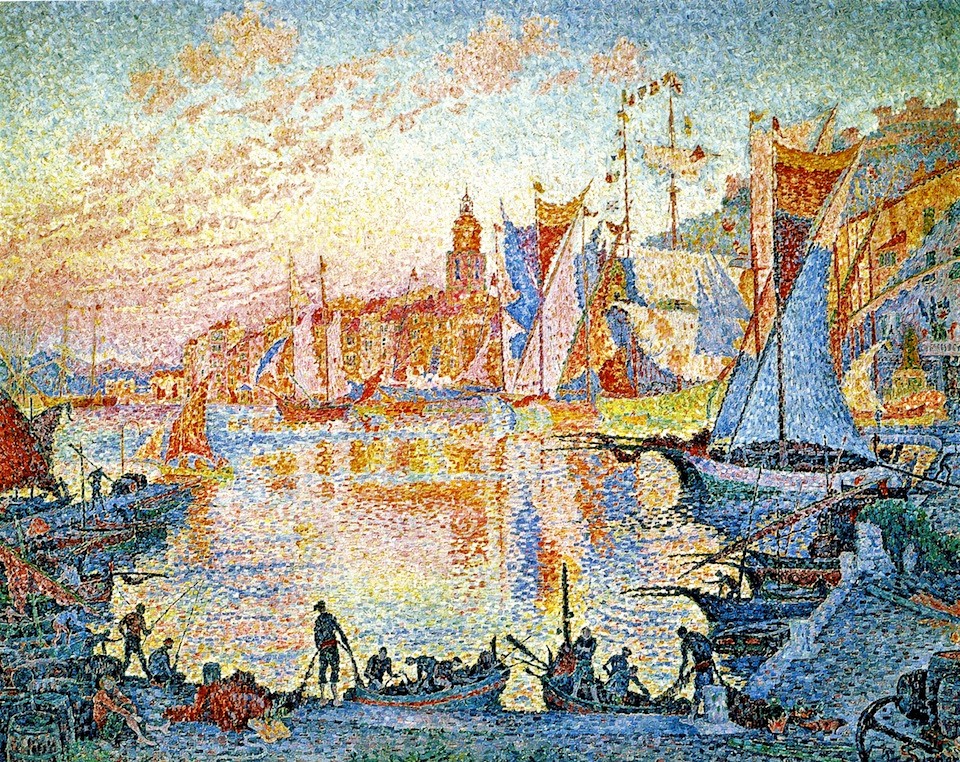
Between 1892 and 1914 Saint-Tropez was still a small fishing village bordered at the Mediterranean sea, with a gulf and a beach (iR9; iR3).
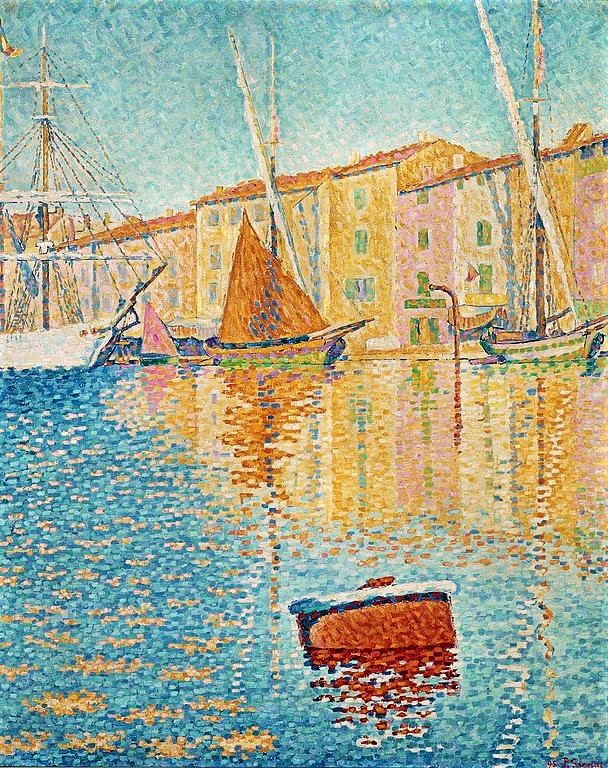
It has it’s own harbour (iR9), the lighthouse (iR9), with the quai Jean Jaurès (iR9) and behind it the Notre-Dame de l’Assomption (iR9), …
Elements that are depicted in paintings are: the Bertaud pine (R39,no75; R106,CR253+478; M96); the citadel (iR6);
In the distance one can discern the mountain range of the massif de Maures, to the north and west (iR3) and the Massif d’Esterel, to the north-east (iR3).
(R39,p172)
To the south-west there are the islands Îsle d’Hyères, Port-Cross and Île du Levant (iR9)
To arrive in Saint-Tropez by train, one first went to Hyères (iR9), then to La Foux (iR9) and then to Saint-Tropez (R419,p97).
Signac:
After the death of Seurat in 1891/03/29, Paul Signac would become the most important spokesman of neo-impressionism. In 1899/06 he published ‘D’Eugène Delacroix au néo-impressionnisme’, which was reissued in 1911 (R39,p308+312). Signac had been earlier at the Mediterranean, namely in Collioure in 1887 and Cassis in 1889 (R106,p43).
1892/05/06 Signac arrived at Saint-Tropez in his boat the ‘Olympia’. Signac rented ‘La Ramade’ from the painter Ker Xavier Roussel, a little furnished cottage, overlooking the sea and situated above ‘la plage des Graniers‘ (R106,p65; R39,p304/5; iR9). Around 1895/04 onwards Signac rented a larger villa ‘La Hune’, a bit higher on the hill, which two years later (1897/12/27) he bought (R39,p305+307). Signac also dwelled in a 3rd house (before 1895) called ‘Les Cigales’ (R176,p196).
Signac was invited by Cross to come to the Mediterranean (R419,p94).
Between 1892 and 1895 Signac developed neo-impressionism from Pointillism to Divisionism. He wrote (1894/10/03): “I am attaching ever greater importance to the purity of the brushstroke and I try to give it the utmost purity and intensity: it is this love of beautiful colour that makes us paint in this way, and not a taste for the point.” (R106,p58+60) 1895/07/05 he wrote that he was ‘in search of a freer technique while retaining the advantages of divisionism and contrast’ (R39,p208). The smaller, more subdued and systhematically applied point-like brushstrokes, were replaced by larger, brighter, more spontaneous mosaic-like brushstrokes.
Signac also began to paint large decorative paintings, with arabesk lines and depicting idealized anarchist landscapes, using elements from the Saint-Tropez landscape, like the Bertaud pine and the citadel in relocated compositions (till 1897) (R106,CR234+253; R39,p173+214+no63+75).
Signac would meet and paint with other neo-impressionists, post-impressionists and Fauves.
Signac also made trips in the Midi with other artists: with Camoin to Marseille (1906/07);
Signac would buy paintings of Les Fauves: of Matisse (1904), Camoin (1906) and Van Dongen (1906 +1908) (R106,p66).
1913/09/23 Signac moved with his lover Jeanne Selmersheim-Desgrange to a villa at Cap d’Antibes; he didn’t divorce Berthe Roblès and would divide his time between Antibes and Saint-Tropez (R39,p313-5).




Ker Xavier Roussel (1867-1944):
Ker-Xavier Roussel (probably) already lived in Saint-Tropez in the early 1890s. Roussel is namely known as member of the art-movement ‘Les Nabis‘ and his symbolist figure paintings. He also made (symbolist) landscapes and village views (with figures), but I could find one located in Saint-Tropez. (iR6; R534,p217-248)
Signac rented since 1892/05 ‘La Ramade’ from him (R106,p65; R39,p304/5; iR9) and in 1904 arranged that Matisse and Manguin could rent it (R39,p310).
January 1906 Ker-Xavier Roussel lived close to Signac and Maurice Denise would visit them (R39,p310).
Théo van Rysselberghe:
Théo Van Rysselberghe accompied Signac with his boattrip in the Olypia to Saint-Tropez in 1892. He would return often: in the summer of 1896 (R39,p306); …
With his monumental painting ‘L’heure embrasée‘ (iR6) made in Saint-Tropez 1896/97 he distanced from the neo-impressionist principles, which let to disagreements with Signac (1896/07). (R39,p307+199;R68,p140-144).
Henri-Edmond Cross (1856-1910):
Henri-Edmond Cross had established himself 1891 in Cabasson, at the foot of Fort Brégançon, 43km south-west of Saint-Tropez (iR9; R39,p172). He had invited Signac to come to the Midi (R39,p172+174;R419,p94). They would often paint together and the Mediterranean shores, anyway in Marseille (1898/10). They clearly influenced each other. (R39,p174+308)
Cross visited Saint-Tropez, anyway 1904/09 and 1906/08 (R106,p66;R39,p310).
In 1906 Cross lived in Saint-Clair and had contact with Manguin, who stayed in Cavalière (R176,p200).
1910/05/16 Henri Edmond Cross died in Saint-Clair, 35km west of Saint-Tropez. Signac had visited him twice a week during his illness. (R39,p312; iR9).
Maximilien Luce (1858-1941):
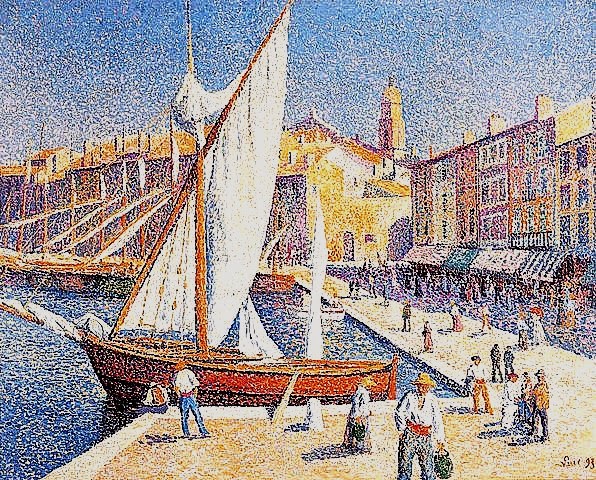
Maximilien Luce first came to Saint-Tropez July 1892, two months after Signac had setteld here. He would return in 1893 and several years afterwards till 1918 (R306,p118+no.14+15;R419,p95).
Henri Matisse (1869-1954):
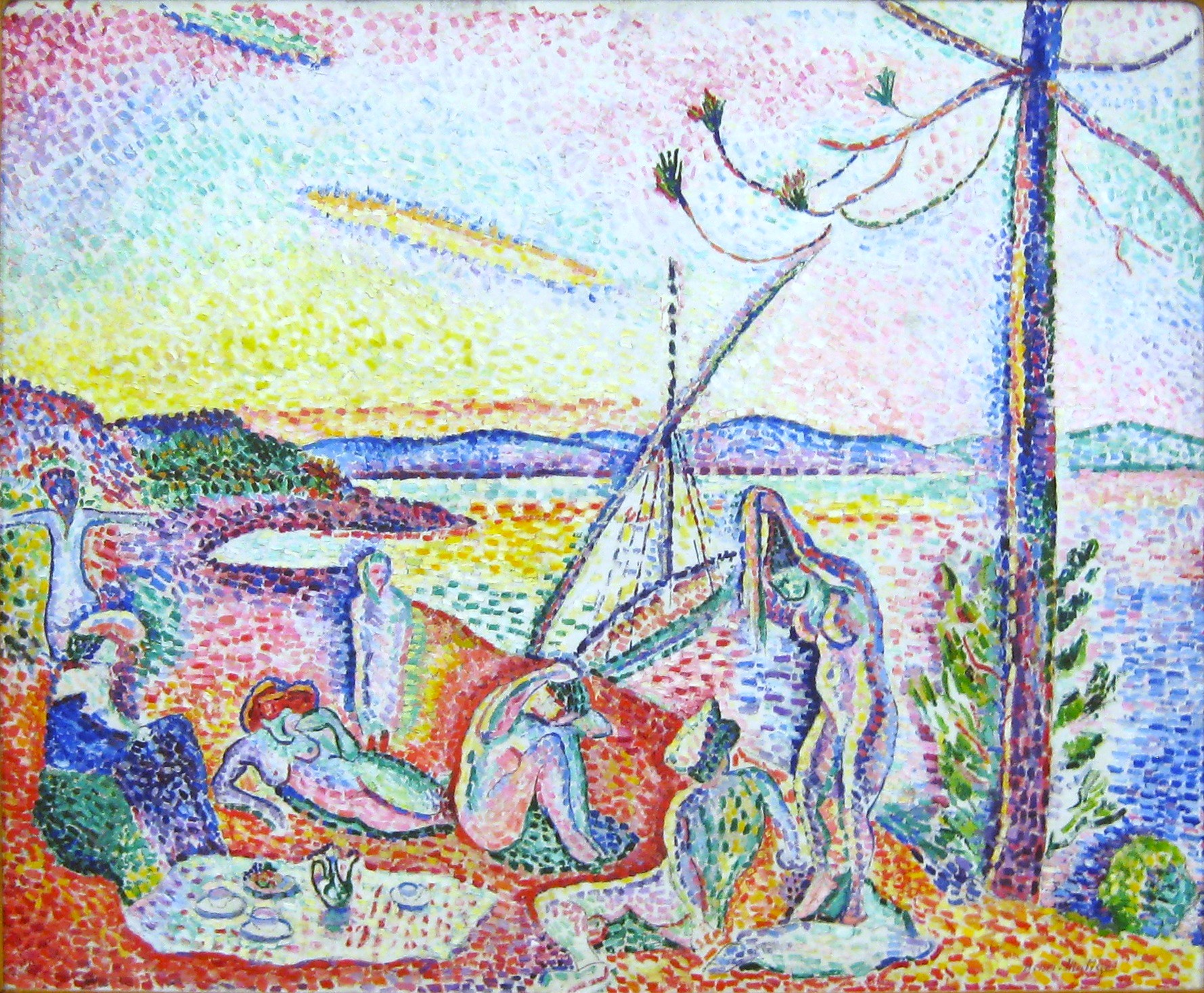
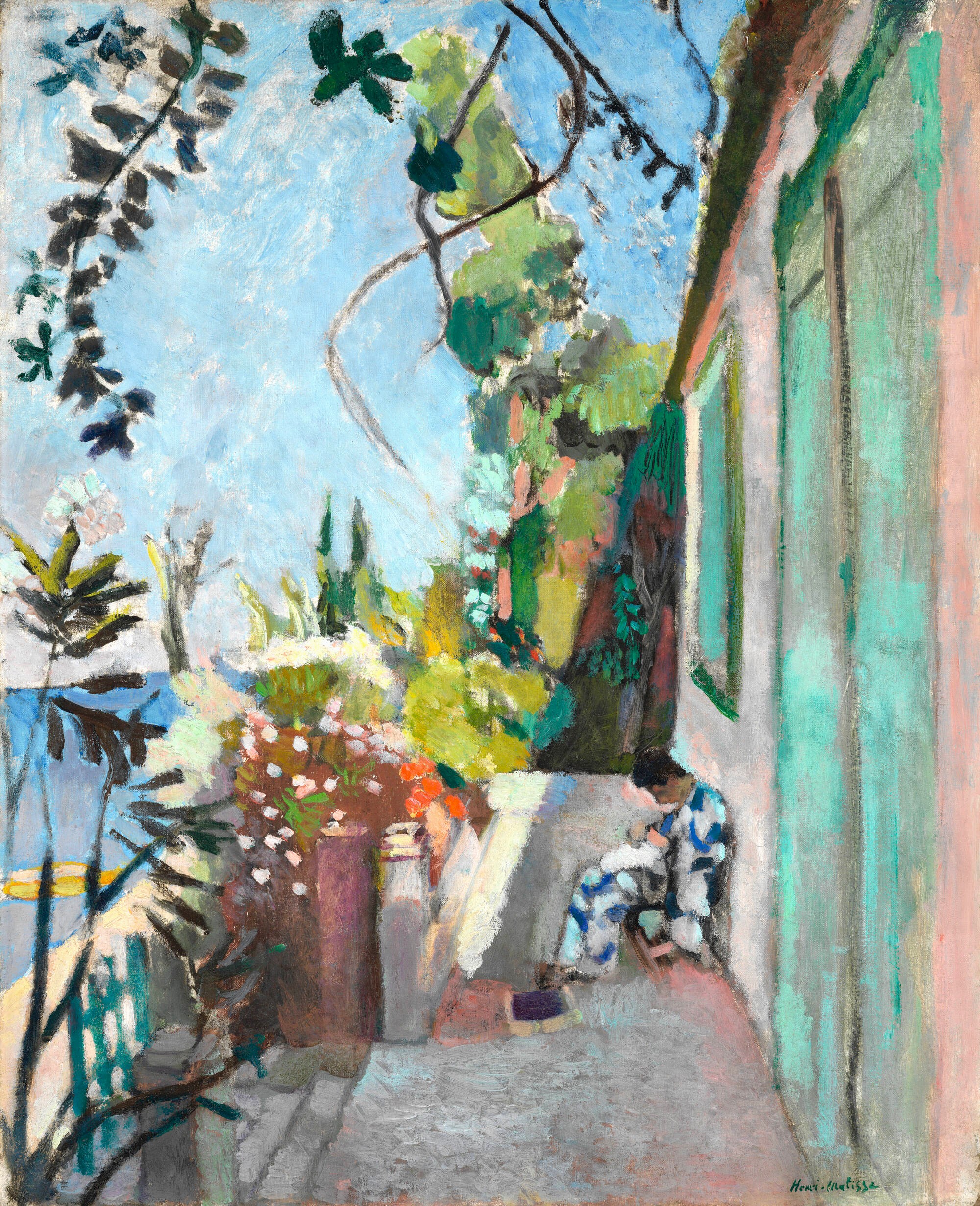
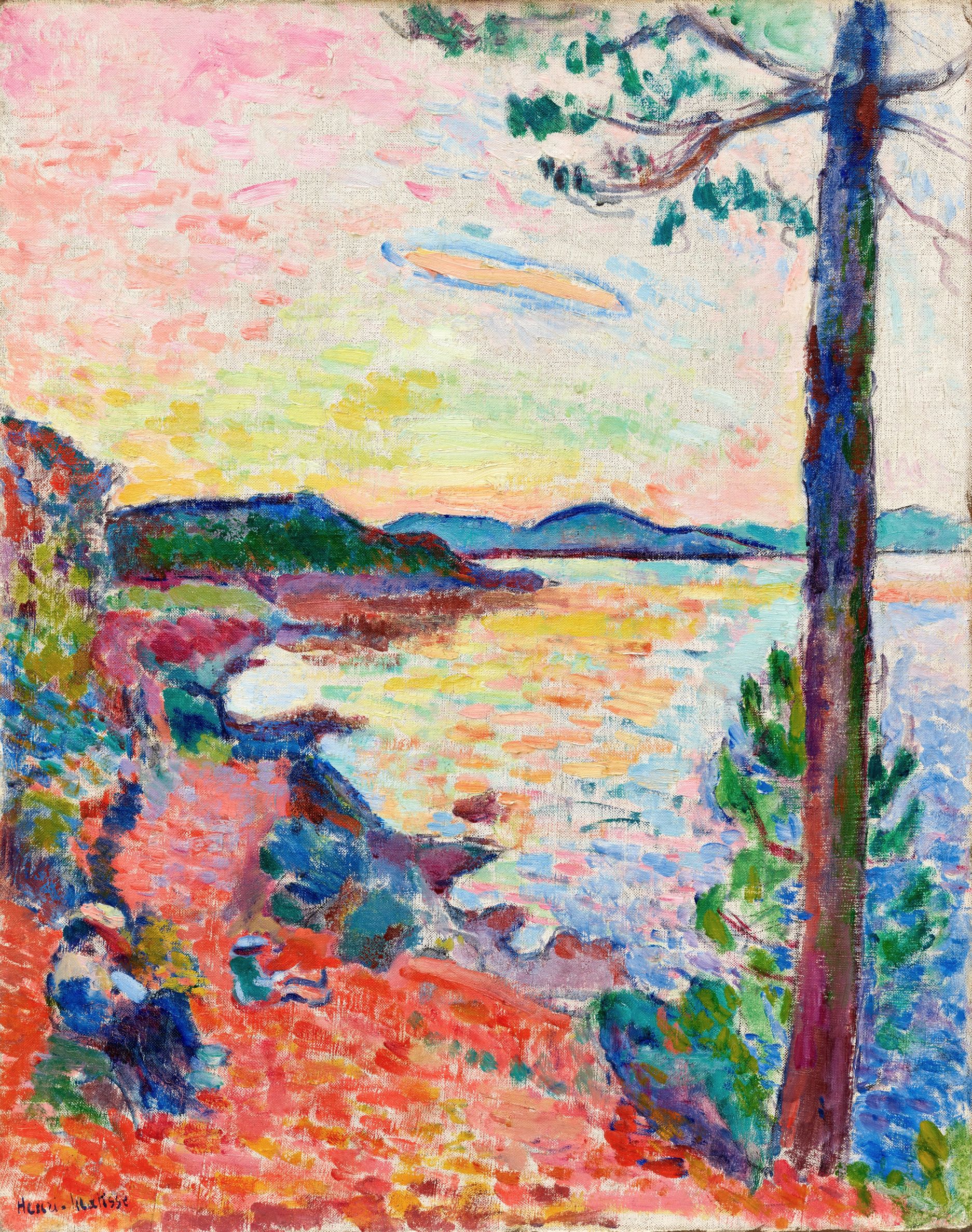
February 1904 Signac met Henri Matisse (1869-1954), who would visit him in Saint-Tropez, from June till late September, and stayed at ‘La Ramade’* (R39,p310;R176,p196). Here he would start at the Plage des Canoubiers (iR9) his famous ‘Luxe, calme et volupté’↑, a tittle derived from a poem of Baudelair; a more allegoric or symbolist title, than a representation of a real landscape (iR3; R419,p97). Matisse exhibited this painting at the Salon des Indépendants of 1905, together with 2 other views of Saint-Tropez, including maybe a painting of the same spot and ‘The Terrace’ (of ‘La Ramade’)↓.
Philippe Cros (wrongly) states that Matisse began practicing a divisionist technique that summer (R419,p97). Cachin states that Matisse experienced since 1899 with Pointilism, but only in this summer of 1904 applied the divisionist method more systhematicly (R106,p64). Louis Vauxcelles wrote in his review 1905/10/17 in Gil Blas ‘He asks of Pontillism more vibration and brightness’ (iR40).
Note*: Philippe Cros writes that Matisse stayed at ‘La Cigale’, just below Villa la Hune (R419,p97).
Note**: WikiPedia adds He first adopted the style after reading Signac’s essay “D’Eugène Delacroix au Néo-impressionisme” in 1898 (sic; published 1899/07) (iR3).

Manguin:
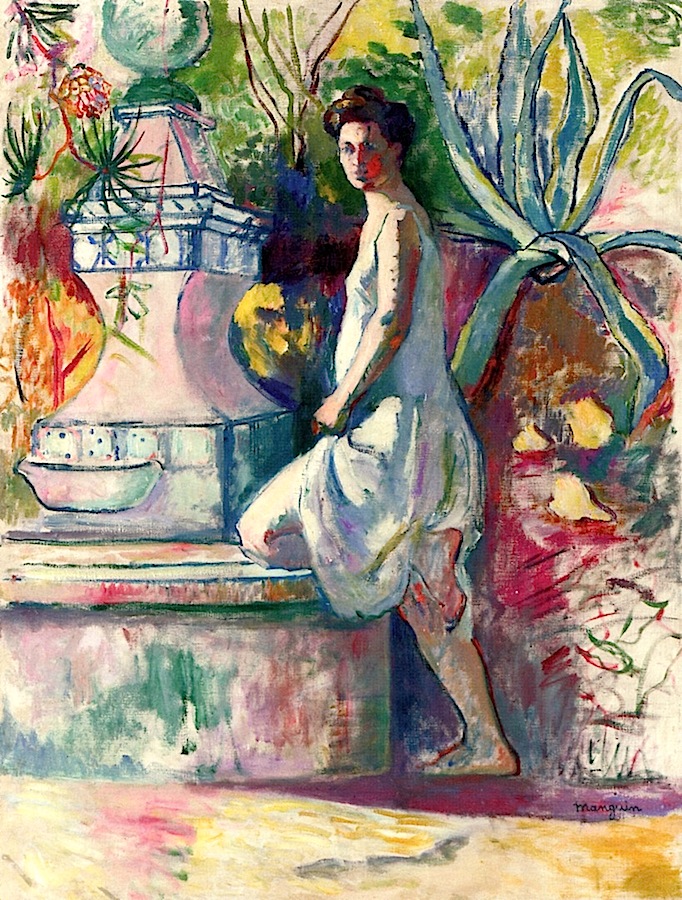
1904/10/04 onwards Henri Manguin would stay 2 weeks at ‘La Ramade’ and would paint a dozen works (R176,p92-95+184+196;R39,p308+310).
In the summer of 1905 (May till September) Manguin and his family stayed at the Villa Demière on the hills of Malleribes, a 20 minutes wlak from the centre of Saint-Tropez. In this period he made trips to Menton (iR9) and Côte d’Agay (iR9). Manguin made almost 50 art-works. 5 of them he showed at the famous Salon d’Automne of 1905. In these months Jeanne was pregnant; 1905/11/13 she gave birth to Lucile. (R176,p197) Marquet, who stayed at the Hôtel Sube near the harbour (iR9), visited them on 9 June. Camoin and Marquet did meet at the Bar des Roses.
Manguin would spent the summers in Saint-Tropez in the Villa Demière every year up to 1908.
1907/05/13 onwards Manguin stayed at the Villa Demière for half the year, where he made (just) about 30 art-works (R176,p201).
Late 1919 Manguin rented the villa L’Oustalet (from Bonnard), which he bought in 1923. (R176,p198)

1905:
In the summer of 1905 Matisse, Manguin and also Charles Camoin (1879-1965) and Albert Marquet (1875-1947) visited Signac (R39,p310).
Henri Lebasque (1865-1937):
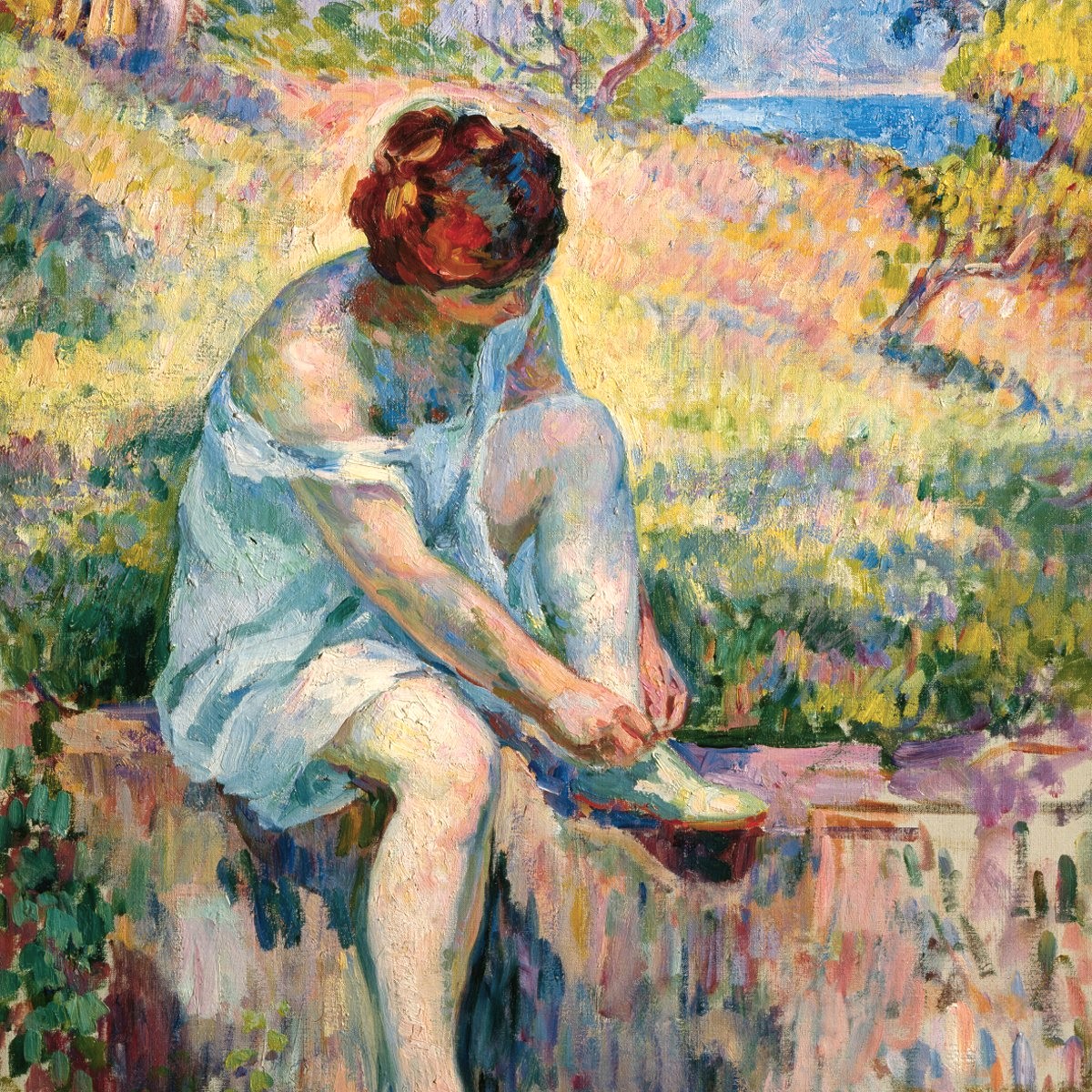
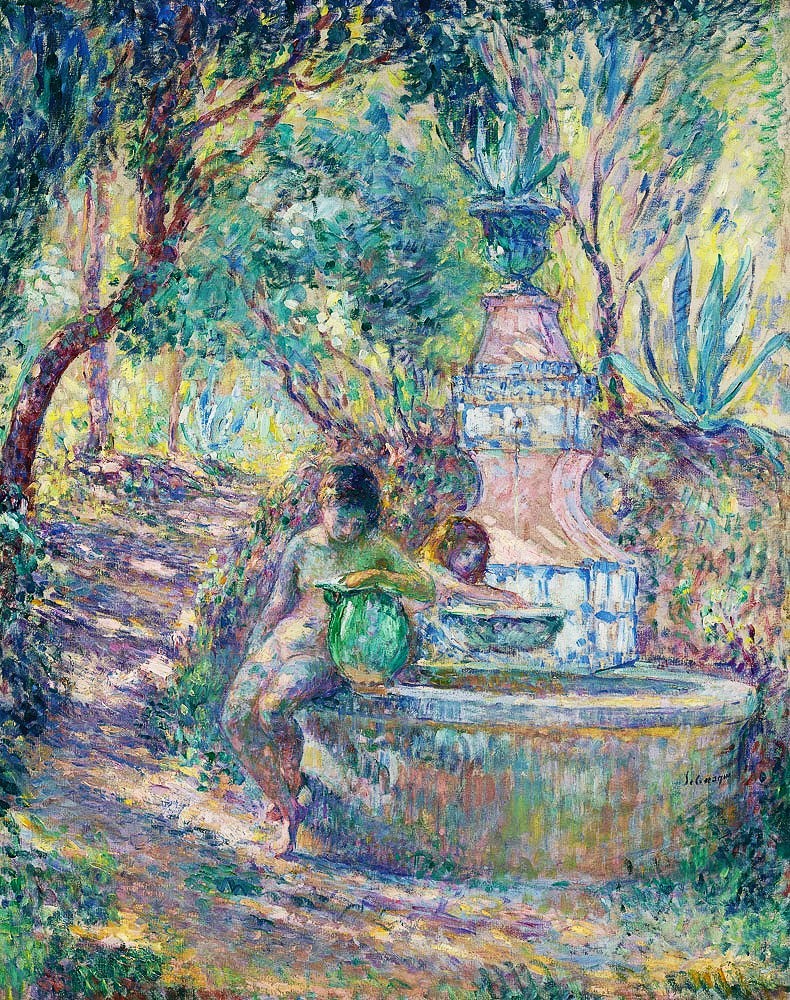
In 1900 Henri Lebasque became the neighbour of Signac at the rue La Fontaine (in Paris). Helped by Manguin he discovered Saint-Tropez in 1906 and stayed from May till September in the Villa Demière. He returned in the summer of 1909. He also travelled in other parts of the Midi, in the summer of 1911 he stayed with Manguin in Sanary-sur-Mer (iR9). (R307,p379;R176,p201).
Lebasque made almost 100 pictures in Saint-Tropez (R307,CR1123-1218).


Other connections:
Bonnard and Vuillard also came to Saint-Tropez (in the 1890s?) (R419,p95).
Marquet and Camoin stayed in the early summer of 1905 in Saint-Tropez in the Hôtel Sube (iR9). The 12th of July they left for Agay (iR9) and Anthéor (iR9).
André Dunoyer de Segonzac (1884-1974) rents in the summer of 1908 (probably) ‘La Ramade’ and has contacts with Signac (R39,p311).
1909/01 Francis Picabia (1879-1953) makes neo-impressionist paintings in Saint-Tropez (R39,p311). Several other artists painted in Saint-Tropez, like Auguste Pégurier (1907), Jean Peské (1895) and Francis Picabia (1909) (R419,p92-111).
Saint-Tropez, the bay:
x


Saint-Tropez, the harbour:
x



Saint-Tropez, place des lices:
(iR9).


Pine trees:
x


Other pictures of Saint-Tropez:
x


Musée de l’Annonciade:
Saint-Tropez has the Musée de l’Annonciade (M219).
Sources:
My main sources are:
Cachin, Francoise and Marina Ferretti-Bocquillon. Signac: Catalogue raisonné de l’oeuvre peint. Paris, 2000. (=R106).
Ferretti-Bocquillon, Anne Distel, John Leighton and Susan Alyson Stein: Signac 1863-1935. The Metropolitan Museum of Art, New York 2001. See digital version at libmma.contentdm.oclc.org/161820. (=R39)
Ferrier, Jean-Louis: Fauvismus; die Wilden in Paris. Terrail, Paris, 1992 (=R533).
Serrano, Véronique (ed.): Manguin or the exaltation of colour; a fauve in the Bonnard museum. Cannet, 2015. (R176)
Fourcade, Dominique, Isabelle Monod-Fontaine, Claude Laugier & Éric de Chassey: Henry Matisse, 1904-17. Exhibition catalogue Centre Pompidou, Paris, 1993 (=R216).
Wilson, Sarah: Matisse. Groningen, 1991 / 1993 (=R284).
Russell, John: De wereld van Matisse (1869-1954). Het Parool (Time/Life), Amsterdam, 1969 / 1971 (=R562).
Cros, Philippe: The painters of Provence. Flammarion, Paris, 2000 (=R419,p92-111).
Additional sources are:
See links for general references (=R), references to internet sites (=iR), for musea (=M). For other additional references (=aR) see below. See links for practical hints and abbreviations and for the subscription of the paintings.
For further reading:
- x
additional references (=aRx):
- x
Recommanded citation: “Meta-Impressionism: Fauvism. Last modified 2026/10/15. https://www.impressionism.nl/saint-tropez/”
Note: additional info and pictures will be added.