Impressionism: a historical reconstruction
The 8th ‘impressionist’ exposition
1886
extended overview
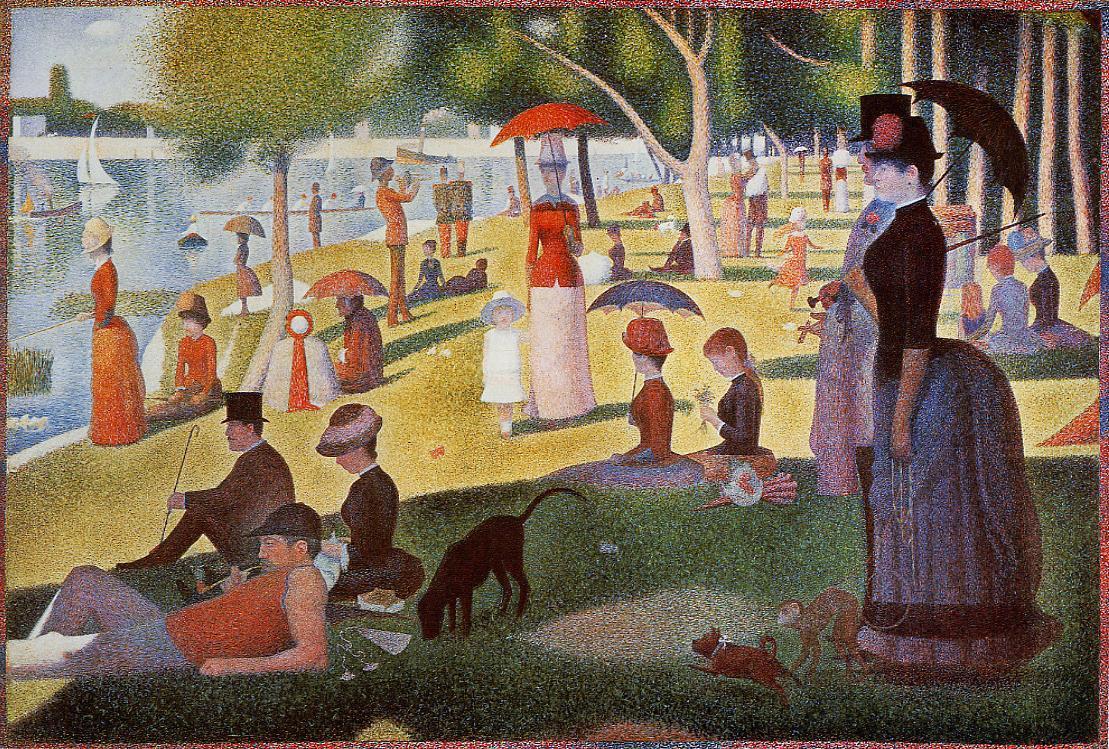
1886: the last ‘impressionist’ exposition:
The 8th ‘impressionist’ exposition held in 1886 in Paris had 17 +1hc = 18 partakers exhibiting about 301 works (see slideshow), which is much more than the 246 numbers of the (inaccurate) catalogue. Just half of the art-works exhibited were oil paintings. Comtesse Rambure was mentioned in a review, but not in the catalogue (=hc) (R5,p151). Lucien Pissarro (32x), Morisot (29x), Camille Pissarro (28x) and Rouart (27x) showed the most works. 5 of the 18 partakers were newcomers. There was one room for ‘Neo-Impressionist’ painters using the new pointillist technique. Namely Un Dimanche à la Grande-Jatte↑ of Seurat was reviewed by the art-critics. Rouart showed 23 aquarelles, 11 depicting Venice. Redon displayed 15 drawings in a separate corridor (R2,p439). Degas exhibited a serie of nude pastels. Camille Pissarro and Degas were the principal organizers (R2,p421; R5,p151). Guillaumin, Cassatt and Morisot also had an active role (R2,p423-425;R44,p140;R68,p105). This exposition wasn’t only independent of the Salon, but also of the art-dealers who controlled the art-market (R2,p421). Monet and Renoir choose to exhibit at the Georges Petit gallery, they were joined by Raffaëlli against who in 1881 and 1882 was so much opposition (R2,p422). The ‘Salon des Indépendants‘ had ‘stolen the term ‘indépendants’, so this exposition again had the neutral term ‘8e exposition by… (names of the partaking artists)’.


What happened between 1882-1886?
1882/11/04 Monet and Sisley discussed the future of the group exhibitions. Monet wanted two exhibitions a year, one for landscape paintings and one for figure paintings. Sisley was content with the idea of Durand-Ruel to organise solo-exhibitions (R5,p130). 1882/12/23 Monet and Pissarro considered the gallery of Georges Petit suitable for a new exposition (R2,p425). In 1883 Durand-Ruel held several solo exhibitions. In 1884 the first exhibitions of the Salon des Indépendants were held. In the years 1883-85 there were several international and regional exhibitions wherein several Impressionists joint, partly organized by Durand-Ruel. The question remains: With so many alternatives why did they organize their own exposition again in 1886?
The ‘Salon des Indépendants‘ who started in 1884 ‘stole’ the term ‘Indépendants’ from the Impressionists who called their exposition that way in 1882 and more or less in 1881, 1880 and 1879. Thus leaving the Impressionists with the term ‘impressionists’ whereas the term ‘Intransigeants’ already had faded out, see. Ward hardly mentions this fact and often calls the Impressionists ‘independents’ (R2,p421-442). Still in 1886 the artists themselves used again the neutral term ‘8e exposition by… (names of the partaking artists)’.


1886: what preceded?
Plans for the 8th ‘impressionist’ exhibition started October 1885 (R2,p421). Caillebotte, Cassatt, Degas, Monet, Morisot, Pissarro, Renoir and Sisley were all behind the project of a group exhibition (R2,p423). They didn’t want Durand-Ruel to organize again a group show. But 1885/11/09 Monet accepted to exhibit with Georges Petit, which implicated that he did not participate in an Impressionist group show (R2,p422). Still he continued corresponding with Pissarro about such an exhibition (R2,p423).
Pissarro (stimulated by Guillaumin) had lobbied to include Gauguin (again), Seurat, Signac and his own son Lucien Pissarro to the group of participants (R2,p423; note: Adler suggests that Guillaumin and others were opposed to Seurat and Signac, R89,p52). Guillaumin later on introduced Redon and Schuffenecker, but abandoned the idea of introducing Dubois-Pillet and Hayet (R2,p425+440;R1,p523). Guillaumin lobbied (with Degas, Rouart and indirectly Morisot) to reinforce the rule not to submit to the Salon and added the rule not to exhibit with an art-dealer like Georges Petit (R2,p423;R89,p52). Degas invited Cassatt, Zandomeneghi, Rouart, Tillot, Forain, Marie Bracquemond (R2,p425).

1886, the organisation / special features:
Pissarro and Degas were the principal organizers. Guillaumin, Cassatt, Morisot (and her husband Eugène Manet) also had an active role. Cassatt, Degas and Morisot guaranteed the costs of the exposition (R44,p26). This exposition wasn’t only independent of the Salon, but also of the art-dealers who controlled the art-market. Monet and Renoir choose to exhibit at the Georges Petit gallery, they were joined by Raffaëlli against who in 1881 and 1882 was so much opposition (R2,p422).
The exhibition was held at 1, Rue Lafitte in Paris (Angle du Boulevard des Italiens) in a suite of five rooms above restaurant Doré from the 15th of May till the 15th of June. There was one room for ‘Neo-Impressionist‘ painters using the new pointillist technique, including Seurat, Signac, Camille and Lucien Pissarro. It was dominated by La Grande Jatte of Seurat, a painting measuring more than 2 by 3 meters. This room was a long and narrow gallery and several works hung quite low. Rouart showed 23 aquarelles, 11 depicting Venice. Redon displayed 15 drawings in a separate corridor. Degas completed the hanging of his (nude) pastels during the exposition.
The inaccurate catalogue, that counted 246 numbers. In reality about 301 art-works were exhibited. Lucien Pissarro (32x), Morisot (29x), Camille Pissarro (28x) and Rouart (27x) showed the most works.
Sources: R2,p19 +421 +423-425 +427 +433 +439 +441 +443 ; R3,p257; R5,p149 +151; R44,p140; R68,p105; R90I,p421; R312,p41.

1886, the partakers:
The 8th ‘impressionist’ exposition counted 17 +1hc = 18 partakers. Comtesse de Rambure seems to have exhibited (R5,p151) outside the catalogue (=hc). 5 of the 18 partakers were newcomers, namely Lucien Pissarro, Redon, Schuffenecker, Seurat and Signac. The only 5 partakers who joined all the last 4 exhibitions from 1880-1886 were Gauguin, Guillaumin, Morisot, Camille Pissarro and Vignon. The following 6 partakers hadn’t partake the last time in 1882, because of a dispute: Degas, Cassatt, Forain, Rouart, Tillot and Zandomeneghi and now joined again. Marie Bracquemond also exhibited, here husband Félix was rejected because he exhibited at the Salon.
1886, the used techniques:
See link for an overview of the used techniques.
18 partakers exhibiting about 301 works (see slideshow).
Probably 153 of the exhibited art-works oil paintings (about 50% of the total amount).
5 partakers exhibited 47 aquarelles (and gouaches) (15,6%): Marie Bracquemond (2x); Morisot exhibited a serie of at least 2, but I assume 6 aquarelles (no.93); Camille Pissarro (3 gouaches); Lucien Pissarro (at least 13!); Rouart (23x!).
8 partakers exhibited 39 pastels (13%): Cassatt (1x); Degas (15x!?, see nos.14-28); Forain (?no.33); Guillaumin (4x); Morisot (?2x); Camille Pissarro (7x); Schuffenecker (no.174); Zandomeneghi (8x).
7 partakers exhibited about 31 drawings (10%): Marie Bracquemond (no.1); Forain (?no.40); Morisot exhibited a serie of at least 2, but I assume 6 drawings (no.92); Redon 15x!, though this was not indicated in the catalogue (nos124-138); Seurat (3x); Signac (3x); no.217 of Tillot contained a collection of studies with Chinese ink; at least 2, maybe more.
2 partakers exhibited 22 engravings (7,3%): Camille Pissarro (8x); Lucien Pissarro (14! woodcut engravings).
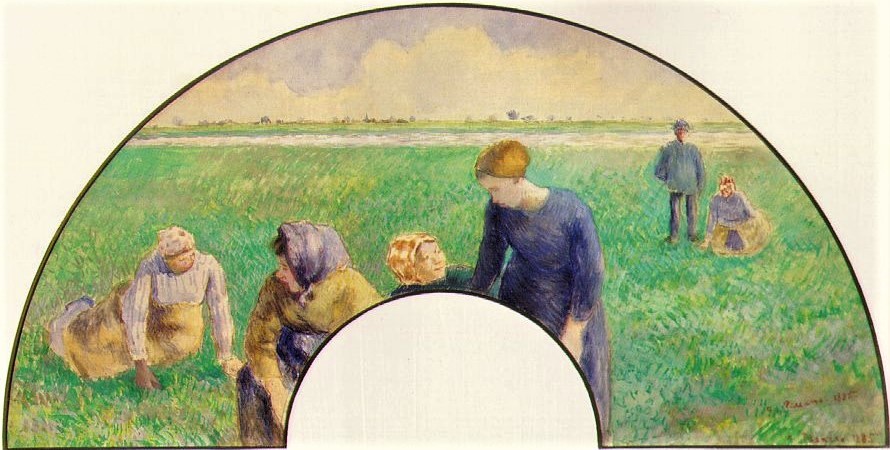
Morisot exhibited a serie of at least 2, but I assume 6 fans (no.94); Camille Pissarro exhibited 1 (no.106); probably Redon also exhibited a fan outside the catalogue (=hc). So in total there were 8 fans exhibited (3%).
Gauguin exhibited 1 sculpture outside the catalogue (<1%).
Some of the above mentioned art-works can also be seen as applied art. This applies to the above mentioned fans. And also to the aquarelles (no.116) and woodcut engravings (no.122) of Lucien Pissarro that were bookillustrations.


Was this an impressionist exposition?
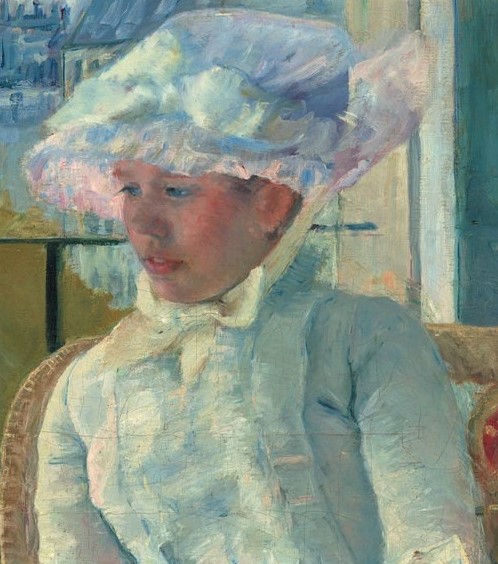
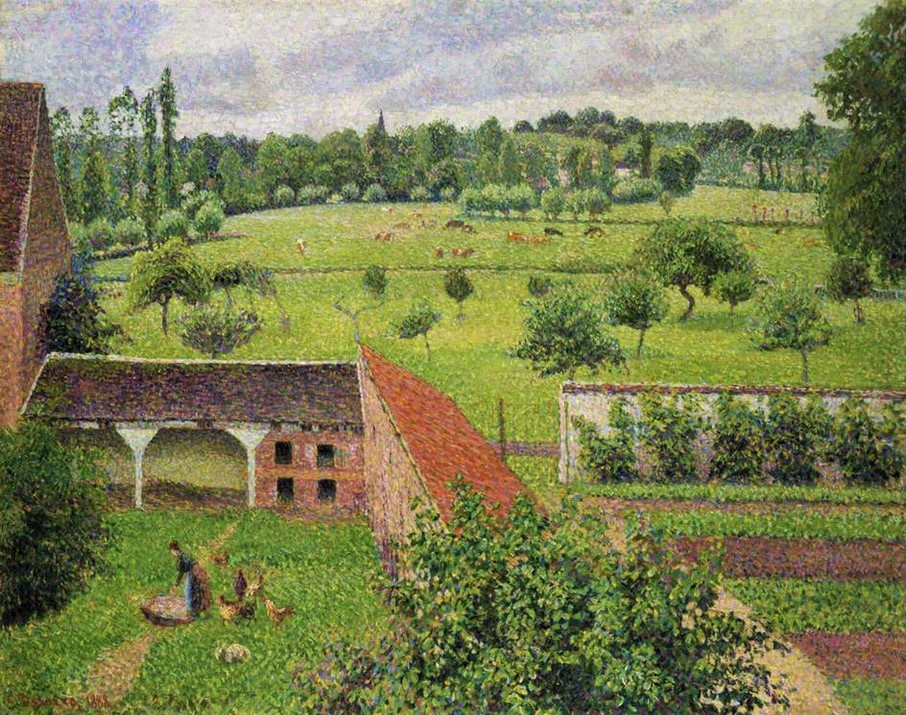
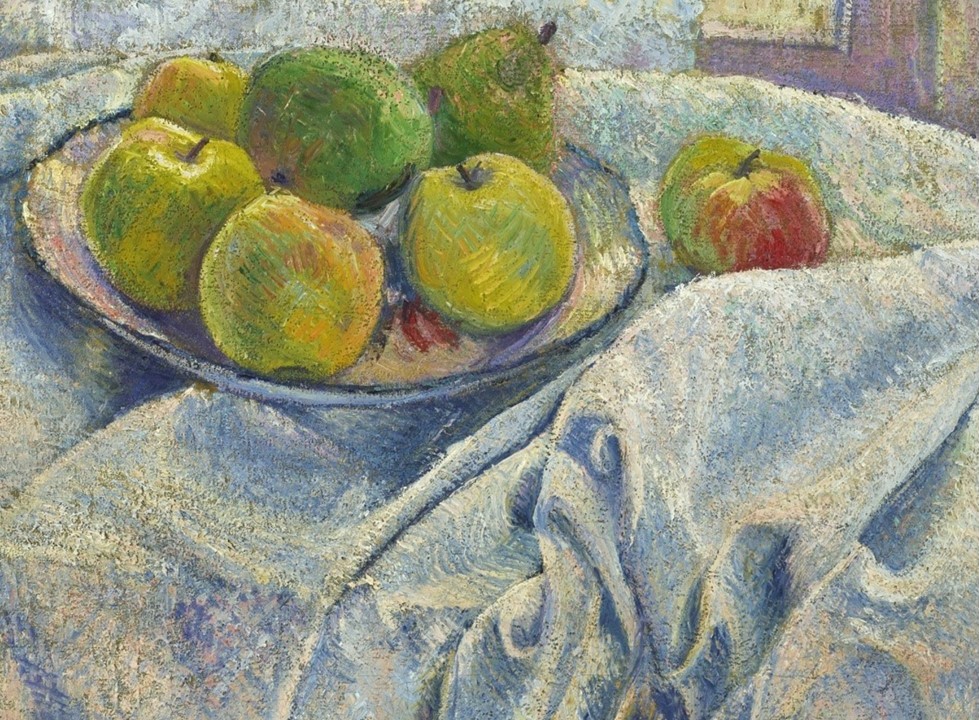
When we see Impressionism as a painting style, was this exposition in 1886 than an impressionist exposition? No, in the sense that many works were no oil paintings and it is hard to discern an impressionist painting style in etchings and drawings and partly also in watercolours. Yes, in the sense that many beautiful impressionist landscapes were exhibited, namely by Gauguin, Guillaumin and Vignon and a few by Morisot, Camille and Lucien Pissarro, Rouart, Schuffenecker and Signac. No, in the sense that many works were figure paintings. Yes, in the sense that many figure paintings were depicted in a spontaneous way and with beautiful colours. Yes, in the sense that Degas, who didn’t want to be called an Impressionist, used juxtaposed strokes in his pastels. Also Zandomeneghi partly used this technique. No, in the sense that several partakers showed pointillist paintings, namely by Seurat, and a few by Signac and Camille Pissarro. No, in the sense that Redon showed drawings that stand closer to Symbolism. Highlights of the impressionist painting style, we find in the rendering of white in a kaleidoscope of colours, namely the white dress of Cassatt (no.7)↑, the white tablecloth of Lucien Pissarro (no.114)↓ and the white snow of Schuffenecker (no.169)↓.

1886, the lenders:
Several works were loans: of Cassatt (4 out of 7), of Degas (7 out of 15), of Forain (8 out of 13+1hc=14), of Guillaumin (4 out of 21), of Lucien Pissarro (about 5 out of 32), of Redon (6 out of 15), of Rouart (5 out of 27), of Seurat (3 out of 9), of Signac (7 out of 18) and of Vignon (4 out of 17). So, in total there had been 53 loans, which is about 18% of all the 301 works exhibited.
One larger lenders was the unknown ‘M’ who did lend 5 works of Rouart (no.139+142+144+146+163). All the others were many small lenders.


1886, reviews:
Many art-critics who sympathised the Impressionists didn’t review the show. Only in the last weeks new critics, like Fénéon, paid ample attention to the large ‘La Grande-Jatte’↑ painting of Seurat and the other paintings in a pointillist style. First these works were more neglected (R2,p427/8). Conservative critics still ridiculed with quotes like: ‘executed with a broom’ and ‘colour blindness’ (R2,p428). Marie Bracquemond, Rouart, Tillot and Vignon were ignored (R2,p430).


1886, the results:
I couldn’t find any information about the costs and the profits of the 8th ‘impressionists exposition. Probably it was rather successfull, because half of the pictures had been sold (R2,p440). Camille Pissarro had offered all his works for sale, but half of the works of Cassatt, Degas and Forain were loans (R2,p425). Cassatt, Degas and Morisot had guaranteed the costs of the exposition (R44,p26). The number of visitors is a bit obscure. Paul Alexis reported an average attendance of 450 visitors a day, whereas in early June Pissarro complained that there were scarcely any visitors at all (R2,p427).


Why did the ‘impressionist’ expositions stop after 1886?
Ward mentions there were some efforts to continue the group shows. But the Neo-Impressionists found an alternative with the Salon des Indépendants (R2,p426) (and also with les XX in Brussels) , though Gauguin refused to join them (R2,p430). At first Pissarro also felt for this Salon des Indépendants, but was dissuaded by Degas, Durand-Ruel and others (R2,p440). He together with Morisot and Sisley accepted the invitation of the co-organizers Monet and Renoir to exhibit with Georges Petit, the dealer they so keenly wanted to be independent of in 1886 (R2,p426). Degas refused to join and simply stopped promoting the exhibition of his works (R2,p427). Many of the Impressionists continued to show their works at several art-dealers and at several exhibitions in Paris and regional and international exhibitions, see other exhibitions and see art-dealers. For many of them the Salon (now organised by the Société des Artistes Français = SdAF) had lost his status of the most important platform to represent their works (R2,p421/2). Still Sisley would exhibit frequently at the Salon de la Société nationale des Beaux-Arts, an independent successor of the Salon, from 1890 until his death in 1899, see.

General sources:
My main sources are Moffett (1986=R2=aR1), Berson (1996=R90), Dayez (1974=R87=aR2), Patry/Robbins (2024=R410), Rewald (1973=R1), Walther (2013=R3), Roe (2006=R4), Denvir (1993=R5), Monneret (1978-81=R88), Adler (1998=R89). See the link for other general References (=Rx) and to the internet references (=iRx). See here below for additional references (=aRx). See links for practical hints and abbreviations and for the subscription of the paintings.
Additional references (=aRx):
- archive.org//t7cr6bg0d (Online version of Moffett: The New Painting, 1986 =R2=iR19)
- culture.gouv.fr//1886 (extended article on the 8th ‘impressionist’ exposition; =iR424)
- culture.gouv.fr//bibliography (overview used sources with links to online versions; =iR424)
- www.youtube.com//art_101_1886 (video on the 8th’impressionist’ exposition by Mr. Burgher with extended info, beautiful pictures and irritating clips
- magrasku.de/achte_impressionisten-ausstellung (page in German on the 8th ‘impressionist’ exposition; =iR59)
- commons.wikimedia.org/eighth impressionist exhibition (3 pictures exhibited at the 8th ‘impressionist’ exposition; =iR6)
- impressionistarts.com/eighth-impressionist-exhibition (webpage on the 8th ‘impressionist’ exposition; =iR374)
Recommanded citation: “Impressionism, a historical reconstruction: The 8th ‘impressionist’ exposition in 1886; extended overview. Last modified 2026/04/06. https://www.impressionism.nl/8th-impressionist-exposition-1886/.”
Note: More info will be added.