Impressionism: a historical reconstruction
The 2nd ‘impressionist’ exposition
1876
extended overview
The 2nd ‘impressionist’ exposition:
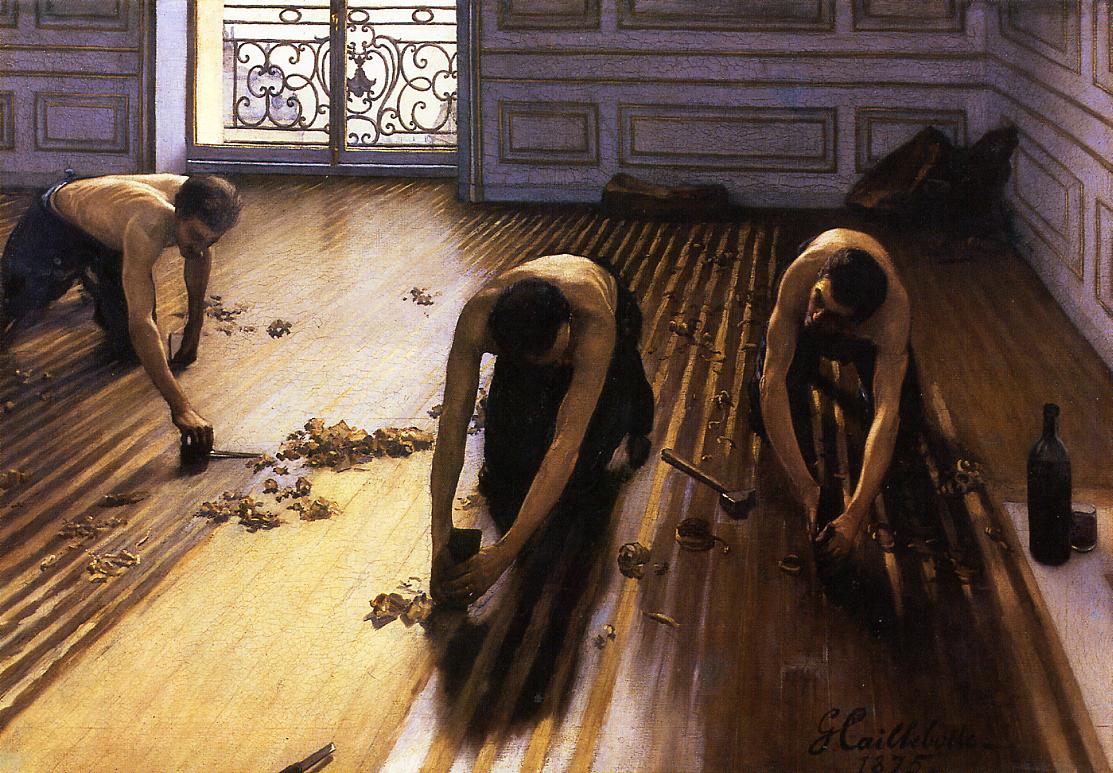
There were 19 partakers showing about 298 art-works, which is more than the 252 catalogue numbers. (See slideshow.) Officially it was called the ‘2e exposition de peinture‘. In the reviews they were equally called ‘impressionists‘ and ‘intransigeants’. Caillebotte was an important newcomer and one of the organisers. Lepic was a sort of guest of honour, showing far out the most (49) art-works, more than 16% of the whole. Many etchings and art-works in other techniques were exhibited. Renoir showed paintings in a mature Impressionist style. Faure and Chocquet were important lenders.
On this page you will find information on the organisation, the partakers, the used techniques, the lenders, the reviews and the results of the 2nd ‘impressionist’ exposition held in 1876 in Paris.
Note: in the links of the artists I sometimes refer to the main page on this artist, sometimes to the works exhibited and sometimes to the account, see also the overview of partakers.


1876, the organisation:
Caillebotte, who joined the ‘impressionist’ expositions for the first time also was one of the principal organisers, together with Degas, Renoir and Rouart. The catalogue indicates, that it was held in April. Some reviews mention the exposition opened the 1st of April (Rv2;Rv34). But, Degas made clear that it already opened Thursday the 30th of March*. This date is affirmed in several reviews (Rv1+3+5+32+43+6+19). Probably it was a pre-opening for selected people on which ’the complete parisian press was present’ (Rv11). Some early reviews mentioned ‘The exhibition that is bound to open…’ (Rv24+28+51). So, probably the official opening was still to come on the 1st of April. It is not clear when the exposition stopped. The catalogue just mentioned April. Pothey (1876/03/31 =Rv6) remarked ‘during a month’. It is well possible that the exposition ended Sunday the 30th.
In a footnote Alfred de Lostalot (1876/04/01; Rv10) remarked that the catalogue hadn’t been written yet. (R90I,p87) When we read the reviews with this knowledge more precisely, than we see that many reviews have been written in these early days (despite the publication date); in total 25 of 60 (=42%).
The exposition was held in the galleries of Durand-Ruel spread over 3 large rooms, 11, Rue le Peletier** in Paris.
Above the door of the exhibition “impressionnistes” was put (Rv27).
Note*: See the letter of Degas to Berthe Morisot late March (Reff 2020, letter no.56 =R433III,p39). Denvir writes the exposition took place from the 11th of April till the 9th of May (R5,p96).
Note**: the regular entrance was at the rue Lafitte (Rv16).
Sources: reviews; R2,p146+158+160; R90I,p47; R433III,p39; iR417.

1876, the partakers:
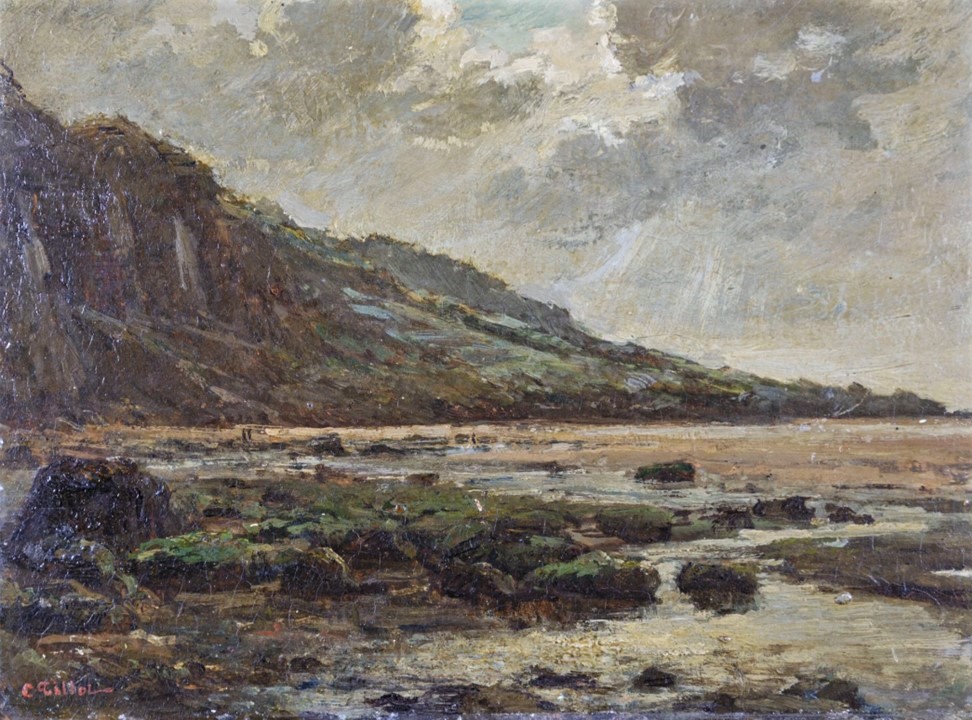
The second impressionist exposition had 19+1hc-1=19* partakers showing about 298 art-works, which is more than the 252 catalogue numbers. (See slideshow.) Apparently Mme de Rambure exhibited without being in the catalogue (R102,p275), but probably she was the same as ‘Jacques François‘, a pseudonym for an unknown woman, who was a newcomer. Guest of honour was Ludovic Lepic, who had participated in 1874 and now showed the most art-works (49=16,4%). Other guests of honour were the newcomers Marcellin Desboutin (20 art-works) and Alphonse Legros (25 art-works). All 3 showed many etchings. The most important new-comer was Caillebotte, who also was one of the principal organisers. Other new-comers were Jean-Baptiste Millet and Charles Tillot (though he stayed unknown, he joined 6 of the 8 expositions). Edgar Degas, Claude Monet, Berthe Morisot, Léon Ottin and Auguste Renoir showed many art-works. Other partakers were: Edouard Béliard, Pierre Bureau, Adolphe-Félix Cals, Leopold Levert, Camille Pissarro, Henri Rouart and Alfred Sisley. 7 of the 19 partakers would stop exhibiting at the ‘impressionist’ expositions: Béliard, Bureau, Desboutin, Legros, Lepic, Jean-Baptiste Millet, Léon Ottin.
In a letter late March to Berthe Morisot, Degas rendered a ‘final list’ of partakers. Bureau wasn’t mentioned in it. Sisley and de Molins were noted as doubtful, the last one didn’t join. (R433III,p36=letter 56) Bureau wasn’t mentioned in the reviews that were written in the first days, when the catalogue wasn’t published yet.
Edouard Manet didn’t join, though 2 paintings were rejected by the jury of the Salon. Instead he showed them in his own studio and received many visitors (R1,p366). Still, in reviews he is mentioned as the head of the group.
Note*: some sources state there were 20 partakers, but this is not specified (R1,p366; iR426). Venturi wrongly suggested that works of Bazille were exhibited (1939=R435II,p257-9; R1,p396,note34), but this concerned a portrait of his by Renoir (2IE-1876-224). Denvir states that two works of Bazille were exhibited (R5,p97), so does Sue Roe (R4,p151).


1876, the used techniques:
See link for extended information and an overview of the used techniques in 1876.
In 1876 19 partakers showed about 298 art-works.
8 partakers showed 19 or more art-works; 11 partakers showed 12 or less art-works.
This included about 211 oil paintings (70,8%) shown by 18 partakers. Legros probably didn’t show oil paintings.
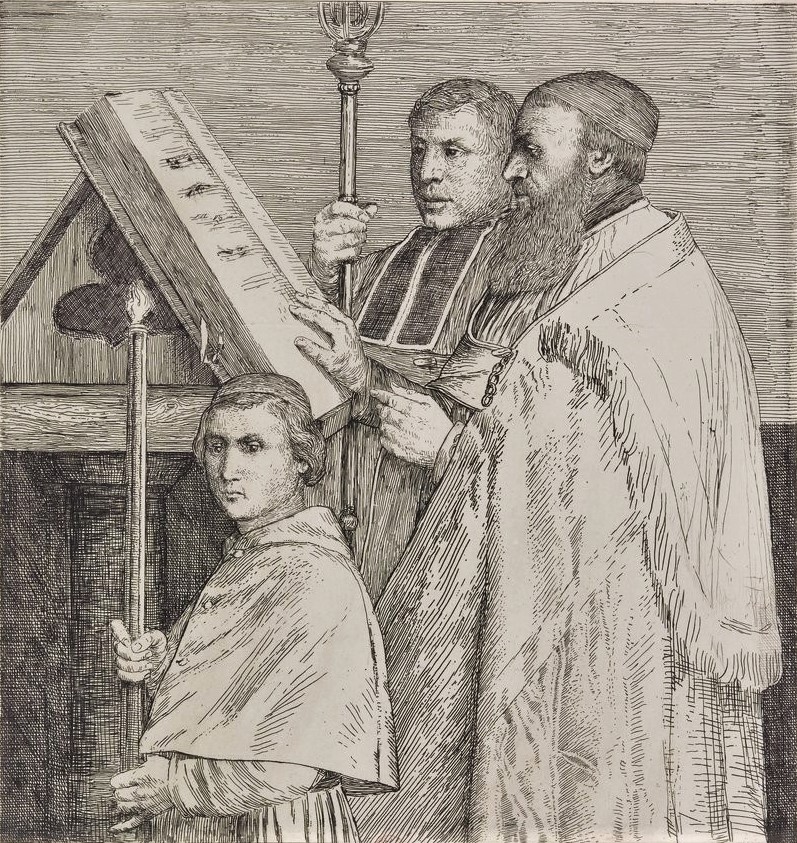
3 artists showed about 48 engravings (16,1%): Desboutin (12), Legros (25) and Lepic (11).
3 artists showed about 24 aquarelles (8,1%): Lepic (16), Jean-Baptiste Millet (5) and Morisot (3).
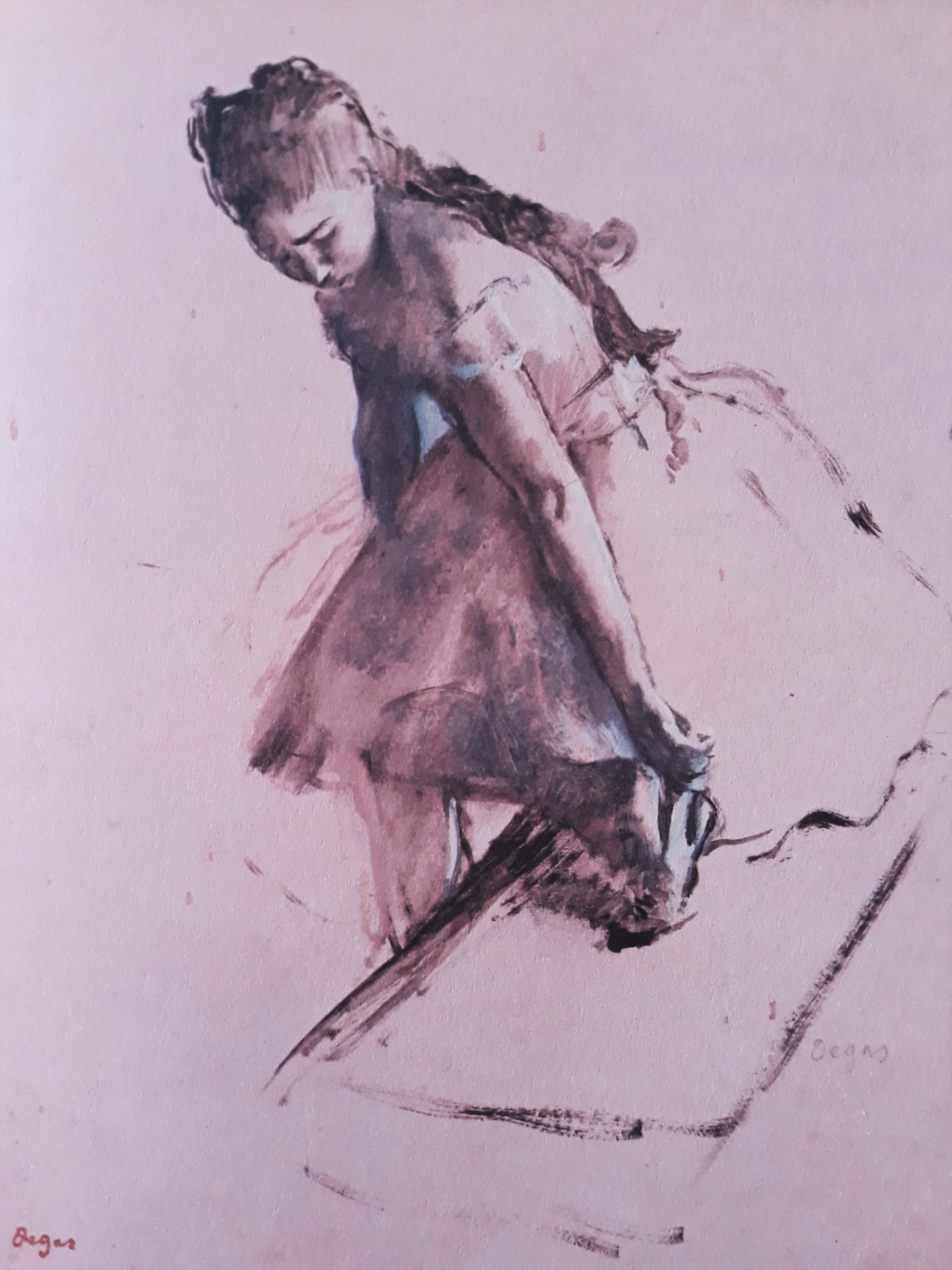
4 artists showed about 8 drawings (2%): Cals (3); Degas (1); Jean-Baptiste Millet (2); Rouart (2)
3 artists showed about 5 pastels (1,7%): Degas (1), Morisot (3) and Renoir (1).
Two art-works of Degas (no.51) can be classified as mixed techniques, less than 1% of the total amount of art-works.


The display of the works:
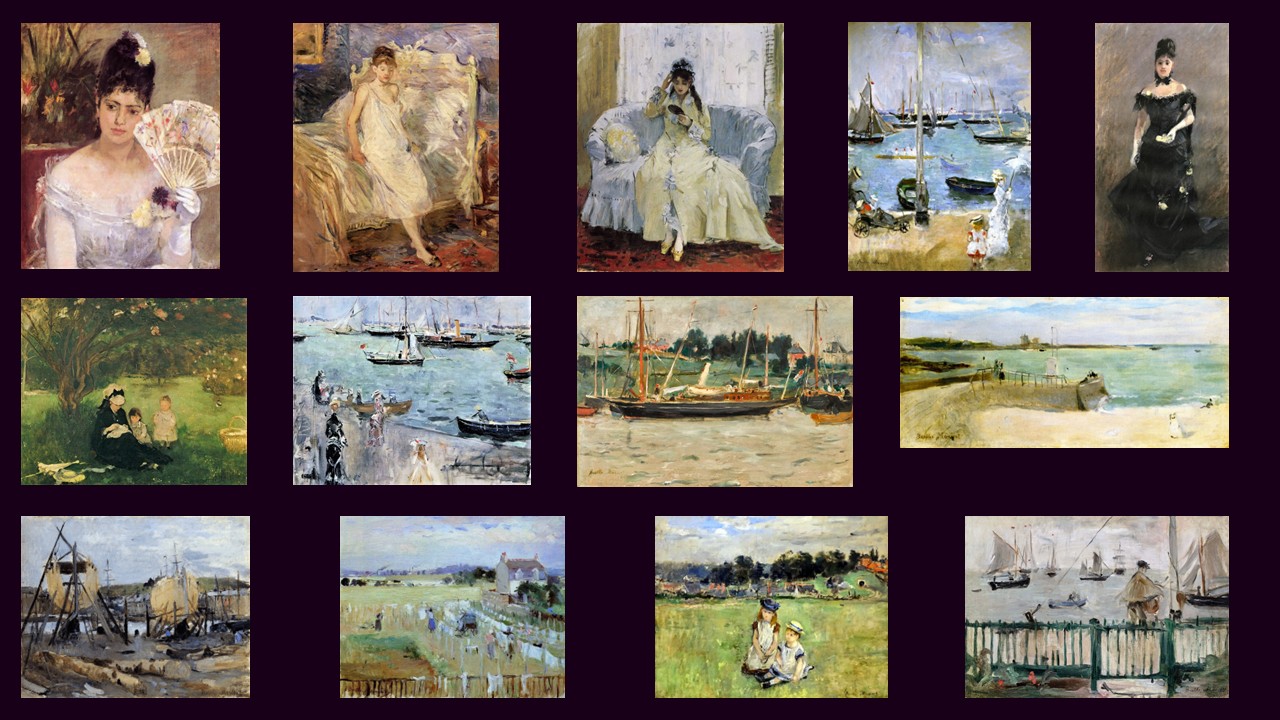
The exposition was held in the galleries of Durand-Ruel spread over three rooms, 11, Rue le Peletier in Paris, that were ‘very spacious and well lighted’ (Rv43). The intention was that the works were hung grouped by artist (R1,p366). But, in fact in room 1 namely engravings, aquarelles, pastels and drawings were shown (of Desboutin, Legros, Degas, Lepic, Jean-Baptiste Millet and of Morisot). In room 2 the paintings of Morisot, Lepic (marines), Renoir (portraits), Monet, Sisley (landscapes) and Caillebotte. In room 3 namely landscapes of Tillot, Pissarro; Léon Ottin, Cals, Rouart, Béliard, Bureau; still lifes of Jacques François and (other) works of Degas*. The canvasses of every artist were shown on one panel (Rv6).
Note*: see namely the reviews of Burty (Rv16+43) and partly also those of Porcheron (Rv28) and Blémont (Rv35) and incidently those in La Liberté (Rv23), of Enault (Rv36) and Blémont (Rv40).
Was this an impressionist exposition?
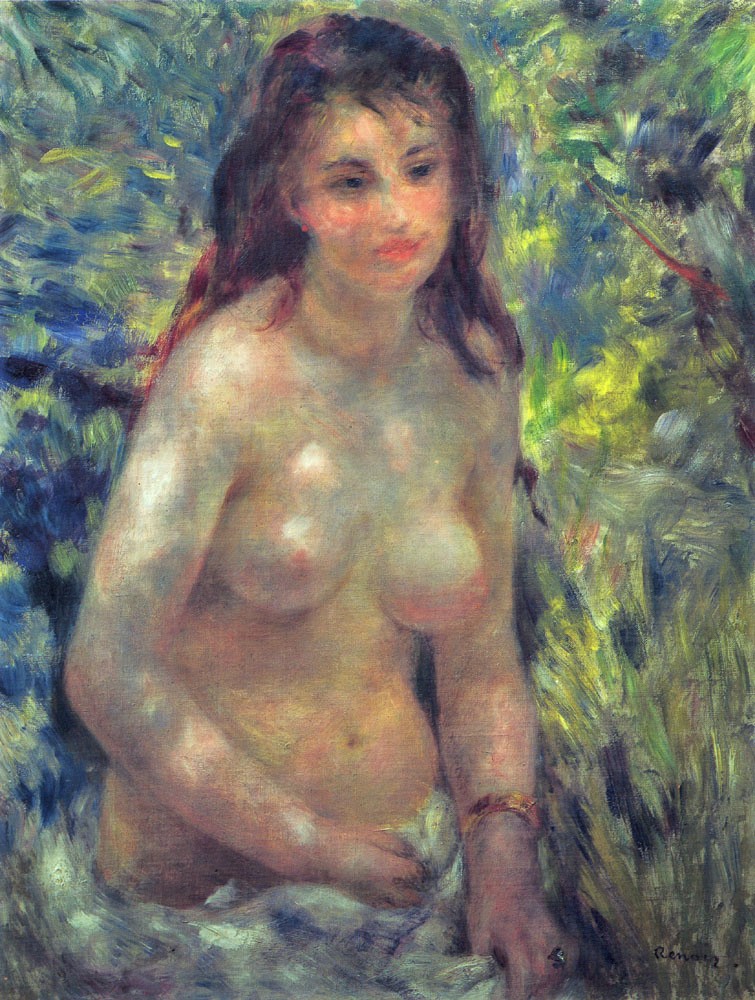
When we see Impressionism as a painting style, was this exposition in 1876 than an impressionist exposition? Most of the paintings of many partakers still had subdued colours and many greyish, brownish and blackish hues were used. This also applies to Morisot and Pissarro. Namely Monet, Renoir and (partly) Sisley used a mature impressionist painting style. They often used juxta-posed brushstrokes and bright colours, namely see Monet (no.149+152+155+160) and Sisley (no.239+244). In several portraits the model merges with the background (no.200+213+212), in the latter he also used leaves filtered light. Still, Renoir called this work a study, which is not in line with the impressionist conviction that a sketchy painting is the best way of rendering an ever changing moment. Caillebotte still painted in a more realist style.


1876, the lenders:
Many works of Sisley, Renoir, Jean-Baptiste Millet and Monet were loans: 8 out of 10 of Sisley; 12 out of 19 of Renoir; 6 out of 10 of Millet; 10 out of 19 of Monet. Other loans were of Degas (1 out of 24), Lepic (1 out of 49), Léon Ottin (3 out of 22) and Pissarro (1 out of 12). So, in total there had been 42 loans, which is about 14% of all the works exhibited. The most important lenders were Fauré and Chocquet. See for more info the overview page on the lenders.


1876, reviews:
Note: see the extended page on the reviews with also an overview numbered as Rv1, 2, 3, etc.
There are about 62 reviews known on the 2nd ‘impressionist’ exposition of 1876. About 1/3 was small, 1/3 large and 1/3 medium seized. About 1/3 was more positive, 1/3 more negative and 1/3 mixed or more neutral*.
Morisot wrote in a letter ‘I am part of a group of artists who openend a private exhibition.’After referring to the negative review of Wolff in La Figaro, she writes ‘we have been praised in the radical newspapers… at least we’re getting attention, and we have enough self esteem not to care.’ (R4,p155)
Note*: Monnerett and Rewald state that the press was generally disastrous and violent (R88II,p238;R1,p368), but that is part of a created myth.
Most art-critics used both the terms ‘impressionists‘ and ‘intransigeants‘; see.
The group of artists is characterised for their independance, namely from the jury of the Salon, but also from convention, from the polished, academic painting. Zola (Rv54) declares ‘‘This revolutionairy movement will surely transform the French school within 20 years.’
Some say they miss ‘a fertile principle.’ (Rv32+27) Some criticise that ‘They complete lack artistic education.’ (Rv24+28)
Degas, Monet, Morisot and Renoir were most often mentioned (34+33x). Followed by Pissarro (28x), Caillebotte (27x), Sisley + Lepic (24x) and Desboutin (23x). Less often were mentioned Rouart, Ottin + Legros (12x), Béliard (11x), Cals, Jacques François and Tillot (10x). Hardly mentioned were Bureau (5x) and Levert (1x).
Some works are often mentioned in the reviews: Japonnerie (no.153) of Monet (26x); Raboteurs de Parquets (no.17+18) of Caillebotte (21x); Nouvelle-Orléans (no.36) of Degas (16x); 2x Jeune homme… (no.19+20) of Caillebotte (13x); the Etude (no.212) of Renoir (12x); Inondations à Port-Marly (no.244) of Sisley (11x)*. Rivière (Rv51) highly praised no.77 of Jacques François: ‘It is a masterpiece without precedent. Never has a still life been done with this spirit and in this style. It is an extraordinary work and opens a new way to the still life’. Bigot (Rv32) reviews Sisley his Inondations à Port-Marly (no.244) as ‘maybe it is the best piece at this exposition.’


Some partakers are attributed a special role, namely: Caillebotte (Rv34;Rv10;Rv43); Degas (Rv17;Rv31;Rv41;Rv36); Desboutin (Rv51);
Lepic (Rv12+23); Monet (Rv50+54+41); Morisot (Rv60+41); Pissarro (Rv43+50); Renoir (Rv43); Rouart (Rv2). Many apply to Manet a leading role, though he didn’t participate (Rv26+29+33+38+42+44+54+56).
Some partakers are not calculated as ‘impressionists’ or ‘intransigeants’, namely Béliard, Bureau, Cals, Desboutin, Lepic, Millet, Ottin, Rouart and Tillot.
Several reviews made remarks on the painting style of the ‘impressionists’ (see link for more info)*:
‘The objects are seen as if through a prism that breaks light down into its primary colours.’ (Rv38) ‘They seek the direct impression from nature en plein air using bright and charming hues, nice and vibrant tones, a whole new palette.’ (Rv21+22) ‘…they focus on emotion, on the impression of the moment’ (Rv26) ‘(They use) a method of simplification using elementary harmonies; less worried about form, it is exclusively decorative and colourfull.’ (Rv21) ‘They don’t imitate, they translated, they interpret, they strive to bring out the resultant of the lines and multiple colours that the eye perceives at a glance when looking at an object. They are synthetists, not analists. They render their personal and direct sensation.’ (Rv35) ‘They exclude shadows, soften the contours, melt the colours, juxtapose hues side by side.’ (Rv32)
They are accused of an ‘excessive use of colour’, of paintings trees red or yellow, hairs green and blue, waters crimson and pink grass. Several reviews criticise them for their lack of composition, drawing, perspective, anatomical knowledge (Rv1+42); for their unusual perspective; for showing only sketches; for rendering unpleasant topics. But, Zola criticises Caillebotte and Degas for their precision and finishing. In more positive reviews they are praised for rendering a faithful representation of everyday life. Some partakers are called a Realist (Caillebotte) and others member of the ‘école des taches’ (Degas).
Note*: Clayson writes that most of the art-critics were focusing on the sketch-like lack of finish of the paintings and not on the newness of suburban subjects (R2,p145+157+158). I think this is a somewhat limited view, namely the ‘excessive use of colour’ is often brought up.
Identification of the exhibited art-works:
In 1876 19 partakers showed about 298 art-works. Ruth Berson in her impressive catalogue identified 101 of them, with a more or less certainty (R90II,p47-65). I make some additional uncertain suggestions. But, of many art-works I render compilations of other works of the artists and also similar works of other artists. In this way I tried to render an impression of all the art-works exhibited. See the slideshow for the result, and receive within 30 minutes an overall accounted impression.


1876, the results:
Note: there are not many data about the results.
Though held in the Durand-Ruel galleries the artists had to finance the costs themselves (R3,p192). The rent was 3.000 franc (R5,p97). But, the idea was the Durand-Ruel would receive half from the entrance fees (R1,p373). Rewald mentions that the entrance fee was 50 centimes** (R1,p368). The partaking artists had to pay a contribution of 120 franc (19x120fr= 2280fr) (R2,p158;R1,p373). One source mentions that the exhibition was financed by Rouart (iR318).
Financially it was relatively successful, but there were less visitors, though Zola (Rv22) remarked the first of April ‘There are many visitors.’ Fewer visitors attended this exhibition than the first (so let’s say about 3.000).
The partaking artists received their contribution of 120 franc back, together with a dividend of 3 franc (R2,p158; R5,p97; R3,p193). A total of 2337 franc. Considering the lesser amount of visitors this probably implicates that there were more works sold of which the artist paid commission. Monet sold his Japponerie (no.153) for 2.000fr to count de Rossi, but this was at an auction at Hôtel Drouot (HD1876/04/14*, no.37).
Note*: halfway the exposition. Was it withdrawn from the exposition?
Note**: In 1874 the entrance fee was 1 franc and the price for the catalogue 50 centimes.
Sources: R1,p373/4 (Rewald cites a letter of Cézanne to his parents dated 1876/09/10); R2,p146 +158; R3,p192-194; R4,p153; R22,no387.
For further reading: Letter Desboutin to Mme de Nittis (1876/04/20) (Milan, 1963; R2,p158,note8).

General sources:
My main sources are Moffett (1986=R2,p145-186=aR1), Berson (1996=R90I,p47-113 +II,p33-65), Rewald (1973=R1,p366-374), Walther (2013=R3,p192-197), Roe (2006=R4,p151-155), Denvir (1993=R5,p96+97), Monneret (1978-81=R88II,p235-238), Reff (2020=R433). See the link for other general References (=Rx) and to the internet references (=iRx). See here below for additional references (=aRx). See links for practical hints and abbreviations and for the subscription of the paintings.
Additional references (=aRx):
- archive.org//t7cr6bg0d (Online version of Moffett: The New Painting, 1986 =R2=iR19)
- culture.gouv.fr//1876 (extended article on the 2nd ‘impressionist’ exposition; =iR424)
- applebooks.apple.com//1876 second impressions (preview of Robert Cormican: In 1876: second impressions. 2014.)
- www.youtube.com//art_101_1876 (video on the 2nd ‘impressionist’ exposition by Mr. Burgher with extended info, beautiful pictures and irritating clips)
- magrasku.de/zweite_impressionisten-ausstellung (page in German on the 2nd ‘impressionist’ exposition; =iR59)
- commons.wikimedia.org//second impressionist exhibition (some pictures that have been exhibited; =iR6)
- impressionistarts.com/second (webpage on the 2nd ‘impressionist’ exposition; =iR374)
Recommanded citation: “Impressionism, a historical reconstruction: The 2nd ‘impressionist’ exposition in 1876; general info. Last modified 2026/04/04. https://www.impressionism.nl/2nd-impressionist-exposition-1876/.”
Note: More info will be added.