Impressionism, a historical reconstruction:
Art-History
a history of avant-garde movements?
or a history of beauty?
Introduction:
Impressionism is just one of the many art-movements within art-history.
On this page I share some of my personal (preliminary) observations and opinions on art-history.
I will focus on painting and the years 1855 -1939.
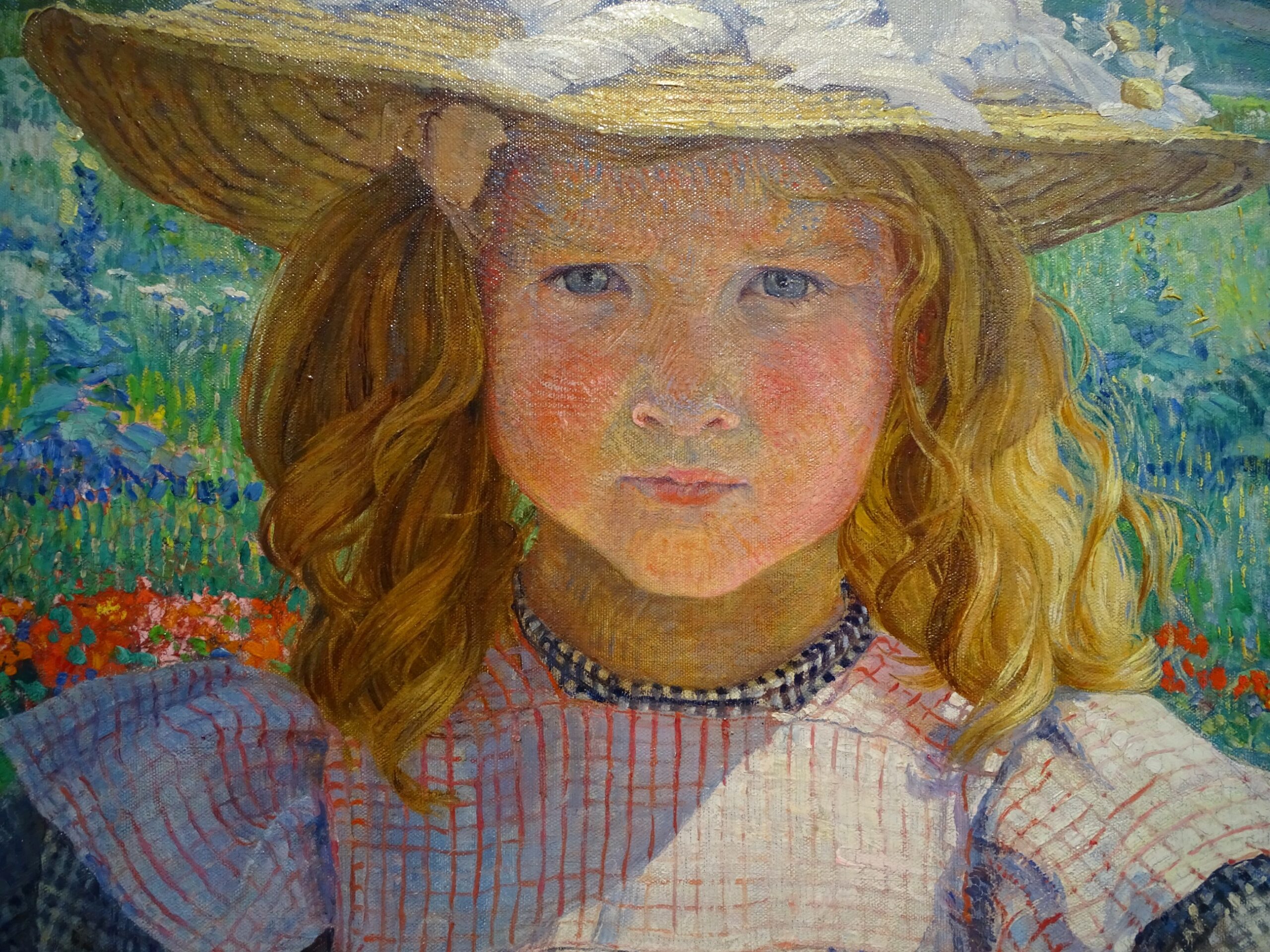
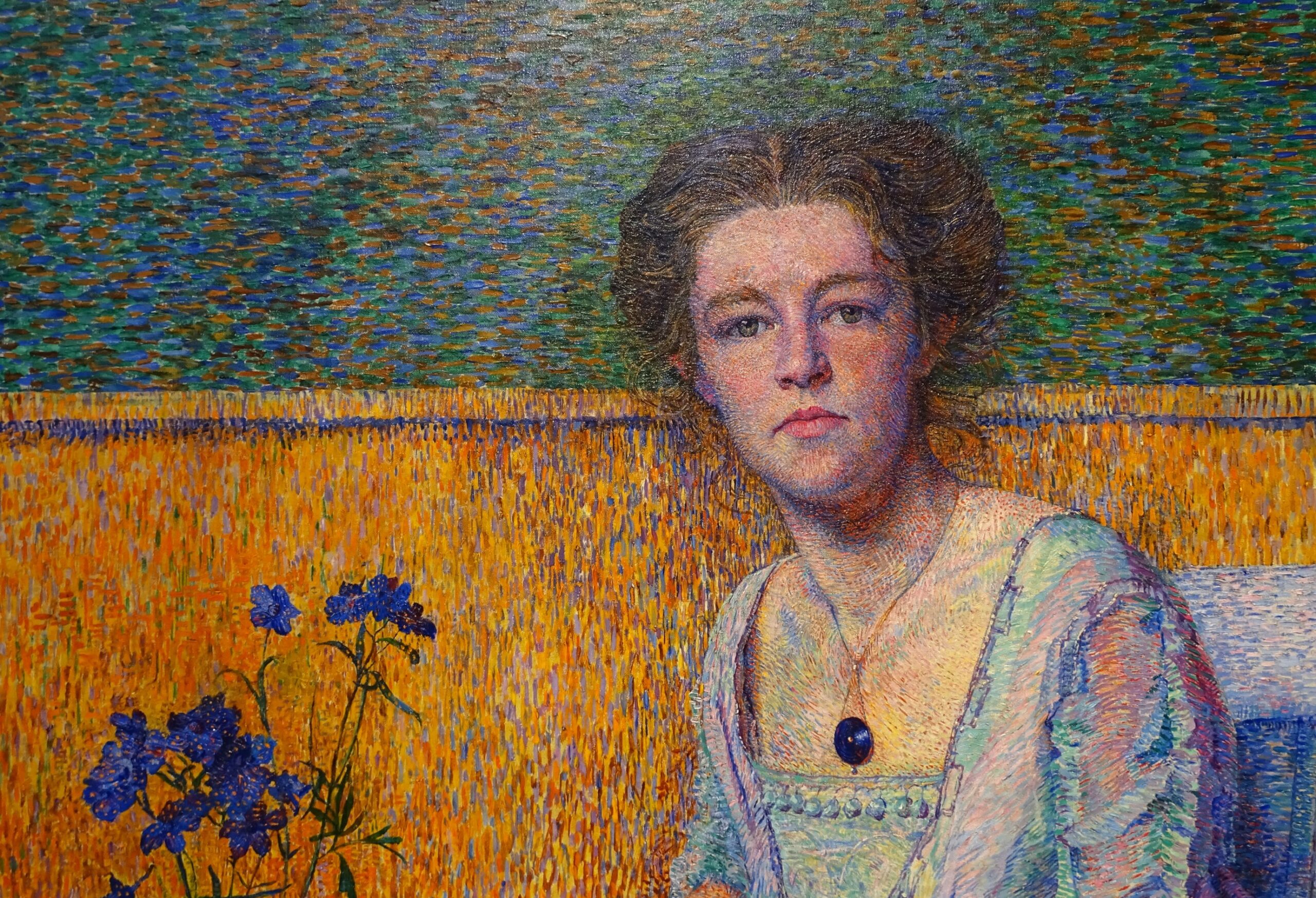
In the 9 years of study on Impressionism I found out that art-history is focussed on avant-garde art-movements. The narrative is mostly that the avant-garde artists first are rejected and ridiculed and later on become successful: the victims become victorious! As I point out in Myths on Impressionism, this sounds more as a script for a Holywood movie or a novel, than the result of serious and balanced investigation. I plead for a nuanced and differentiated view on art and for a focus on beauty. For example: the Dutch artist Jo Koster made in 1911 a most beautiful impressionist portrait. In the years 1912-1921 she namely used a neo-impressionist painting style, often with great result. But, you won’t see Jo Koster included in publications on Impressionism or Neo-Impressionism. She was not in the avant-garde, she used these techniques years afterwards. But, is that a reason she should be neglected? Should art-history not be focussed on beauty? Beauty that renders joy to life!?
Note: this page renders preliminary observations that will be developed later on.
The rejected victims become victorious:
It seems to me, that art-history is focussed on the history of avant-garde art-movements, like Impressionism.
And the narrative mostly often goes like this:
*the avant-garde artists oppose the traditional teachings on the art-academies and art-studios
*they are often rejected by the traditional expositions
*they form a group of like-minded artists
*they organise their own exhibitions
*their exhibited art-works are severely criticised by the (conservative) art-press
*they are victims of the conservative status quo of art
*but, in the run, they get more and more appreciated and become more and more successful
*and now-a-days they are highly appreciated, than their conservative counterparts
*the victims have become victorious!
A perfect script for a Hollywood movie.
But, to narrow minded for sincere art-history.
See also myths on Impressionism.
The forming of an art-movement:
The forming of an (avant-garde) art-movement often has several elements:
There is a group of like-minded artists.
Often they know each other from an art-studio, which they attended at the same time
They come together in certain cafés and houses.
They paint together in the same studio and share the same model.
They paint together in the open on certain locations.
They travel together and take back their painted souvenirs.
Sometimes they come together in an art-colony.
They portray each other.
They correspond with each other.
Many of them are in their 20s or 30s and are not yet settled (and live like bohemians).
Often one of them is seen as a leader, an inspirator. Sometimes there are a few leading figures.
Sometimes one of those leaders writes down their ideas on art, in this way defining the art-movement.
Sometimes an association is formed, with official statuts and formulated goals.
Sometimes the name of the group is given by some-one outside of the group, often an art-critic.
The group gets support of benefactors (the mecanas). They buy their art-works, finance their exhibitions, write positive reviews.
Often this group of like-minded artists consists of one or more groups of friends.
Others later join the group.
Others leave the group.
Disagreements arrise in the group.
The style of the art-movement:
An art-movement presumes similarities in painting style. This is where things start to get tricky.
Often this painting style develops and comes at it’s peak a few years after the group has been formed.
Are the paintings made before this peak representative for the art-movement?
Often the styles between members of the group differ.
Are the works of the leader(s) the standard?
Often one or more artists that belong to the circle of friends and exhibit with the group, just partly uses elements of their painting style. Still, their works are presented as belonging to (the style of) the art-movement.
Some art-movements don’t have a common vision.
The like-mindedness is the desire to break free and develop something new.
Sometimes the like-mindedness is more practical. Sharing costs for a model, a studio, an exhibition.
Often an artist is locked up within one art-movement. Renoir is an impressionist. Matisse is a Fauvist.
But, often at the start of his or her career the artist experiences with several painting styles.
Even at the peak of using the typical style of the art-movement, an artist often varies in styles.
Anyway there are variations between landscape, figure and genre paintings (interiors and still lifes).
Most artists don’t stick to the style of the art-movement they are associated with.
Still, many of these works are included in representations of that specific art-movement. In this way blurring the more specific style of that art-movement.
After an art-movement has reached it’s peak, the name of the art-movement can become a sales term.
It helps for an art-dealer to sell his stock.
It helps for an exhibition to attract many (paying and buying) visitors.
It helps for a book to get sold.
It helps for a website to track attention.
But, are all these works presented still representative for the style of that art-movement?
All the above mentioned aspects make it hard to define the typical painting style of a certain art-movement.
Quotations on art:
Here below you will find some quotations on art, that put a refreshing light on art-history.
The publication ‘Critique de l’avant garde’ (1885) of Théodore Duret included his earlier review called ‘Salon de 1870; Edouard Manet‘, in which he wrote: “Since 40 years, there is always an artist, among the newcomers, that is an aim for (critical) attacks… Just yesterday, people were making fun of Courbet, but now they’re singing his praises… people got familiar with his work; that is why the habit (to ridicule all that is new) and the mediocracy (that hate all that is original) now points at the newcomer Manet… ‘Oh, his drawing is so bad!’ (Something that was said of Delacroix 30 years ago.) ‘But, this is not properly finished!’ (Yesterday they said this about Corot.) ‘What are these people ugly!’ (This is still the more or less the current summary of the public opinion on Millet.) This is the fate mister Manet is destined to, till the public has become accustomed to him… and will ridicule another newcomer.” (R5,p145;R145,p35-40=iR19)
In 1938 Hendrik de Vries (1896-1989) wrote on the Dutch avant-garde art-movement De Ploeg of which he was part in the 1920s: “Expressionist despair or overconfidence (exuberance) requires energy, which is usually no longer present after a certain age.” (R571,p16)
A history of beauty:
Masters of art made very beautiful paintings, but also many mediocre paintings.
Painters lost in oblivion also made very beautiful paintings, see for example Jo Koster↑↑, a Dutch artist. Often they are quite forgotten.
Years after a certain art-movement had it’s peak, other artists would apply that painting style and made marvouls of painting.
Maybe it is good to focus more on beauty within art-history.
Focus more on the pearls of the forgotten painters.
Present the variation in styles an artist used and don’t lock them up within one art-movement.
Define more specificly what caracterises the painting style of an art-movement.
Recommanded citation: “Impressionism: Art-history; a history of avant-garde art-movements? Last modified 2026/09/13. https://www.impressionism.nl/art-history/”
Note: this page renders preliminary observations that will be developed later on.