Meta-Impressionism / Modernism
Henri Matisse
1869 – 1954
More than a Fauvist
the early years till 1910
Introduction:
Henri-Emile Matisse was born in 1869 in Le Cateau-Cambresis (Nord) and died in 1954 in Nice. This page focusses on his early (exhibited) paintings till 1910 and his connection with Impressionism. Traditional narratives on Matisse are questioned*.
Note*: My preliminary remarks are namely based on observation of many paintings and just a limited study. So, please also question my narrative.
Note: this page is under construction!
Family life:

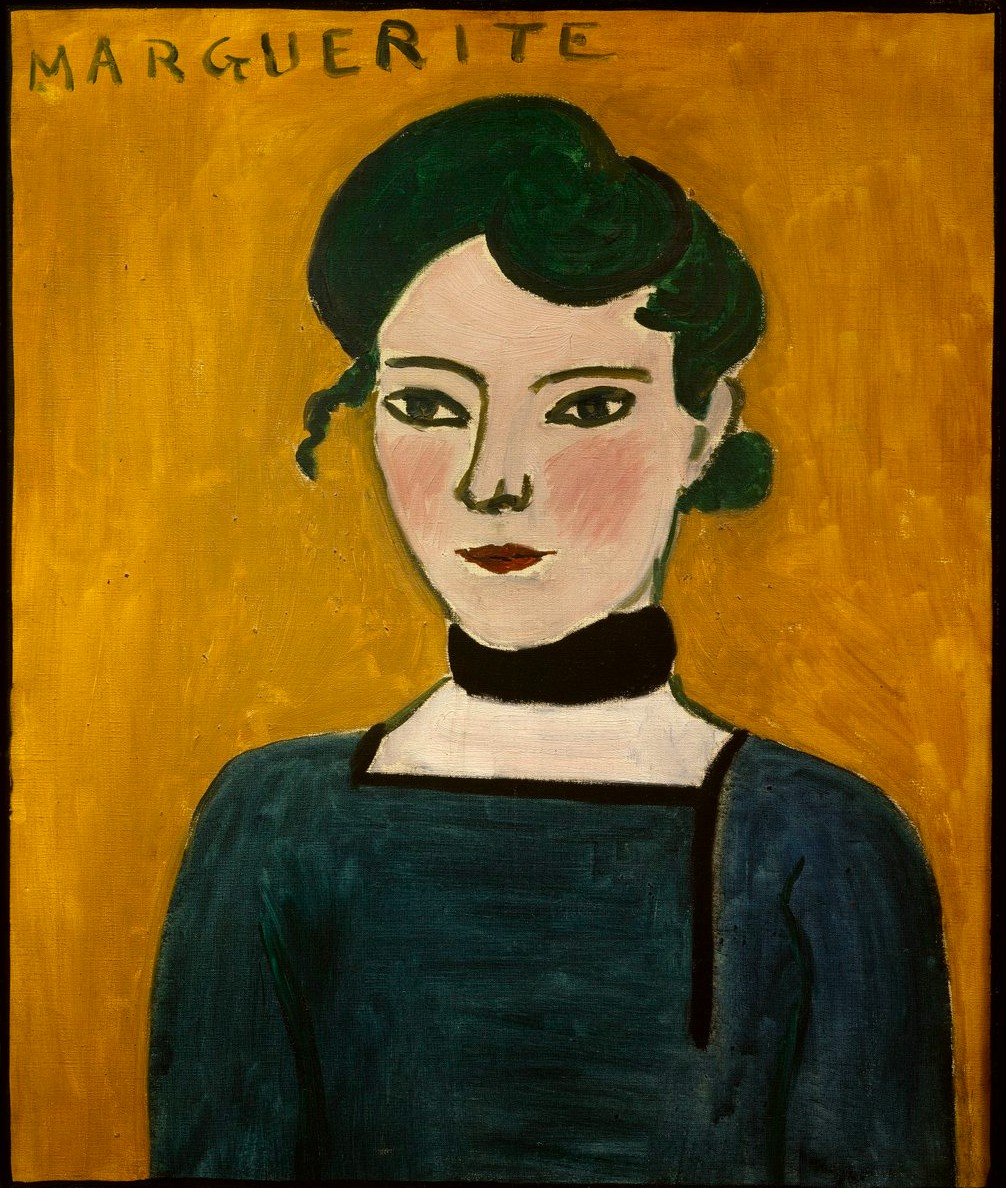
Development of his painting style:
Most sources on Matisse render the narrative that he first painted in a more traditional style, then since 1896 more impressionist, then since 1898 more neo-impressionist, culminating in his Fauvist style in 1905.
But, when we look more closely, than we can see that Henri Matisse used a large variation of painting styles throughout the years. In that sense it doesn’t fit that he is presented mainly as a Fauvist.
Many of his paintings are not dated*. This makes it harder to discern his development in style. But, most likely is that he used various painting styles at one time. For example Matisse started with more divisionist paintings around 1897.
Here below I try to describe some of Matisse his (early) painting styles:
Using many greys and or browns: still lifes 1890 (iR6) +1895 (iR14) +1896 (iR155); interiors 1895 (M7), 1903ca (iR15); landscapes made in Britanny / Belle-Île (1896); city views 1897 (M86)
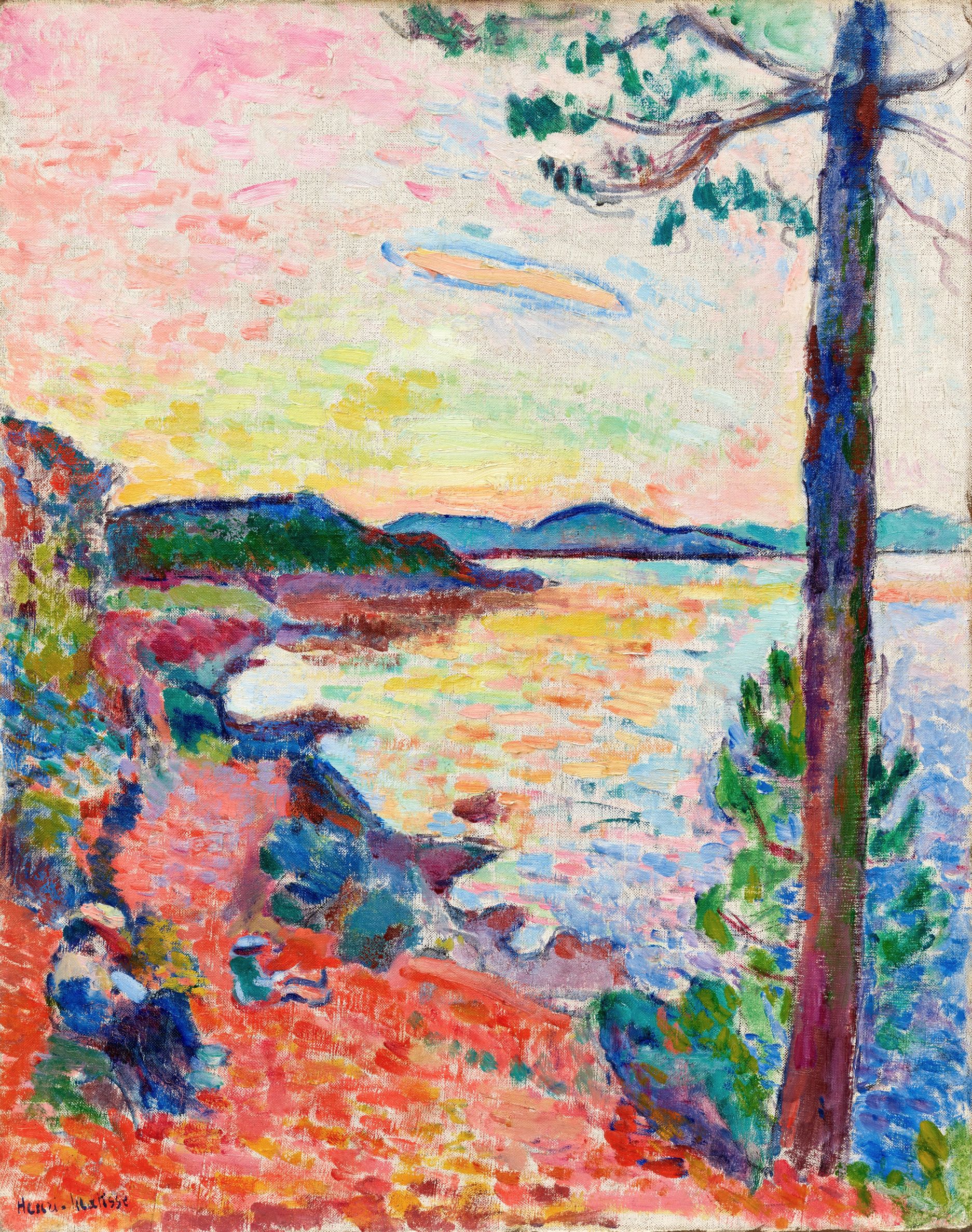
Using thick, short brushstrokes, leaving (much) parts of the canvas uncovered: some landscapes made in Belle-île 1896/97 (iR15); Saint-Tropez 1904 (M54);
Using variations of bright colours, applied with thick, broad brushstroke: landscapes made in Brittany 1897 (iR15); still lifes 1898ca (M95);
Using more bright colours with some mosaic dabs: still lifes between 1897-99 (M292;M95;M7); streetview Arceuil 1899 (M292);
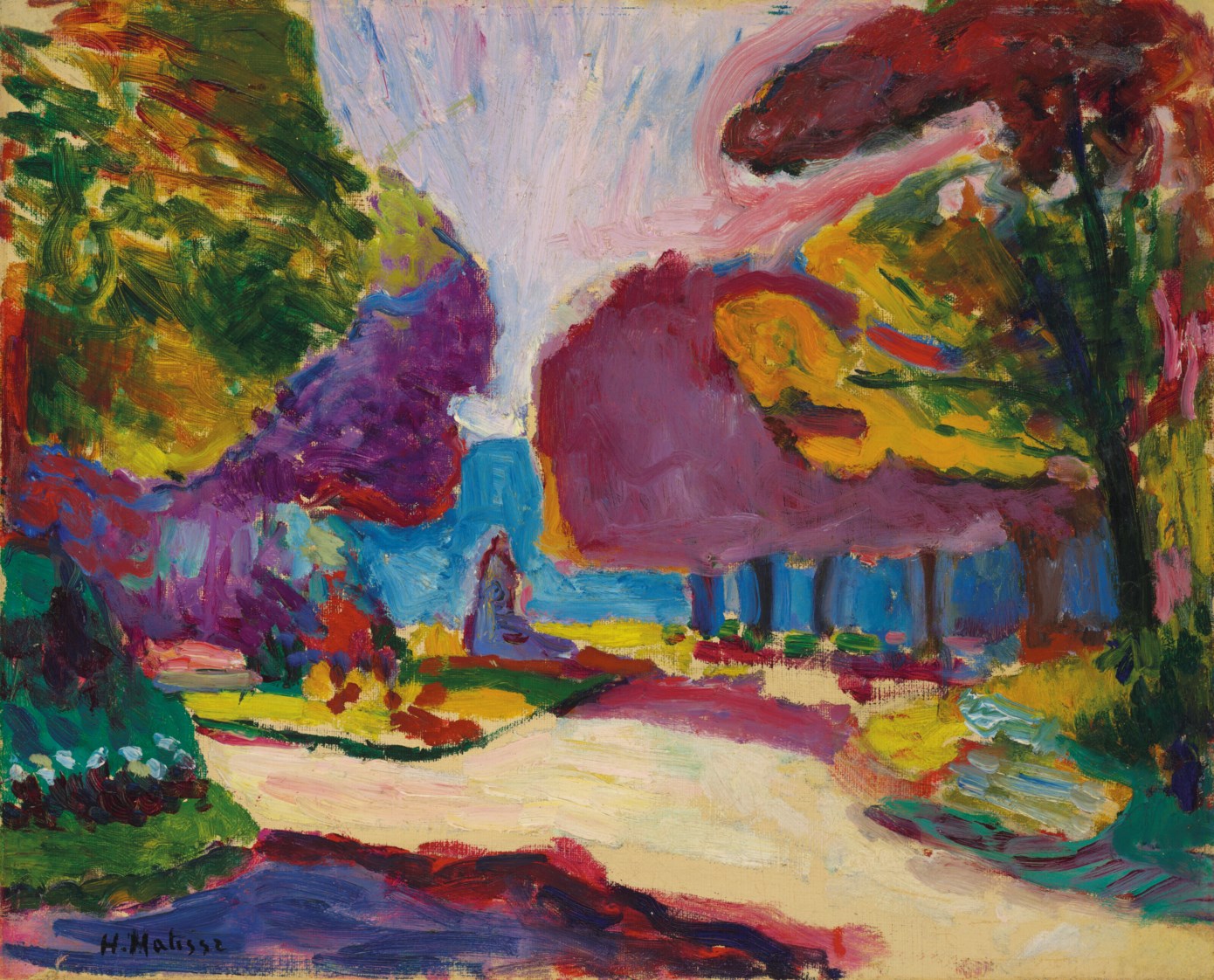
Using large areas of quite monochrome (not naturalistic) colours, with broad brushstrokes: street in Arcueil 1898 (iR15=D50); still life 1900 (M95); park view 1901ca (M95); figure painting 1905 (M7);
Using over the whole picture (divisionist) mosaic dabs: in still-lifes 1899 (M86) +1905 (iR335); in landscapes 1904 (M7) +1905 (M300);
Using over the whole picture (divisionist) mosaic dabs of bright (not naturalistic) colours leaving much of the canvas uncovered: landscape 1904 (=M7);
Using large areas of quite monochrome colours and also mosaic dabs: in Collioure 1905 (M86=BI11.020; M95; M21); with girl reading 1905/06 (M41)
Note*: Still, several of these paintings can be dated based on indirect data. I assume that my sources are accurate in this, but maybe this needs more critical study. This applies namely for the dating of his still lifes.
Matisse on his art:
When quotations of Matisse are rendered in sources, often the date of this quote is not rendered. This doesn’t help in discerning the development in his own thoughts about art. I assume that Matisse in quotes later on in his life, reframed the narrative on his earlier works. I think it would help, when there was a critical study of his authentic statements (namely done up to 1910). By lack of this resources, I will render just a few quotes, that give some indication, on his thoughts about art.
“I had to invent something that would render the equivalent of my sensation—a kind of communion of feeling between the objects placed in front of me” (Flam, 1986,p41 in iR15)
Commenting on his 2nd Britanny trip in 1896 he (later) said “”I began to work from nature. And soon I was seduced by the brilliance of pure colour. I returned from my trip with a passion for rainbow colours.” (M15)
Quotations on his art:
Several sources render comprihensive descriptions on the development of his art (till 1910):
On a city view on Arcueil (1899ca): “Matisse has moved through the Impressionist phase. Light is crucial, but more so are the bold areas of colour that prefigure the Fauve palette that Matisse would increasingly adopt over the forthcoming years.” (iR15//6063661)
Tomàs Llorens writes on these years: ‘Matisse, who left Moreau’s studio in the autumn of 1897, married Amélie Parayre in January of the following year. After a brief honeymoon in London, the couple sojourned for six months in Ajaccio, Corsica. Then, in August 1898, Matisse and his wife travelled to Toulouse, and stayed for six months with Amélie’s parents. Many of the landscapes he painted during that period were probably executed outdoors. Yet the colour in them is not naturalistic, but subjective. These paintings are generally described as “proto-fauvist”. If we compare the pictures of Corsica with those of Toulouse, we can observe a shift from the thick impastos of the Corsican period to a brighter and lighter style, which at the end of his stay is practically neo-Impressionist. Matisse was influenced by Signac (an exhibition early 1898) and his publication of the same year. He sometimes leaves large areas of the background in a pale grey colour, which allow the other colours to breath’ (M100)
The start:
In 1892 Matisse entered the studio of Gustave Moreau and in 1898 the studio of Carrière.
Early still lifes:
In his ‘Nature morte avec livres et bougie’, dated 1890, Matisse made a more traditional still life, with many browns and rendering details (iR6). In ‘Nature morte au citron (La carafe bleue)’ dated 1895, he used more colours, though still more muted (iR155). In a ‘nature morte, dated the same year, he used many browns (iR14)*. In his ‘Nature morte avec livres’, dated around the same year, show ‘dabs of colour without a strong contour… The forms are realistic and the colours are true to nature.’ (M70) But, the colours are more bright, than the other works from 1895. In his ‘La bouteille de Schiedam’, dated 1896, the colouring is quite dark (iR155). In his ‘Fruits’ dated by Christies (October) 1896, Matisse used ‘gradations of tone in the silver scale’ and ‘had begun by now to free his touch from the description of objects as such to emphasize the way in which they were made visible by light. (iR15). In his ‘Nature morte au pichet’, dated around 1896, his colours are already more daring and his brushstroke ‘vibrating’ (M15). It, seems that Matisse varied in his style during these years and there wasn’t a clear linear development.
In other still lifes dated between 1897-99** we see his colours brighten up and sometimes use of divisionist mosaic dabs (M292;M95;M7). One work is done in a more systhematic divisionist way, in which much of the depth has disappeared (M86).
In ‘Crockery on a table’, dated 1900, Matisse rendered a large area of red (M95).
Note*: Sothebys notes ‘signed and dated at a later date (circa 1945-46) Henri Matisse 95 (lower left)’, but I don’t see the date.
Note**: the lack of dating on the canvas makes it harder to discern a development. When you assume a linear development, you will determine another date, than when you assume an alternating use of different styles.
Early landscapes:
In 1896 Matisse painted in Britanny and Belle-Île.
In 1898 Matisse painted in Corsica.
In 1899 Matisse painted in Arcueil. About his style is written: “Matisse has moved through the Impressionist phase. Light is crucial, but more so are the bold areas of colour that prefigure the Fauve palette that Matisse would increasingly adopt over the forthcoming years.” (iR15//6063661)
Tomàs Llorens writes on these years: ‘Matisse, who left Moreau’s studio in the autumn of 1897, married Amélie Parayre in January of the following year. After a brief honeymoon in London, the couple sojourned for six months in Ajaccio, Corsica. Then, in August 1898, Matisse and his wife travelled to Toulouse, and stayed for six months with Amélie’s parents. Many of the landscapes he painted during that period were probably executed outdoors. Yet the colour in them is not naturalistic, but subjective. These paintings are generally described as “proto-fauvist”. If we compare the pictures of Corsica with those of Toulouse, we can observe a shift from the thick impastos of the Corsican period to a brighter and lighter style, which at the end of his stay is practically neo-Impressionist. Matisse was influenced by Signac (an exhibition early 1898) and his publication of the same year. He sometimes leaves large areas of the background in a pale grey colour, which allow the other colours to breath’ (M100)
In 1901 Matisse painted in Savoie / Savoye.


Paris:
Matisse often painted the Notre-Dame from the window of his studio*. These paintings throughout the years show a development. His painting from 1914 is almost abstract (M41/78863).
Note*: Matisse had a studio at x, Quai Saint-Michel. See R216, nos. 8 +10 +119.
Mattisse and Signac; Saint-Tropez, 1904:
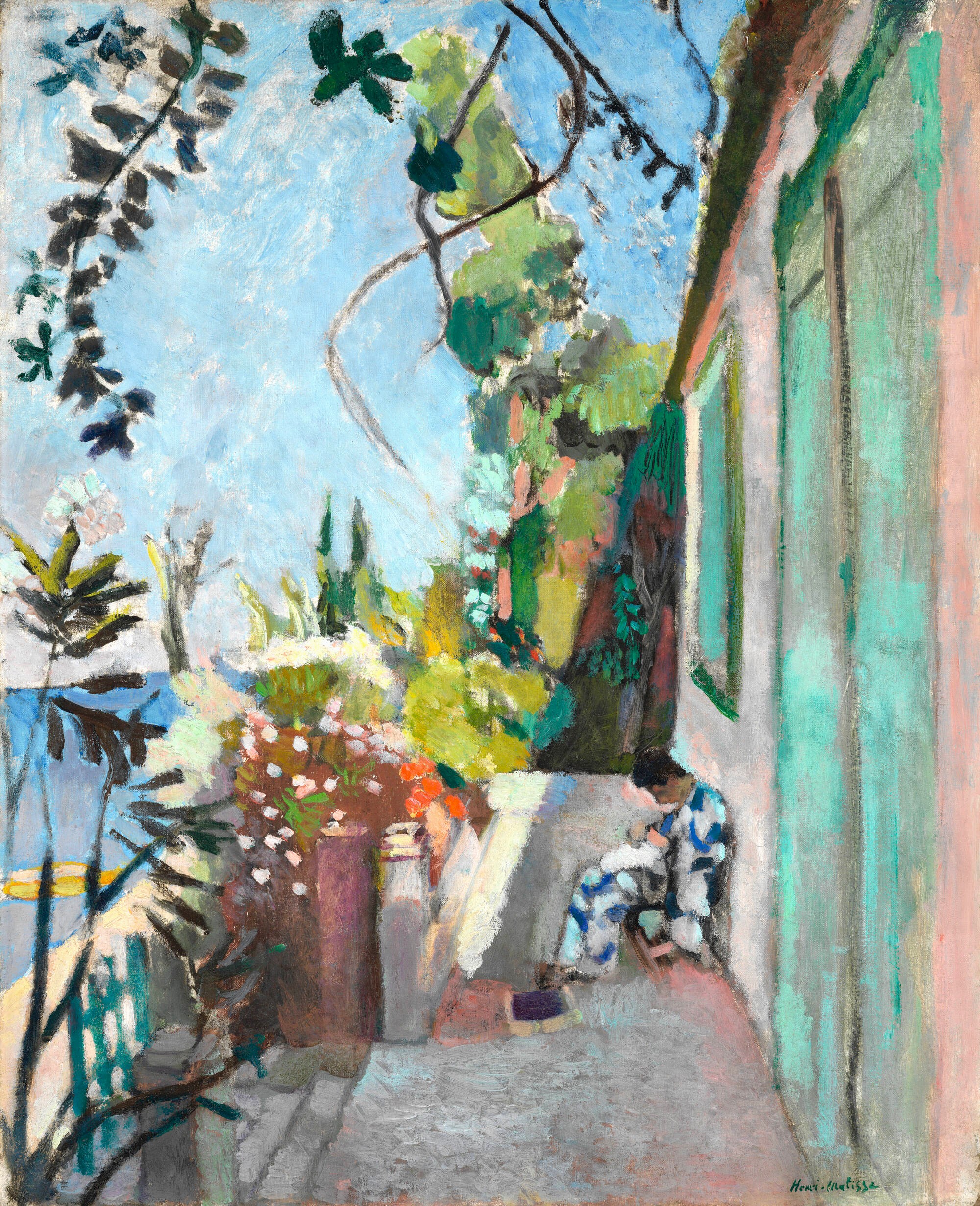
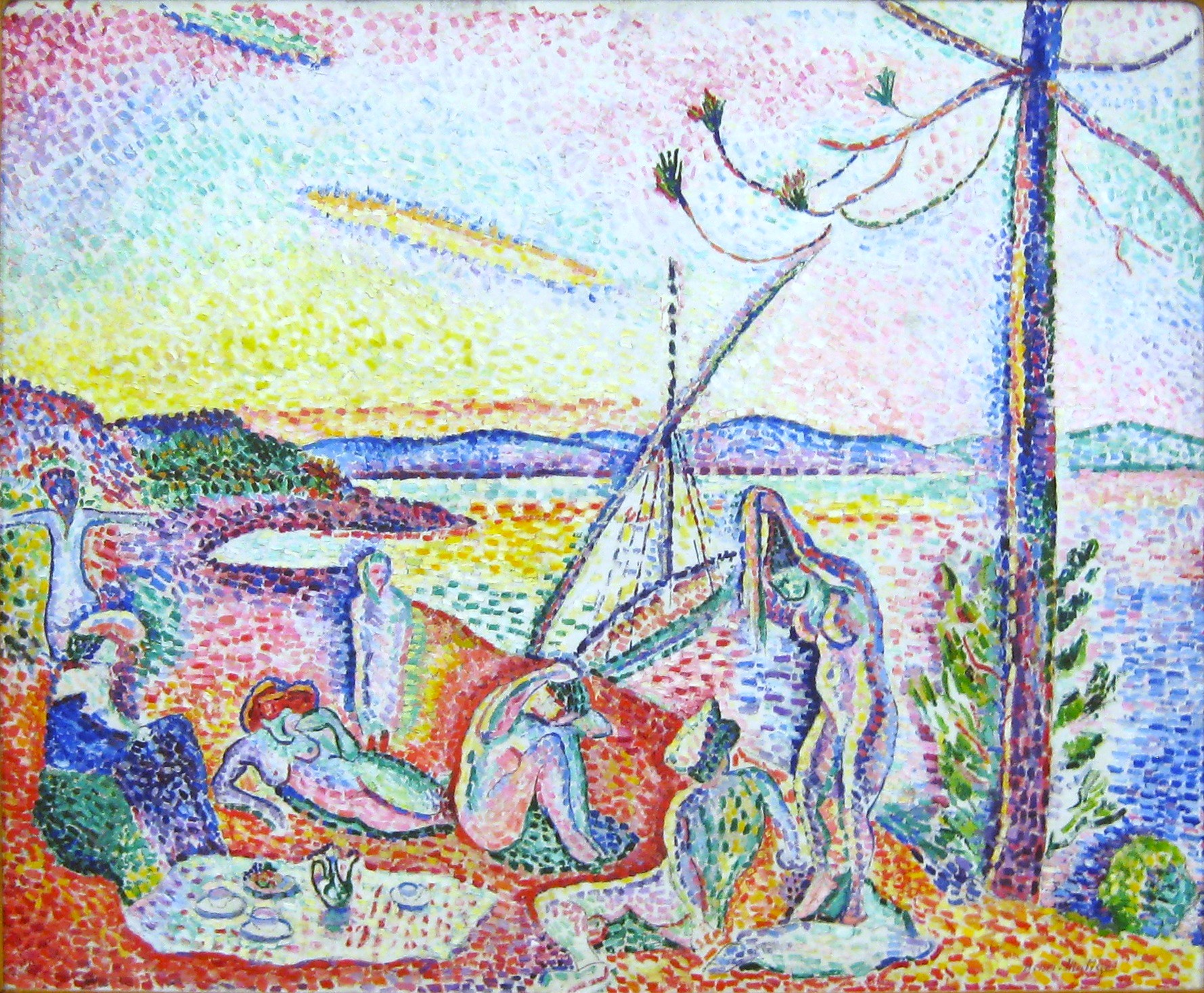
Stayed in 1904 with Paul Signac in Saint-Tropez and shortly adepted elements of his divisionist painting style, namely in his painting ‘Luxe, Calm et Volupté’ (M7; iR3). But, he thought this style was too mechanical and too static.

The Fauve turning point, Collioure, 1905:
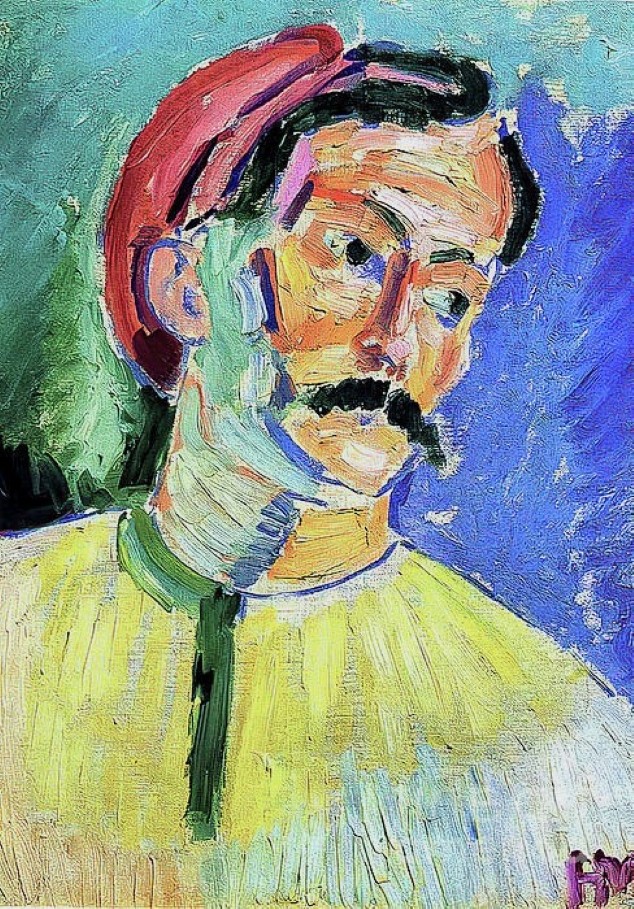
Woman with a hat (3SdA-1905-718) is “marking a stylistic shift in the work of Matisse from the Divisionist brushstrokes of his earlier work to a more expressive style. Its loose brushwork and “unfinished” quality shocked viewers as much as its vivid, non-naturalistic colors.” (iR3)
Between 1905 and 1914, Matisse passed most summers and one winter in the small fishing village of Collioure on the Mediterranean coast. The first summer of 1905* he stayed here 4? months and partly painted together with Derain (R224,p12). “Both artists broke free from the model of Neo-Impressionism and began to paint in a boldly colorful, psychologically-intense style. (…) His landscapes from this summer show a great variation in brushstroke and surface texture, and successfully liberate color from description.” (iR15//5136758).
He used pure and bright colours. He was seen as the head of Les Fauves (at the Salon d’Automne of 1905).
Note*: see R216,no11-23. Matisse also would make many still lifes, interiors and portraits in Collioure. Here I namely discuss the landscapes.


1906-1910, leaving Fauvism:
Already in Spring 1906, Matisse showed a large painting at the Salon des Independents, which leave his Fauvistic works made in 1905 behind: Le bonheur de vivre, now in the Barnes (M25). Matisse shows 16 nude figures in an imagined landscape. The landscape and the figures are just stylisticly rendered with elementary, arabesque lines. The surface is smooth, the paint applied thinly. The colours are bright, mostly unnatural, quite monochrome rendered in large areas.
Later on Matisse was more focussed on rendering ‘balance, harmony and dignity’ (R299,p30). He used large (almost) monochrome coloured sections (compare Cloisonnism). He often used curved lines as arabesks, which gave a decorative effect. His use of colour became more muted, though there are some exceptions. His painting Dance II is seen as his last Fauvist painting. But, the style of all these paintings are so different from his 1905 Collioure paintings, that I wouldn’t call them Fauvist paintings.


1912-1913, Marocco:
Portraits and figure paintings:
Later works:
In his later works Henri Mattisse again used a large variation of painting styles and themes:
Nudes
Odalisques
Female figures in an interior
Portraits
Many of his later interiors and also still lifes look like tapestry without much depth*: interiors 1906 (iR6), ; still lifes: 1906 (M95); 1909 (M95);
Some of his later works are almost abstract: Collioure 1914 (M7), Notre-Dame 1914 (M41),
Note*: See for example R216,no36 +37 +60 +61 +62 +73 +81 +82 +84 +85 +89-91.
Later landscapes:
Jack Flam notes on his later landscapes (like the one in Vétheuil, around 1920): “Now, having become a great modernist, he turned again to the complex visual stimulation of landscapes to free himself of old habits and let the masters of nineteenth-century French landscape painting guide him back to the appearance of the real world from which his work had become progressively removed.” (iR15//5678206)
Remarks on a 1918 landscape painting: “(Matisse used) a reduced pictorial language. Broad passages of pigment… Forms are simplified… the use of dashed blacks and earthen tonalities suggests an awareness of Cézanne’s late landscapes… working from nature, sustained attention to light, and a more moderated chromatic range. His palette expands to include blacks, ochres and subdued greens… executed rapidly and at modest scale, often within a single session… space is compressed, contours simplified… a return to realistic representation… Matisse tests the limits of simplification while preserving the coherence of the motif…” (iR14//I26007)
Links with Impressionism:
About his painting Nude in the Wood (M161) Matisse wrote (1906/07): “For the nude I went all mornings at 6 o’clock to the woods on the mountain with my wife, who posed calmly. We went here a dozen times…” (R216,p429,no.30) This way of rendering to the same spot on the same hour has similarities with how, for example, Claude Monet painted his series.
Travels:
Matisse travelled and visited Belle-Île (1895-97); Corsica (1898-1900); Toulouse (1898-99); Switzerland (1901); Saint-Tropez (1904); Collioure (1905-07 +1911); Issy-les-Moulineaux (1908-1911 +1918); Cavalière (1909); Morocco (1912/13); Étretat (1920/21) (see visimuz, p.15+16); between 1908 – 1917 he also travelled to Germany and Alger. In 1917 Matisse settled in Nice.
Other techniques:
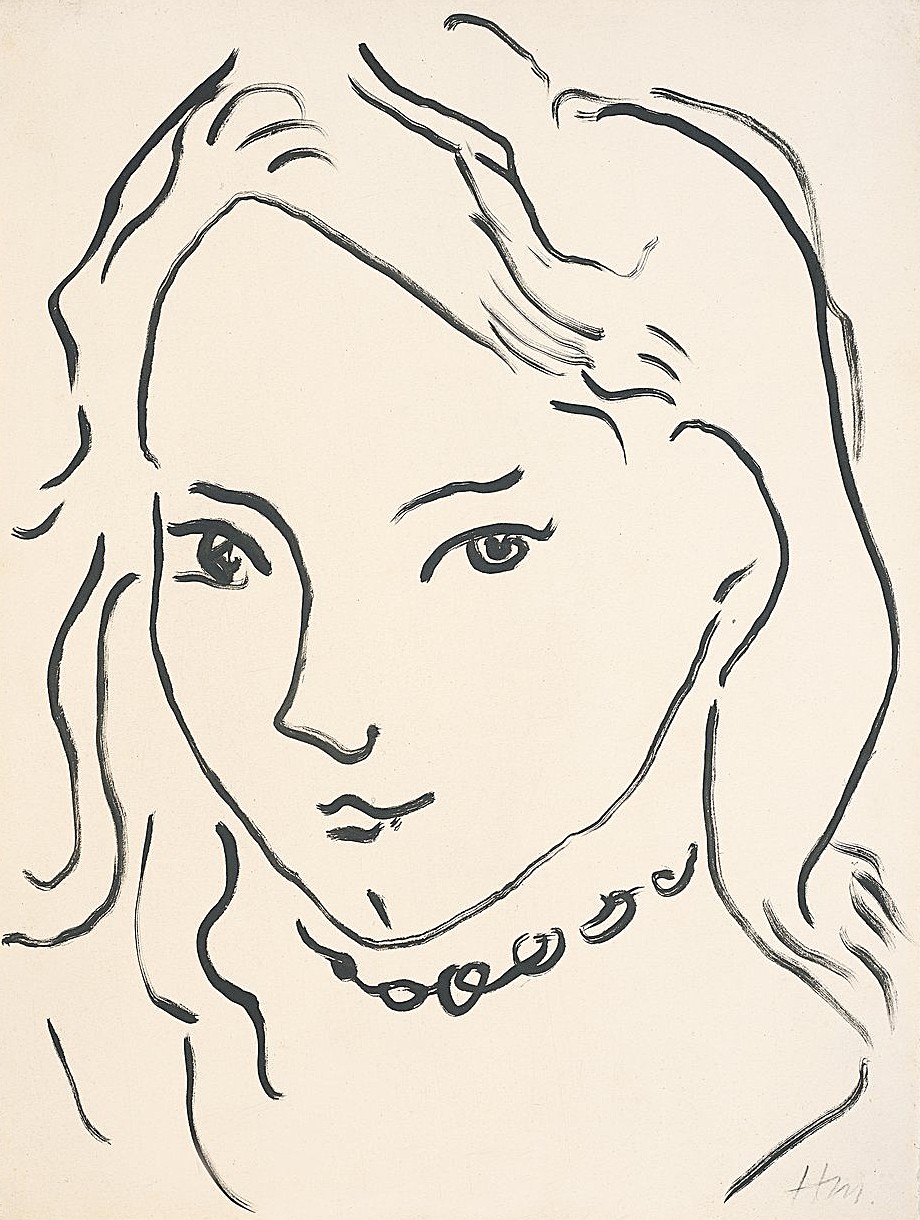
Henri Matisse made many (bronze) sculptures and many drawings. At the 6th Salon d’Automne in 1908 he showed 11 bronze sculptures and 6 drawings.
Later in his life (after 1941) he became known for his cut outs (decoupages). In these works he cut sheets of paper painted with gouache, into shapes of varying colours and sizes, and arranged them to form lively compositions. One of the series was called ‘Jazz’. In 1948 he applied this on designs for the vitrails of the Chapelle du Rosaire in Vence, now called the Chapelle Matisse (iR3).


Exhibitions:
Matisse exhibited* namely at the Salon SNBA (1896 +1897 +1899), Salon des Indépendants (1901 +1905 +1906+1907+1909+1910+1911), the Salon d’Automne (1903-1913+) and the gallery of Berthe Weill (1904 +1905/10 +1906 +1907/03 +1907/11 +1908). Matisse namely showed still lifes and interiors; he showed just a few landscapes and figure paintings.
There have been some solo exhibitions:
At Vollard 1904/06 (=V1904); with 46 paintings (R284,p11); including: iR15;
At Druet 1906/03/19 – 04/07 (=Druet-1906); about 55 art-works.
See R216, no1 +7 +10 +11 +12 +14 +16 +17 +18 +19 +22 +23 +24 +45 +26 +27.
At Bernheim-Jeune 1910/02/14 – 22 (=BJ1910) 63+
See R216, no1 +12 +13 +14 +17 +18 +21 +25 +27 +32 +35 +37 +46 +48 +55 +66 +67 +69 +70
Some international exhibitions:
London, 1910/11/08 – 1911/01/15 at Grafton Galleries “Manet and the Post-Impressionists”.
See R216, no43 +66
London, 1912/10/05 – 12/31 at Grafton Galleries “Second Post-Impressionist Exhibition”.
See R216, no45bis +64 +74 +76 +77 +78 +84 +89 +92 +94 +95 +100 +101 +104 +
USA, 1913 “Armory show”.
See R216, no30 +42 +45bis +72 +78 +94 +101 +104 +
Note*: I limit the period till 1914. See Fourcade et all for a (limited) overview of the exhibitions between 1905-1920 (R216,p523). See also the Salon database (iR1) and the catalogues on the bottom of the main pages on the mentioned Salons.
Exhibited art-works:
Here below you will find some links to works that quite certain have been exhibited by Matisse at the Salon d’Automne and at the Salon des Independants.
1SdA-1903-386, Dévideuse picarde (intérieur) (=iR15//6058200)
21SdI-1905-2771, Luxe, Calme et Volupté (=M7)
21SdI-1905-2772, Nature morte au camaïeu (=? R216,no24=M95 (1906ca); ;
21SdI-1905-2776, La terrasse (Saint-Tropez) (=? Gardner Boston)
3SdA-1905-714, Jeune femme en robe japonaise au bord de l’eau; (=iR4; iR6; M41)
3SdA-1905-715, Fenêtre ouverte (=iR4; iR6; M21;
3SdA-1905-716, Nature morte (=?? iR6=Mx);
3SdA-1905-717, Matinée d’été (=?? iR6);
3SdA-1905-718, Femme au chapeau (=iR4; iR6; M237)
22SdI-1906-2289, Le bonheur de vivre (=M25)
4SdA-1906-1171, Liseuse (=R216,no35; M198)
4SdA-1906-1171, Nature morte, Tapis rouge (=R216,no36; M95)
23SdI-1907-5247, Tableau no III (R216,no42; iR6; M24)
5SdA-1907-757bis, La Musique (esquisse) (=R216,no52; M41)
5SdA-1907-758, Le Luxe (esquisse) (=R216,no53; M7)
5SdA-1907-759, Paysage (esquisse) (=!? M23);
5SdA-1907-759bis, Paysage (esquisse) (=!? iR15//6134218)
6SdA-1908-894, Paysage aux oliviers (=? M23=iR6)
6SdA-1908-896, Nature morte, bronze à l’œillet (=R216,no55; M92)
6SdA-1908-897, Nature morte tapis d’Orient (=R216,no62; M96)
6SdA-1908-898, Panneau décoratif pour salle à manger (=R216,no60; M95)
6SdA-1908-899, Portrait de Mme M… (=R216,no59; M61)
6SdA-1908-902, Jeune marin (=R216,no45; M23)
6SdA-1908-903, Nature morte, aux oignons (=R216,no44; M292)
6SdA-1908-910, Le serf (bronze) (=!? M20//64916)
6SdA-1908, 913, Tête d’enfant (bronze) (=? iR15//6251782)
6SdA-1908-914, Tête de fillette (bronze) (=? iR15//6365191)
6SdA-1908-919, Femme assise (bronze) (=R216,no58; M41)
6SdA-1908-922, Groupe de deux jeunes filles (=R216,no51; M7)
25SdI-1909-1099, La femme aux yeux verts (=R216,no66; M237)
25SdI-1909-1100, L’Espagnole (=R216,no65; M96)
26SdI-1910-544 (Jeune fille au tulipes) (=R216,no75; M95)
8SdA-1910-536, La Danse (panneau décoratif) (=M95)
8SdA-1910-537, La Musique (panneau décoratif) (=M95)
10SdA-1912-769, Capucines à “La Danse” I (=R216,no103; M23)
11SdA-1913-1469, Portrait (=R216,no115; M95)
Sources:
Ferrier, Jean-Louis: Fauvismus; die Wilden in Paris. Terrail, Paris, 1992 (=R533).
Pagé, Suzanne: Le Fauvisme; éruption de la modernité en Europe. Exhibition guide. Musée d’Art Moderne de la Ville de Paris, 1999. (=R563)
Serrano, Véronique (ed.): Manguin or the exaltation of colour; a fauve in the Bonnard museum. Cannet, 2015. (R176)
Fourcade, Dominique, Isabelle Monod-Fontaine, Claude Laugier & Éric de Chassey: Henry Matisse, 1904-17. Exhibition catalogue Centre Pompidou, Paris, 1993 (=R216).
Wilson, Sarah: Matisse. Groningen, 1991 / 1993 (=R284).
Russell, John: De wereld van Matisse (1869-1954). Het Parool (Time/Life), Amsterdam, 1969 / 1971 (=R562).
Additional sources are: Wilson (1991/93=R284); R229,p175/6; Ferrier (1992=R533,p213); Leinz (1987 =R299,p26-31); henrimatisse.org; iR1; iR3; iR4; iR6 (overview with links); iR6 (thematical overview); iR6 (paintings per year); iR6 = iR19 (=Tout l’œuvre peint de Matisse / Massimo Carrà, 1982); Sothebys (iR14); Christies (iR15); iR155;
Matisse musea: Le Cateau-Cambrésis et Nice Cimiez (M300). Other musea: Pompidou (M7); AI Chicago (M20); Hermitage (M95); MoMA New York (M41); SMK Copenhagen (=M292); Tate London (M62); MoMa San Francisco (M237);
Note: see also at the bottom of the main page on Fauvism.
For further reading:
Massimo Carrà, 1982 (=iR6 = iR19 (=Tout l’œuvre peint de Matisse / Massimo Carrà, 1982)
Claude Duthuit, Wanda de Guébriant, and Yve-Alain Bois: Henri Matisse: Catalogue raisonné de l’oeuvre sculpté. Paris, 1997 (=DGB)
Duthuit: Catalogue Raisonné Des Ouvrages Illustrés.
Flam, Jack: Matisse, The Man and His Art, 1869-1918, London, 1986.
Matamoros, J. and D. Szymusiak: Matisse-Derain: Collioure 1905, un été fauve (exhibition catologue). Musée départemental d’art moderne, Céret, 2005.
additional references (=aRx):
- henrimatisse.org (a website dedicated to Henri Matisse)
- en.wikipedia.org//list_Matisse (incomplete list of works of Matisse; =iR3)
- x
Recommanded citation: “Meta-Impressionism / Modernism: Henri Matisse (1869-1954); more than a Fauvist. Last modified 2026/08/27. https://www.impressionism.nl/henri-matisse-1869-1954/”
Note: additional info and pictures will be added.