Meta-Impressionism / other artists:
Jean-Léon Gérôme
1824 – 1904
a most awarded academic artist


Introduction:
Jean-Léon Gérôme (1824-1904) was a most awarded artist that mainly painted in a neo-classical style. He was part of the establishment of the art-world in the 2nd half of the 19th century in France. Namely he was member of L’Institut for 39 years (1865-1904).
Gérôme as an artist:
Gérôme was born in Vesoul in the Haute-Saône and went to Paris in 1840. He studied with Paul Delaroche from 1840/41 till 1844, also in Italy. He continued studying at the same studio now led by Gleyre. He attended the École des Beaux-Arts. He failed for the Prix de Rome in 1846.
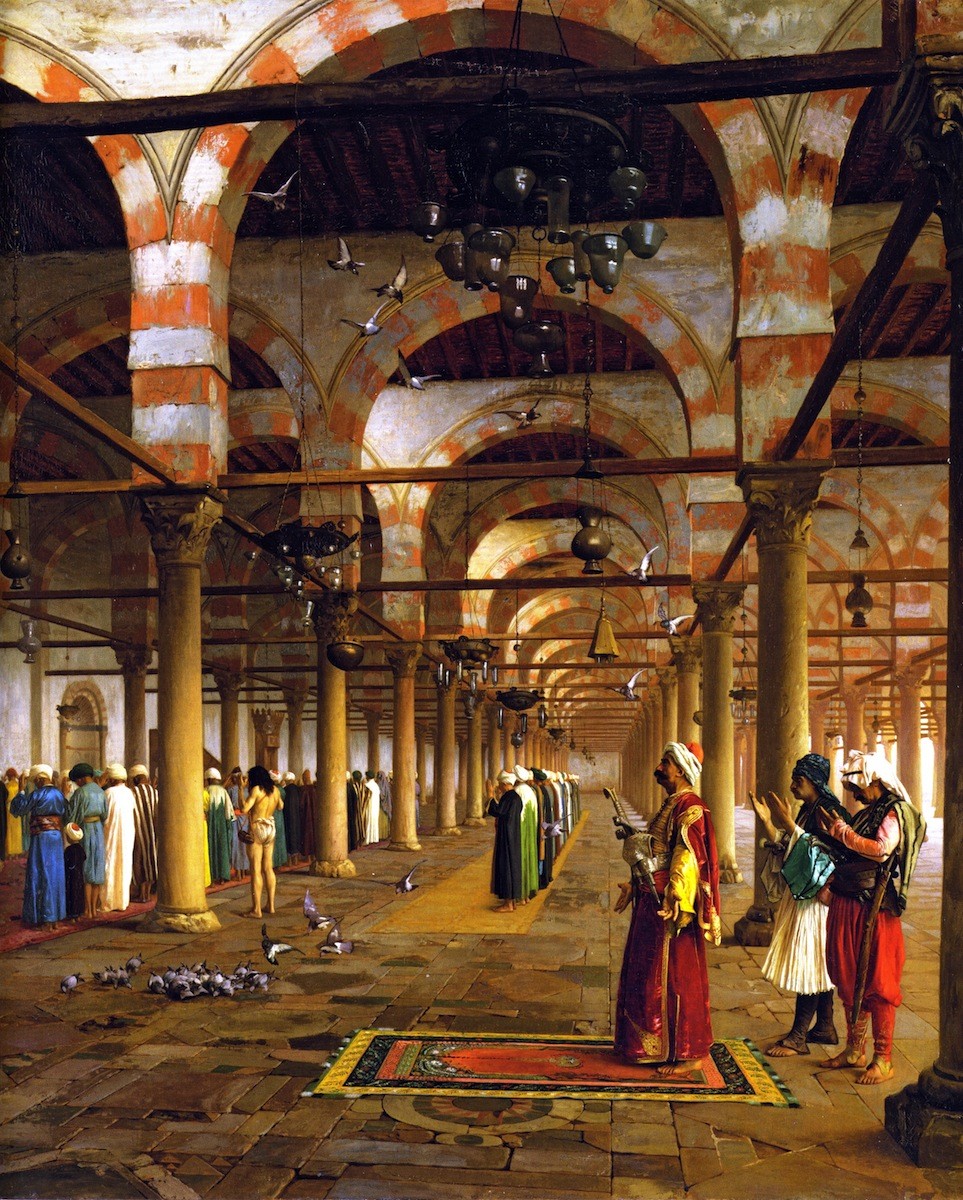
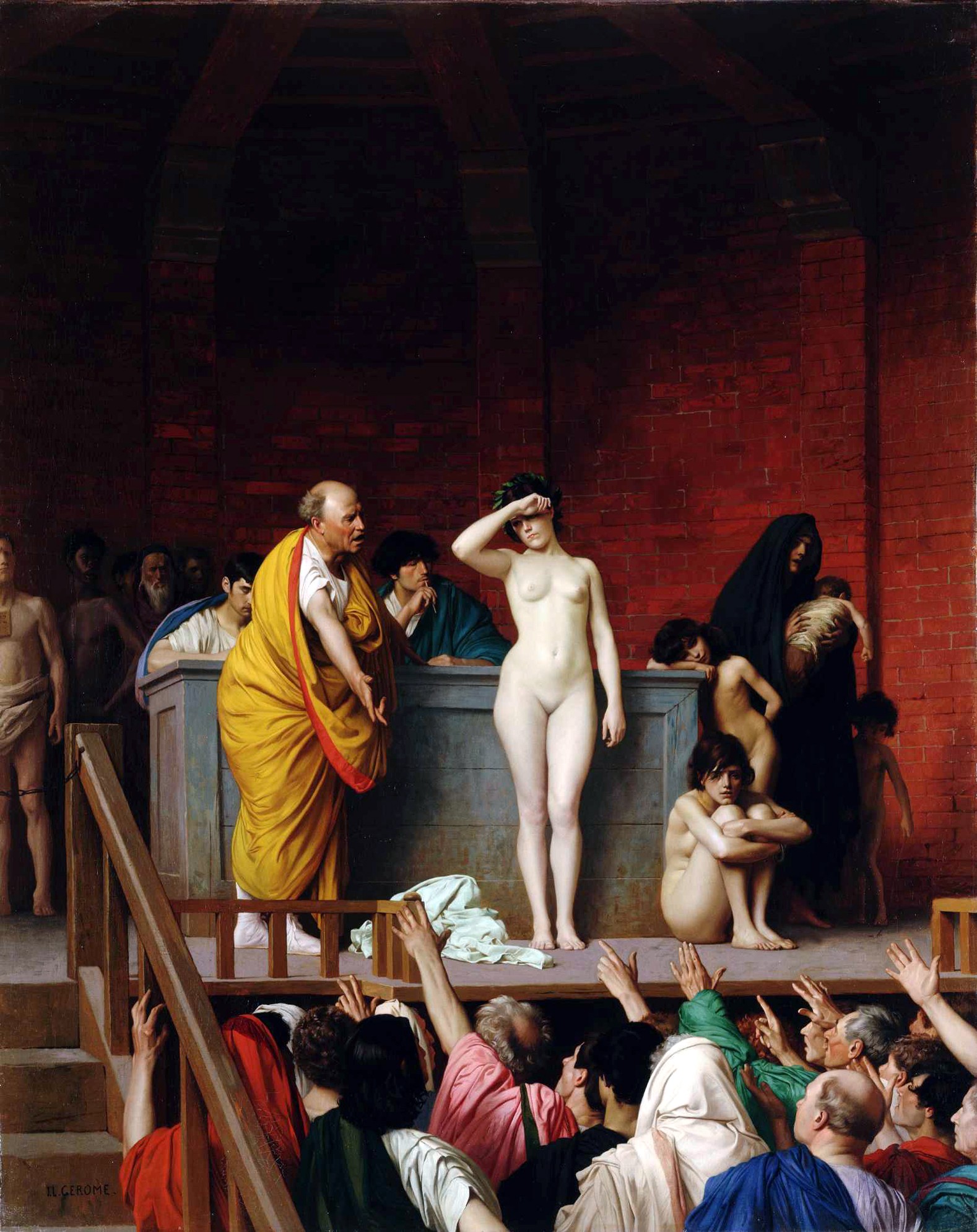
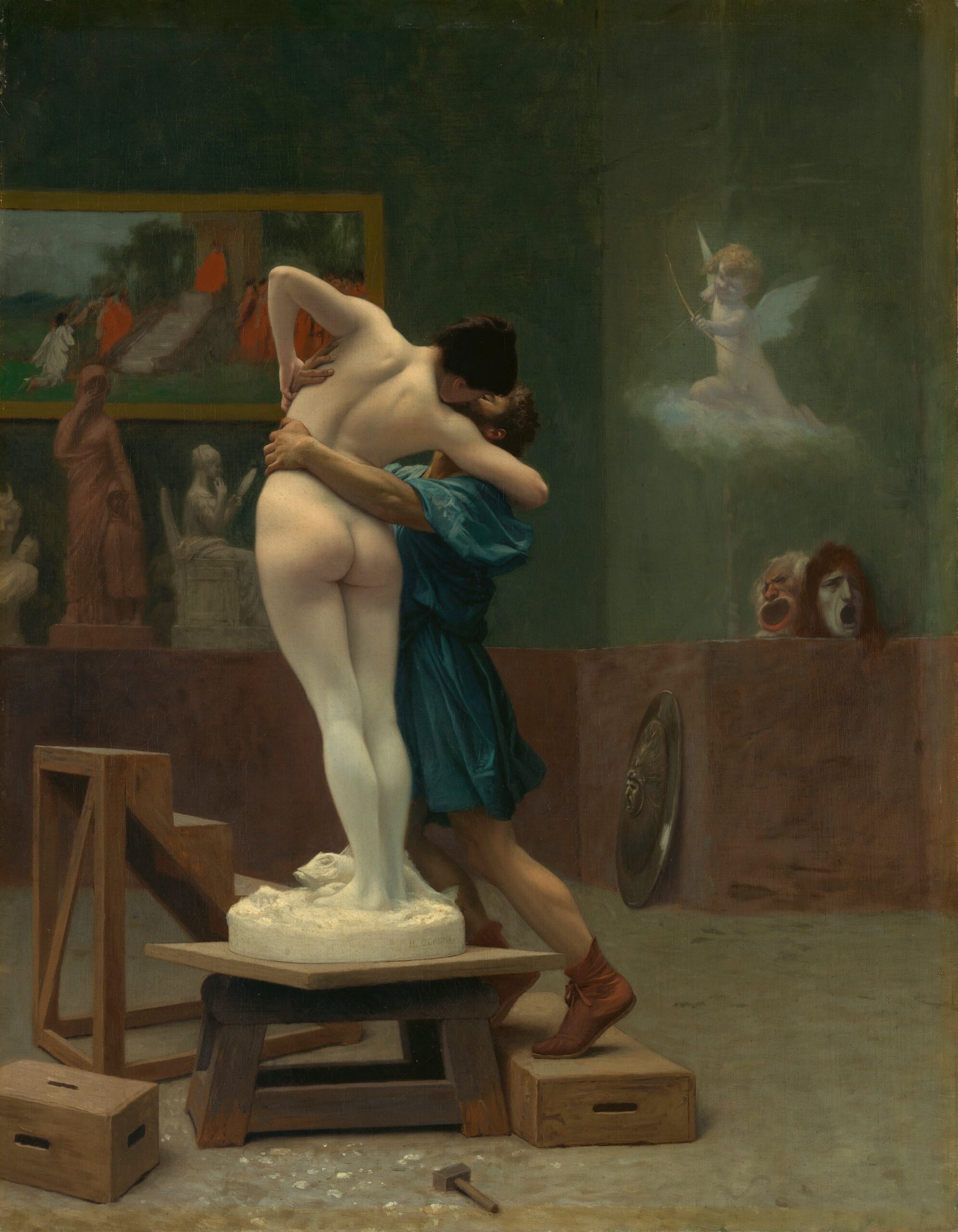
Gérôme is seen as an important representative of Néo-Classicism. Typical for his way of painting is his meticulous precision, a photographic accuracy. He depicted biblical, historical and mythological themes. He represented the Néo-Grec style, depicting daily life in Classical antiquity. Gérôme made several trips to the Near East in 1853 onwards (or between 1856-1875), which he depicted in many orientalist paintings. In his paintings he often used bright colours. Since the late 1870s he was also active and succesfull as a sculptor. His works were sold and resold for high prices, see ‘Prayer in the Mosque’ and ‘Pygmalion and Galatea’↓↓.
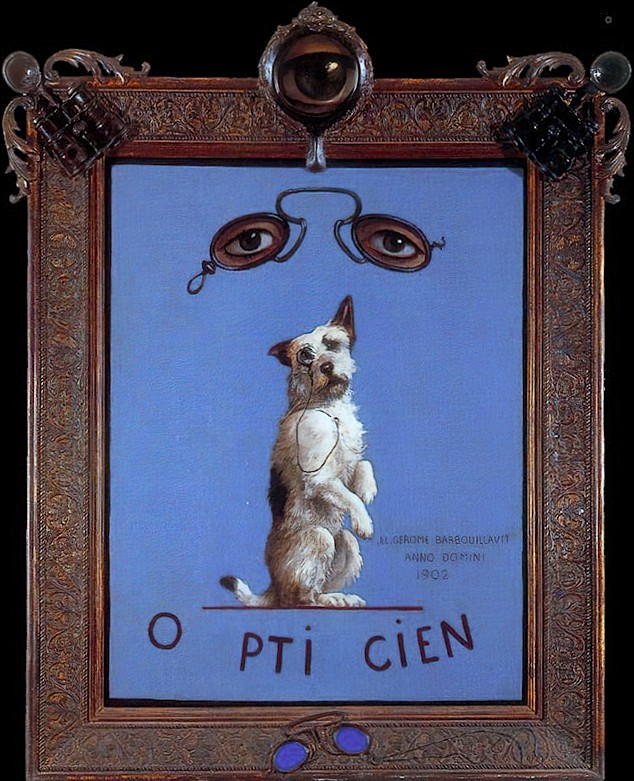
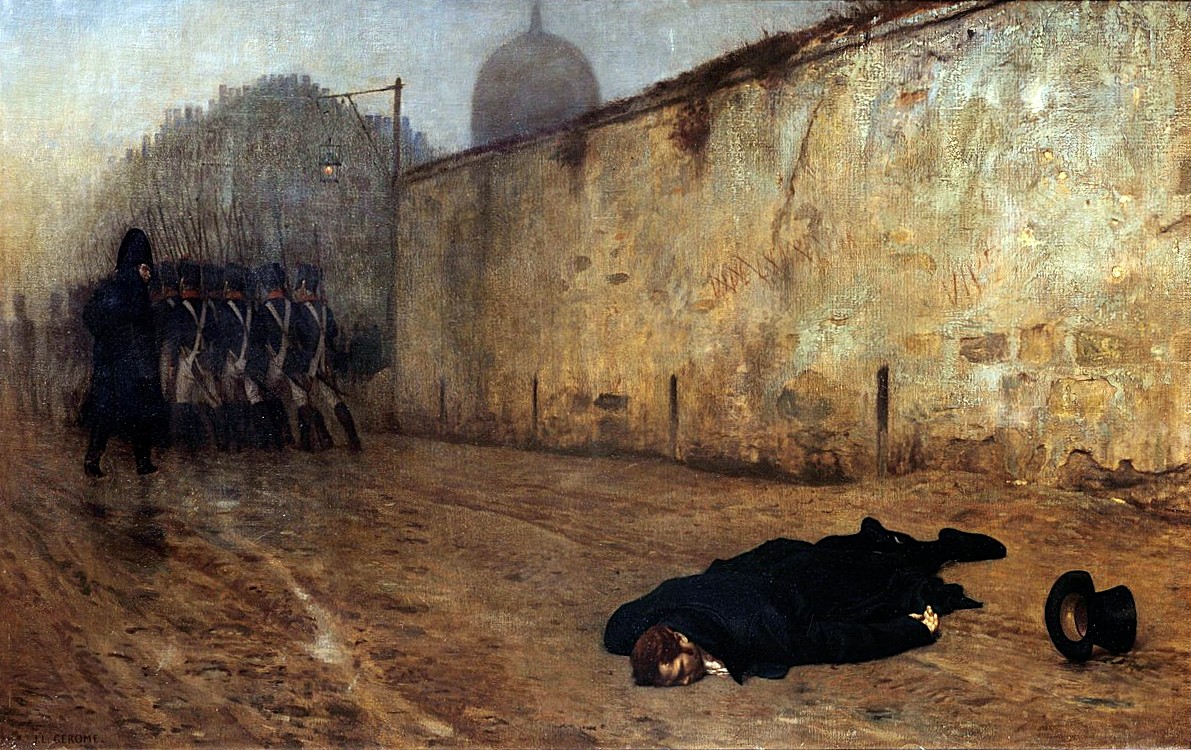
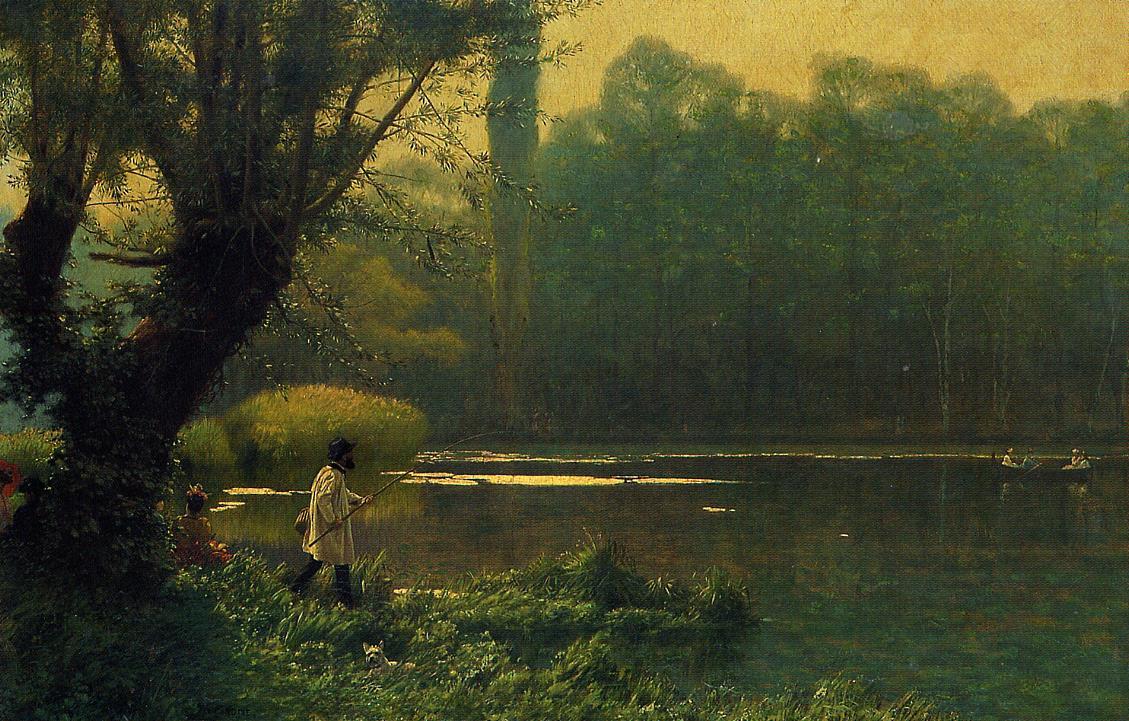
But there are also some deviations in his oeuvre. The ‘Execution of Marshall Ney’ is a historical painting, but has many Realist tendencies. The landscape that depicts a summer afternoon, is an impressionist theme. A work like ‘Opticien’↓ can even be seen as a forerunner of Surrealism (R472,p387) or even of Dadaism.

Gérôme and the Salon:
With his debut at the Salon in 1847 he won a 3rd class medal in history painting↓, though the work hung on a bad spot. In 1848 he won a 2nd class medal. From 1857-63 he exhibited ‘exempté’. Since 1866 he exhibited ‘hors concours’ at the Salon. He received a Medaille d’Honneur in 1874↑*. He exhibited irregularly. Probably he didn’t in 1877 +1878 +1879 +1880 +1882? +1883 +1893 +1894 (iR1).
Note*: (R337/1879; so not in 1875 as Monneret mentions (R88II,p397).


Gérôme and the Exposition Universelle:
Jean-Léon Gérôme received at the Exposition Universelle of 1855 a 2nd class medal; a Medaille d’Honneur in 1867 and in 1878; so he was a most awarded painter; joined in 1889 hors concours and in 1900 was part of the the organizing commitee.
At the Exposition Universelle of 1855 he showed 3 paintings, including 1 religious scene↑. He received a 2nd class medal. He was appointed Chevalier in the Légion d’Honneur.
At the Exposition Universelle of 1867 he showed 13 paintings↑↓; 11 he had shown before at the Salon; 6 were oriental scenes; 5 historical paintings, 1 mythological paintings and 1 a sort of genre painting. He received a Grand Prix. He was appointed Officier in the Légion d’Honneur.
At the Exposition Universelle of 1878 he showed 11 paintings↑↓; 3 he had shown before at the Salon; 3 works were loans. He received a Medaille d’Honneur (rappèl). He also showed 2 groupes of sculptures↓. He was appointed Commandeur in the Légion d’Honneur.
At the Exposition Universelle of 1889 he was part of the admission jury. He didn’t show any art-work.
At the Exposition Universelle of 1900 he was part of the part of the organizing commitee. He showed just 1 painting↑ and 2 sculptures at the Centennial exhibition; he didn’t show any art-work at the Decennial exhibition, but he was president of the jury. He was appointed Grand Officier in the Légion d’Honneur.


Gérôme and the Légion d’Honneur:
Jean-Léon Gérôme was appointed in the Légion d’Honneur in 1855 as Chevalier, in 1867 as Officier and in 1878 as Commandeur and in 1900 as Grand Officier. So, he was a most honoured painter.
Gérôme, part of the establishement of art:
Gérôme started a studio around 1860/64 and would have more than 2000 pupils. Among his students were: Cassatt, Cordey, Forain, Franc Lamy, de Nittis, Raffaëlli, Redon, Vidal and also Besnard, Goeneutte and Fernand Léger. He also teached at the École des Beaux-Arts since 1863 (or 1867) and would do so for years. In 1867 he was appointed as one of the 3 professors (iR3).
In 1865, aged just 41, he was appointed as a member of the Institut de France till his death in 1904, a very long period of 39 years.
He received several important commissions.
He was part of several juries for the Salon and the Exposition Universelle.
Gérôme and the Impressionists:
He defended the academic art against the Impressionists and in 1894 was against accepting the Legacy of Caillebotte, saying ‘If the state accepts such rubbish, moral decay must be very advanced.’ (R3,p664). In 1900 being part of the organizing commitee of the Exposition Universelle, he couldn’t prefend there was a so-called impressionist-room at the Exposition Centennale. Many sources state that he disdainfully said to the President: “Don’t go inside mister President, here hangs the disgrace of France!” (R88I,p293;R88II,p257;R472,p29;R9,p326). But, none of the contemporary articles on the opening the 1st of May quotes this remark (R22I,p347). Still, Cézanne copied (around 1869) some of Gérôme his works and Degas regularly dined with him.


More works exhibited:
On this page you will find just a few paintings that Gérôme made and exhibited at the Salon (iR1) and the Exposition Universelle (R231). Here below you will find some titles of works that are (quite certainly) are exhibited with links to other internet pages.
S1848-1932, Anacréon, Bacchus et l’Amour (2nd class medal) (iR6; iR23; iR127)
S1848-1933, La Vierge, l’Enfant-Jésus et saint Jean (2nd class medal) (iR4; iR6)
S1850-1259, Bacchus et l’Amour ivres (=? M11) Bought by the State.
S1852-535, Pestum (iR6)
S1853-527, Frise destinée à être reproduite sur un vase commémoratif de l’exposition de Londres (ministère d’Etat, Pour la manufacture de Sèvres) (M1)
S1857-1157, Recrues égyptiennes traversant le désert (iR6)
S1857-1158?, Pifferari (iR6)
S1857-1160, Vue de la plaine de Thèbes (Haute-Egypte) (iR4; iR6; iR489)
S1857-1162, Chameaux à l’abreuvoir (=? iR6; M113)
S1857-1161, Memnon et Sésostris (=? iR6; =? iR6)
S1859-1239, Le roi Candaule (iR3; iR6; museum)
S1861-1250, “Deux augures n’ont jamais pu se regarder sans rire” (=? iR13; compare print; compare etch/iR4)
=EU-1867-291, Les deux augures; Salon de 1861; à MM. Vander Donckt frères.
S1861-?, Phryné devant le tribunal (iR4; iR6; M50)
=EU-1867-290, Phryné devant le tribunal; Salon de 1861; à M. H. Schröder
S1861-?, Hache-paille égyptien (compare M1)
=EU-1867-292, Hache-paille égyptien; Salon de 1861; à M. Werlé.
S1861-?, Rembrandt faisant mordre une planche à l’eau-forte (compare M147; print Goupil + print Goupil; iR48)
=EU-1867-293, Rembrandt faisant mordre une planche à l’eau-forte; Salon de 1861; à M. E. Fould.
S1863-769, Louis XIV et Molière (=? iR6)
=EU-1867-294, Louis XIV et Molière; Salon de 1863; à M. Edward-Mattews.
S1863-770, Le prisonnier (iR6; iR23; iR489)
=EU-1867-296, Le prisonnier; Salon de 1863; Musée de Nantes.
S1863-771, Boucher turc à Jérusalem (=!? iR6)
=EU-1867-295, Boucher turc à Jérusalem; Salon de 1863; à M. J. Hoeg.
S1864-794, L’almée (=? iR6/Dayton +iR6; compare etch)
=EU-1867-297, L’Almée; Salon de 1864 (à M. J. Hoeg)
S1865-889, Réception des ambassadeurs siamois par l’Empereur, au palais de Fontainebleau (le ministère de la Maison de l’empereur et des beaux-arts; Versailles) (M195; iR127) Bought 1867 by the State for 20.000fr.
S1866-800, Cléopâtre et César; (Appartient à M. Turner) (iR5)
S1866-, Porte de la mosquée El-Assaneyn au Caire, où furent exposées les têtes des beys immolés par Salek-Kachef (=? iR6)
=EU-1867-298, Porte de la mosquée El-Assaneyn au Caire, où furent exposées les têtes des beys immolés par Salek-Kachef; Salon de 1866; à M. H. Stewart.
S1867-643, Marchand d’habits au Caire (=? iR6)
EU-1867-299, La mort de César (à M. J. Allard) (iR3; iR6; M48)
EU-1867-300, Arnautes jouant aux échecs (=? iR6; iR173)
S1868-1072, Jérusalem (iR3; iR6; M1)
S1874-796, Une collaboration (iR4; iR6)
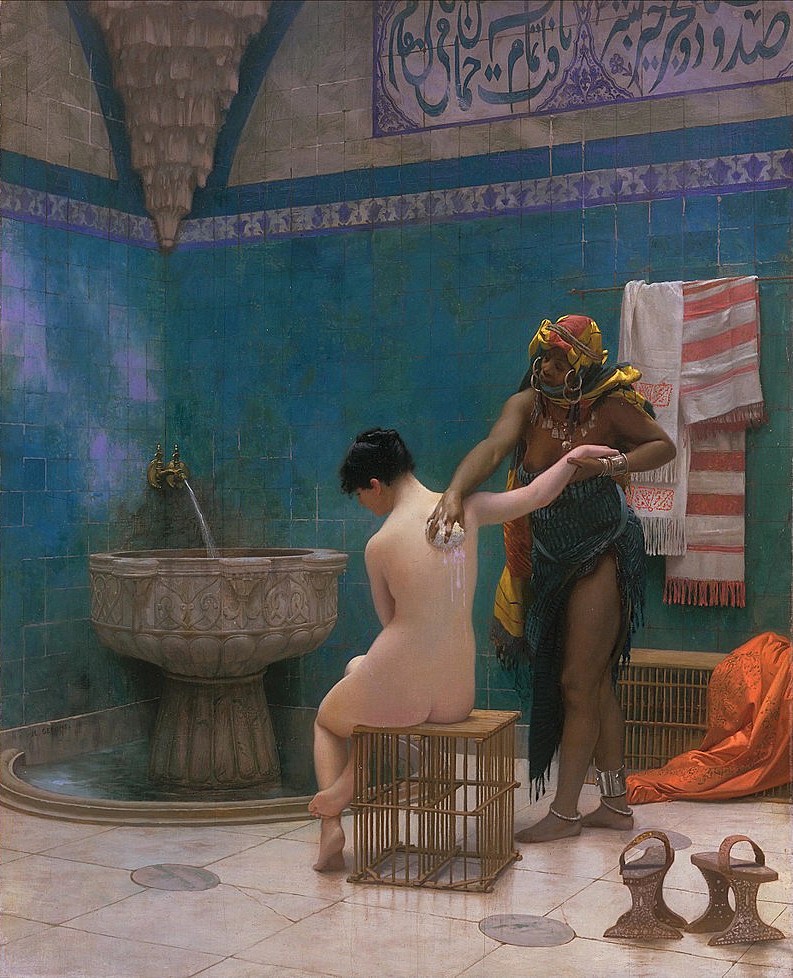
EU-1878-362, Bain turc; à M. Turner (=? M22; iR6)
SdAF-1881-3924, Anacréon, Bacchus et l’Amour; groupe, plâtre (compare bronze statue iR6/M20 + iR6)
SdAF-1884-1031, La nuit au désert (iR4; iR6)
SdAF-1885-?, Réception du Grand Condé par Louis XIV (Versailles, 1674) (M1; iR4; iR6; iR127)
SdAF-1885-1087, Grande piscine de Brousse (iR4; iR6)
SdAF-1886-1043, Le premier baiser du soleil (iR4; iR6)
SdAF-1895-823, Mendacibus et histrionibus occisa in puteo jacet alma Veritas (iR6)
SdAF-1896-897, Promenade de la Cour dans les jardins de Versailles (iR14/A2021/05/20)
SdAF-1896-898, La Vérité (iR3; iR6)
SdAF-1896-3482, Paul Baudry, Sculpture, Monument destiné à la ville de La Roche-sur-Yon (compare iR4)
EU-1900-IV-1662, Le Rétiaire; figurine (à M. d’Albenas) (compare: iR11/A2004/05/15)
EU-1900-IV-1663, Le Sagittaire; figurine (à M. d’Albenas) (=? see)
Sources:
My main sources are: R472,p387; R3,p664; R9,p325/6; R11,p50/1+400/1; R88I,p292; R88II,p1012; R322,p277-280; R231; R259; R337; iR1; iR3; iR6; iR23;
For further reading:
Ackerman, G.M.: Jean-Léon Gérôme: A Catalogue Raisonné. London, 1986 (R472,p387)
The life and work of Jean-Léon Gérôme: with a catalogue raisonné (2d edition). 2000 (iR6; iR66)
Additional references:
Recommanded citation: “Meta-Impressionism: Jean-Léon Gérôme (1824-1904), a most awarded, neo-classicist and influential artist. Last modified 2025/12/06. https://www.impressionism.nl/gerome-1824-1904/”
Note: additional info will be added.