Impressionism, locations
where the ‘impressionists’ did paint:
Giverny
and surroundings
Falaise + river Epte +Limetz + Bennecourt +
Jeufosse +Port-Villez +Le Grand Val +Vernon
Giverny introduction:
Giverny lies on the right / north bank of the Seine, about 75km west of Paris. In 1883 Claude Monet moved to Giverny, in 1890 he would buy the property, in 1893 he would buy the adjoining land and in 1895 he starts to build the waterlily pond here. In 1926 he would die in Giverny. See seperate page on Monet in Giverny with paintings depicting his garden and his pond.
Monet often painted in the surroundings of Giverny. On the right bank of the Seine: Falaise, the river Epte, Limetz and Bennecourt. And on the left bank of the Seine: Jeufosse, Port-Villez, Le Grand Val and Vernon. Here he made several series: the glaçons, the poplars, the haystacks, the misty-morning scenes. Monet also painted in the surroundings, namely the church of Vernon and the opposite hill of Port-Villez. Also other artists came and painted in Giverny.
Note: Additional info and pictures will follow.
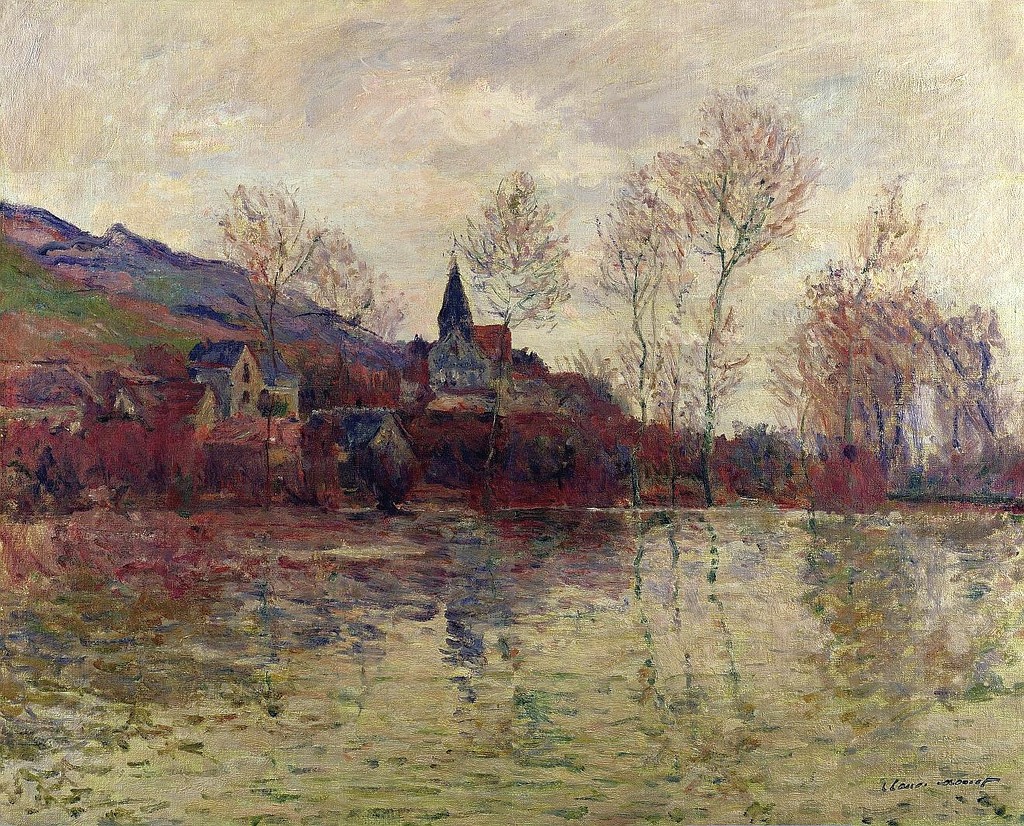
Giverny:
Giverny lies on the right / north bank of the Seine, about 75km west of Paris. (iR468; iR9; iR3; iR4) It is part of the arrondissement Les Andelys (iR3), department Eure (iR3) and the region Normandy (iR3). To the east and south flows the river L’Epte.
In 1883 Claude Monet moved to Giverny, in 1890 he would buy the property, in 1893 he would buy the adjoining land and in 1895 he starts to build the waterlily pond here. But, Monet didn’t only paint his garden and his pond (see seperate page), but the village of Giverny and also the surroundings.
In Giverny you can find the Musée des Impressionnismes (M209); see links for the collection (M209; iR6)
Monet depicted the village of Giverny in the following pictures:
CR986 +987: the Église Sainte-Radegonde (iR4) and the surroundings houses (and the orchard in front); looking north.
CR918 +988 +1062: houses with orchards east of Le Pressoir (iR486) (1884-1886).
CR1063 +1064: Rue des Grands-Jardins (iR486) looking south; houses with orchards (in the Spring).
CR1055: in the snow (1886-01) looking south-east depicting the Pressoir (iR486) and (in the distance) the Clos Morin↓.
CR1057: seen from the road from Limetz↓, looking north-west, with a snow effect (1886-01).
CR1058: looking east depicting the flood (1886 Spring).
CR969: a view on Giverny from the opposite hill (Grand Val).
CR998 +999: a view on Giverny from the southern fields, with in the background the northern hills.
CR1000: the northern hills.
Plain of Les Ajoux: CR1155 +1156.
Monet depicted the surrounding fields of which the location is not clear: CR1146 +1147 +1157.


Le Clos Morin:
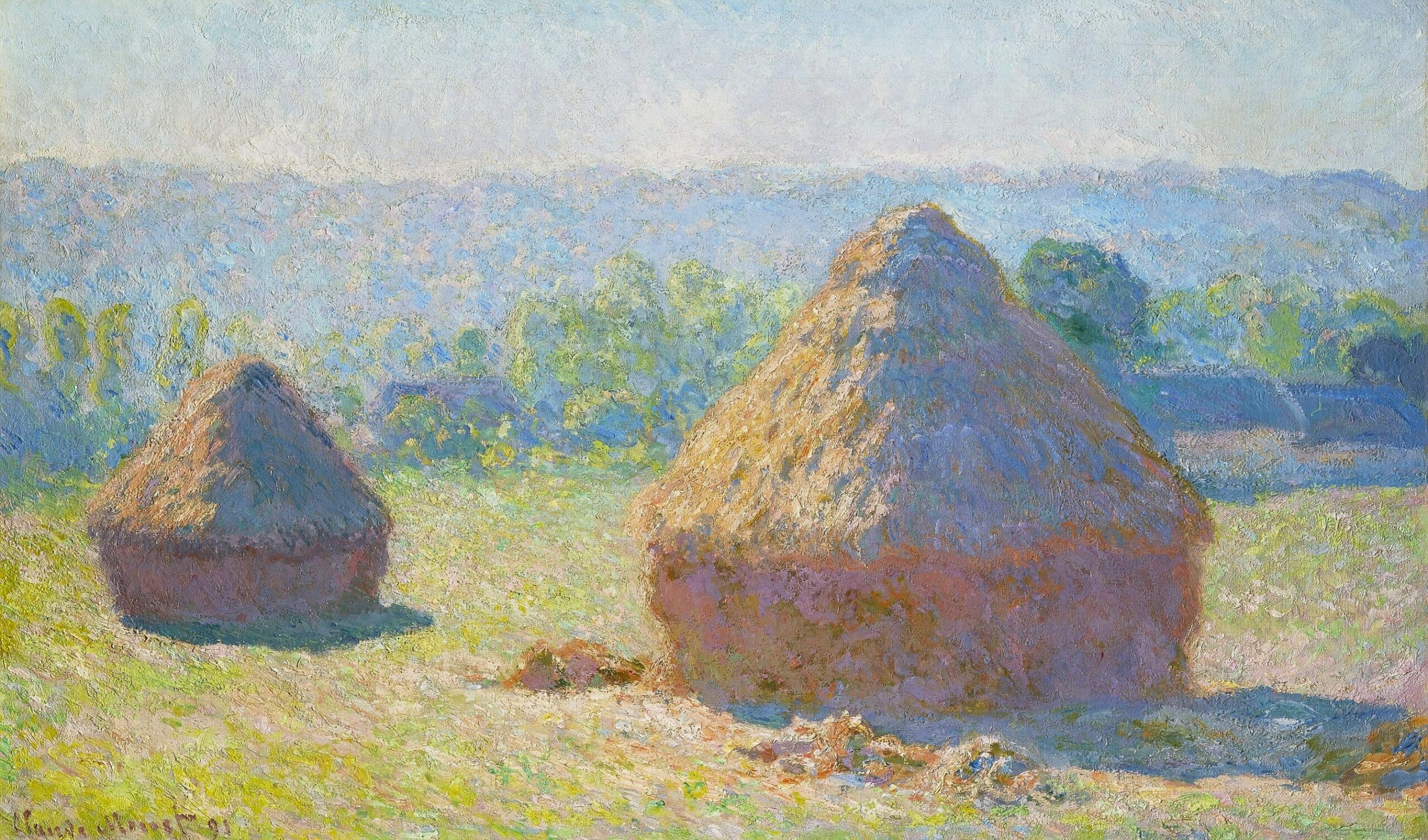
From late Summer 1888 until early 1891 Claude Monet painted a serie of the haystacks (CR1213-1217a +1266-1290). These haystacks had been erected in the fields (called ‘le Clos Morin’) just west of his house in Giverny (R22,no1213). It seems this is now the parking place near the Monet estate (iR9).

La Prairie:
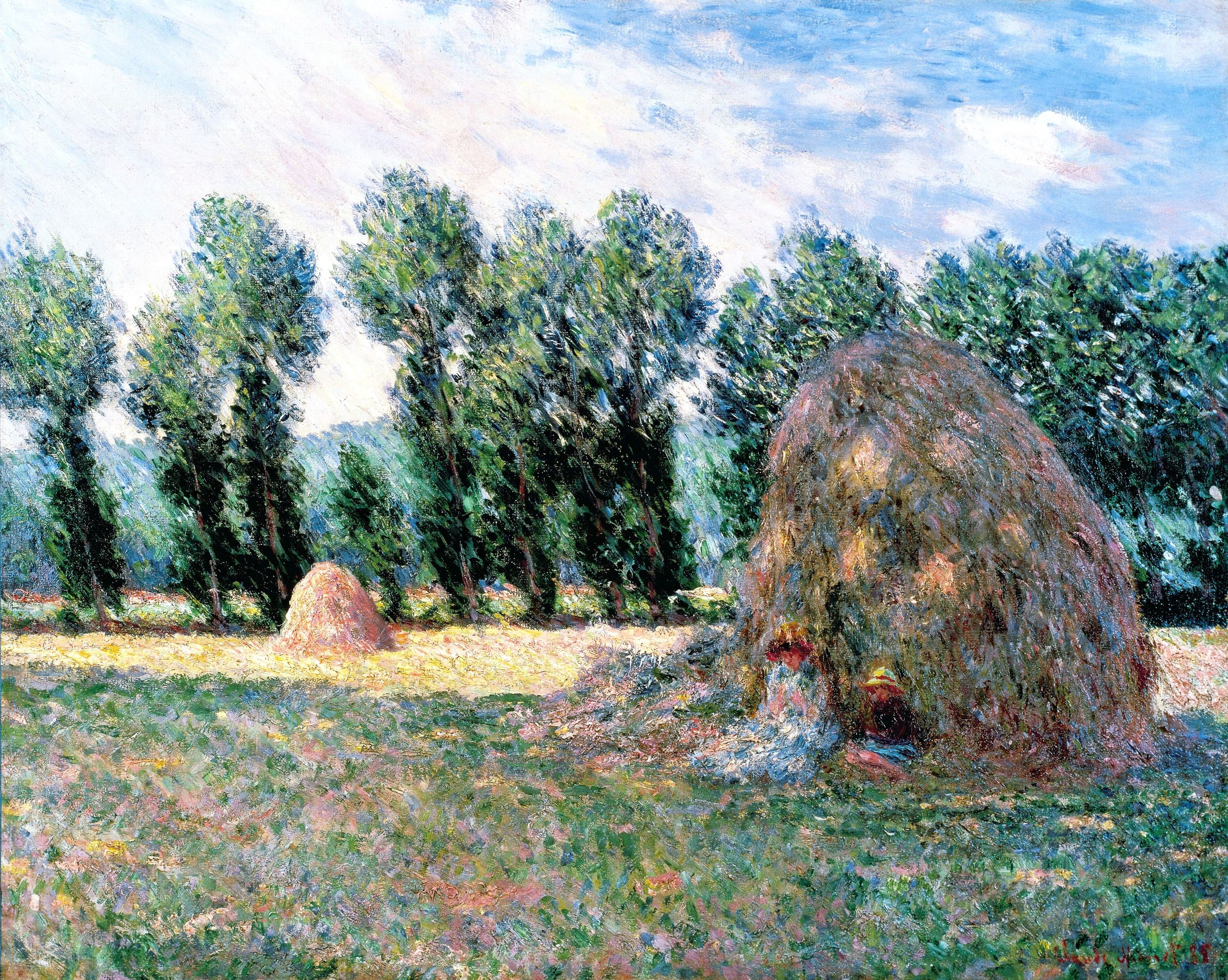
La Prairie (iR486) is a field south(-east) of his estate, which Claude Monet depicted in the years 1884-1886.
In these paintings Monet sometimes depicted his family members, haystacks, poplars along the Epte (in the distance to the south-east) and the hills of Port-Villez (to the south).
See the Catalogue Raisonné of Wildenstein: CR900-902 +991-996 +.

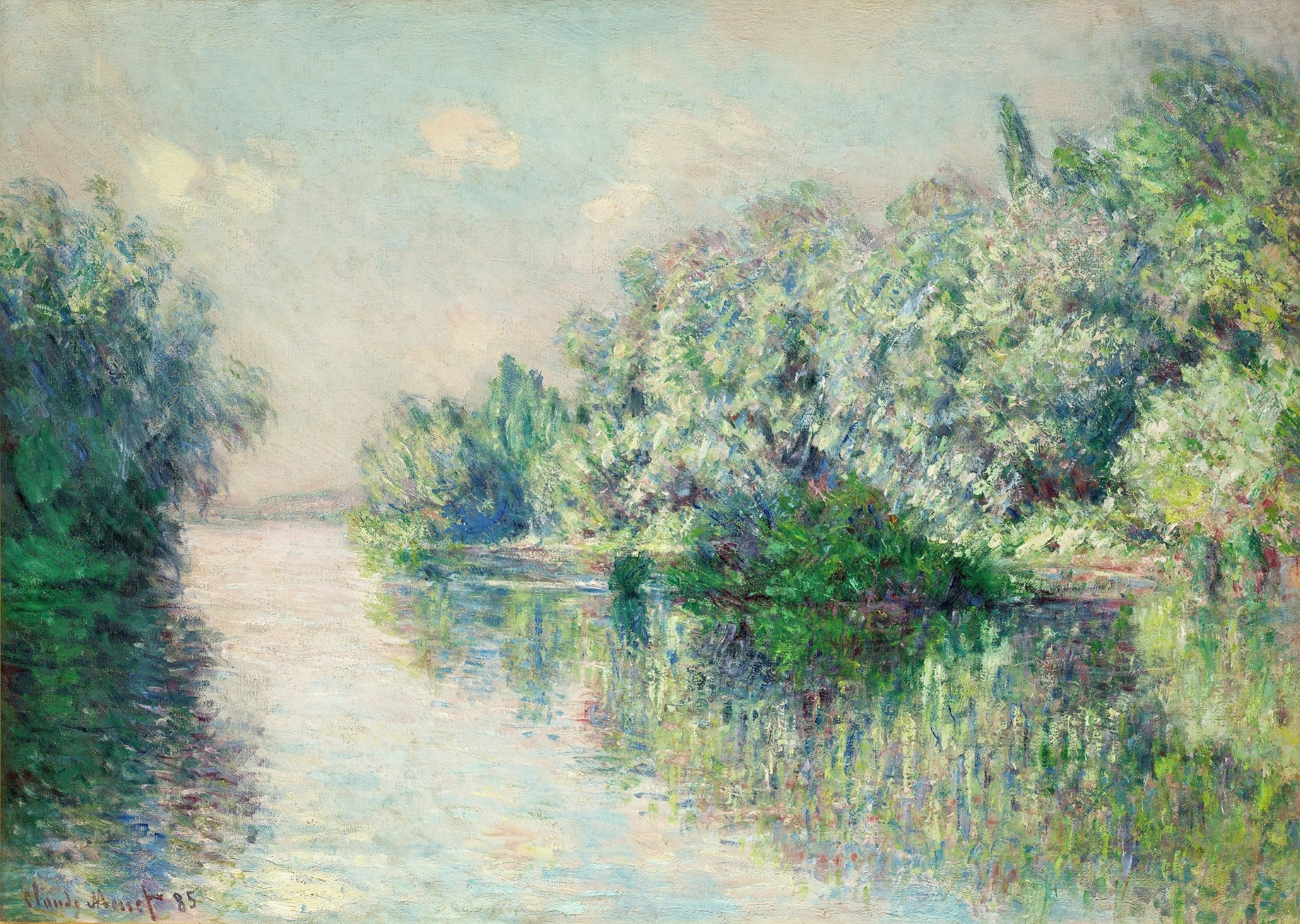
The river Epte:
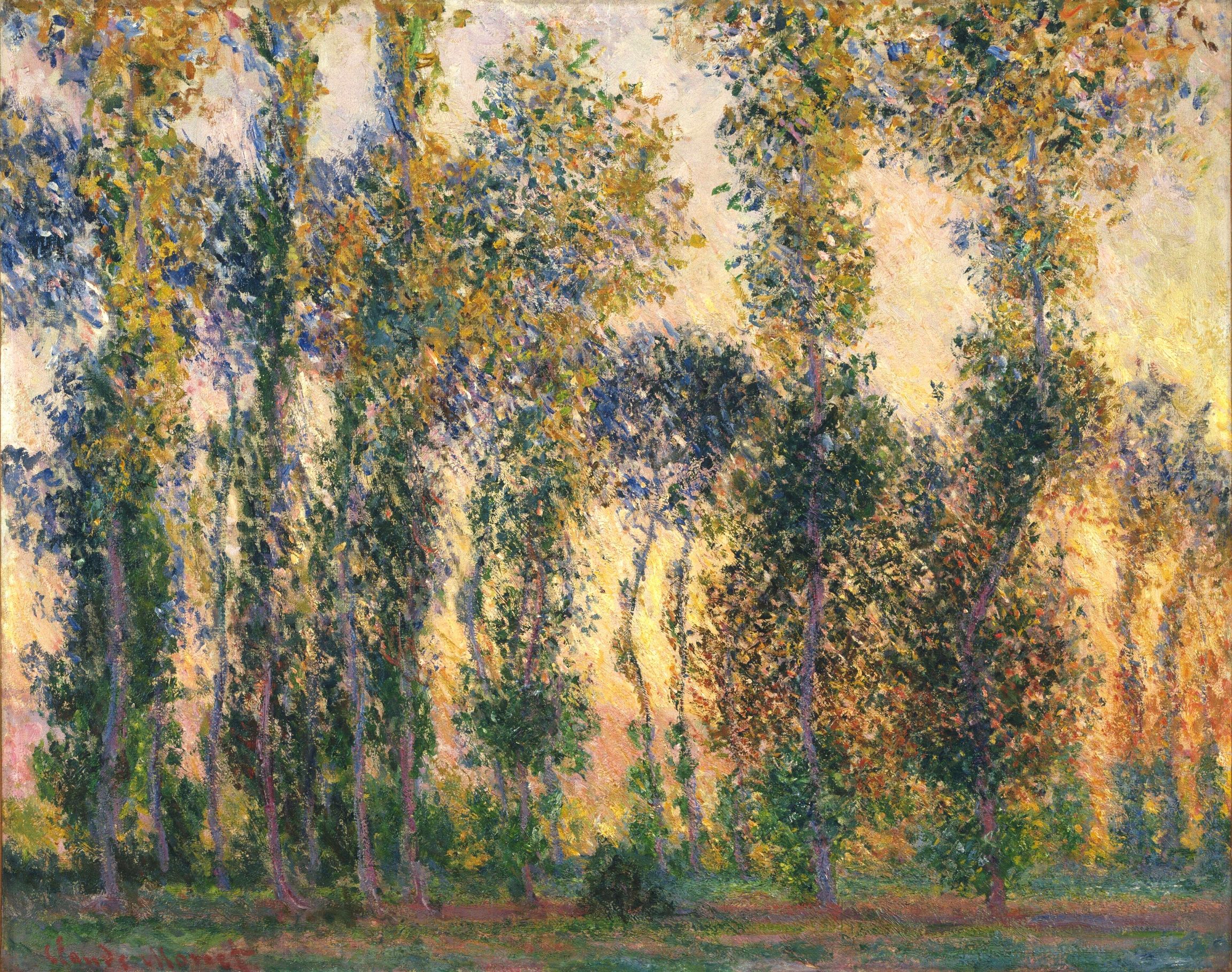
Claude Monet depicted the river Epte several times. Including the mouth of the Epte (CR1006-1008); compare the Arm of the Seine↓.
See the Catalogue Raisonné of Wildenstein: CR980-985 +1006-1008 (R22)
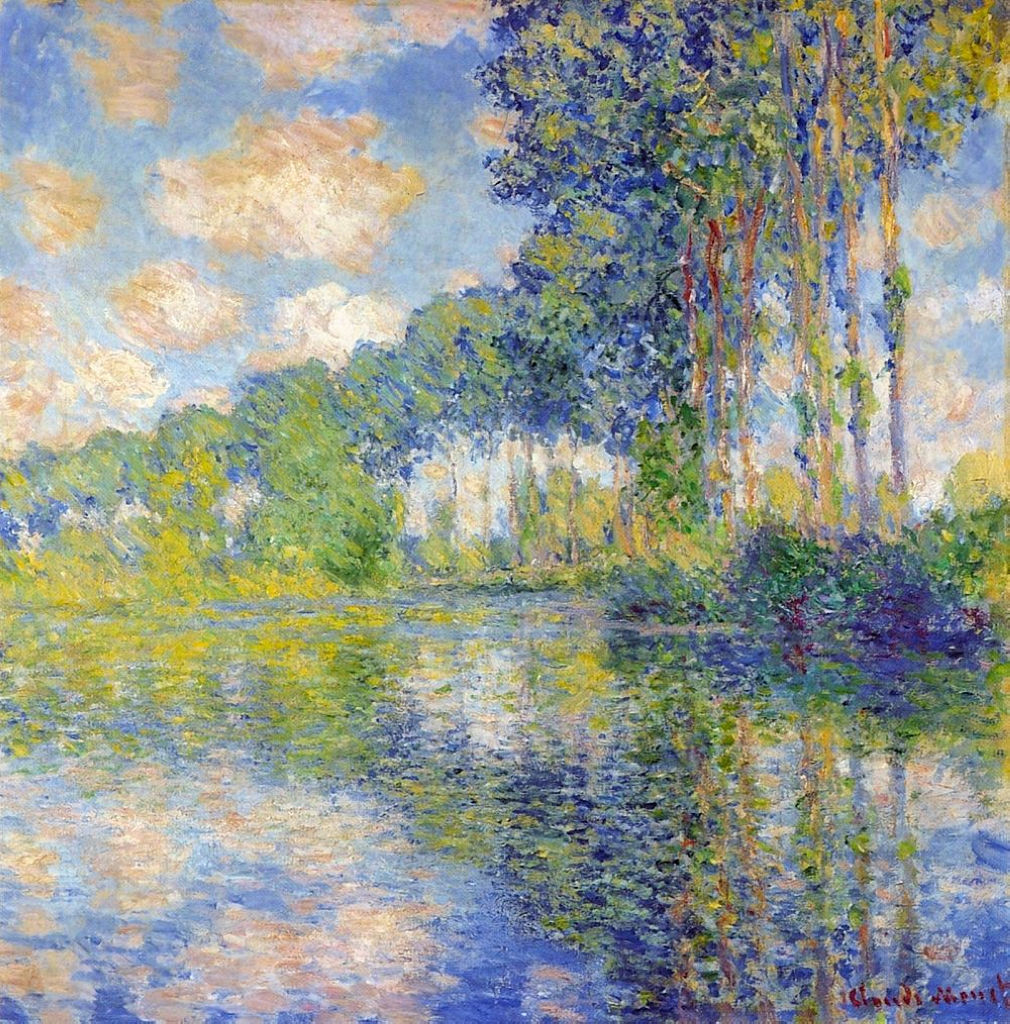
Poplars along the river Epte:
Claude Monet made his famous serie of the Poplars along the Epte (CR1291-1313).

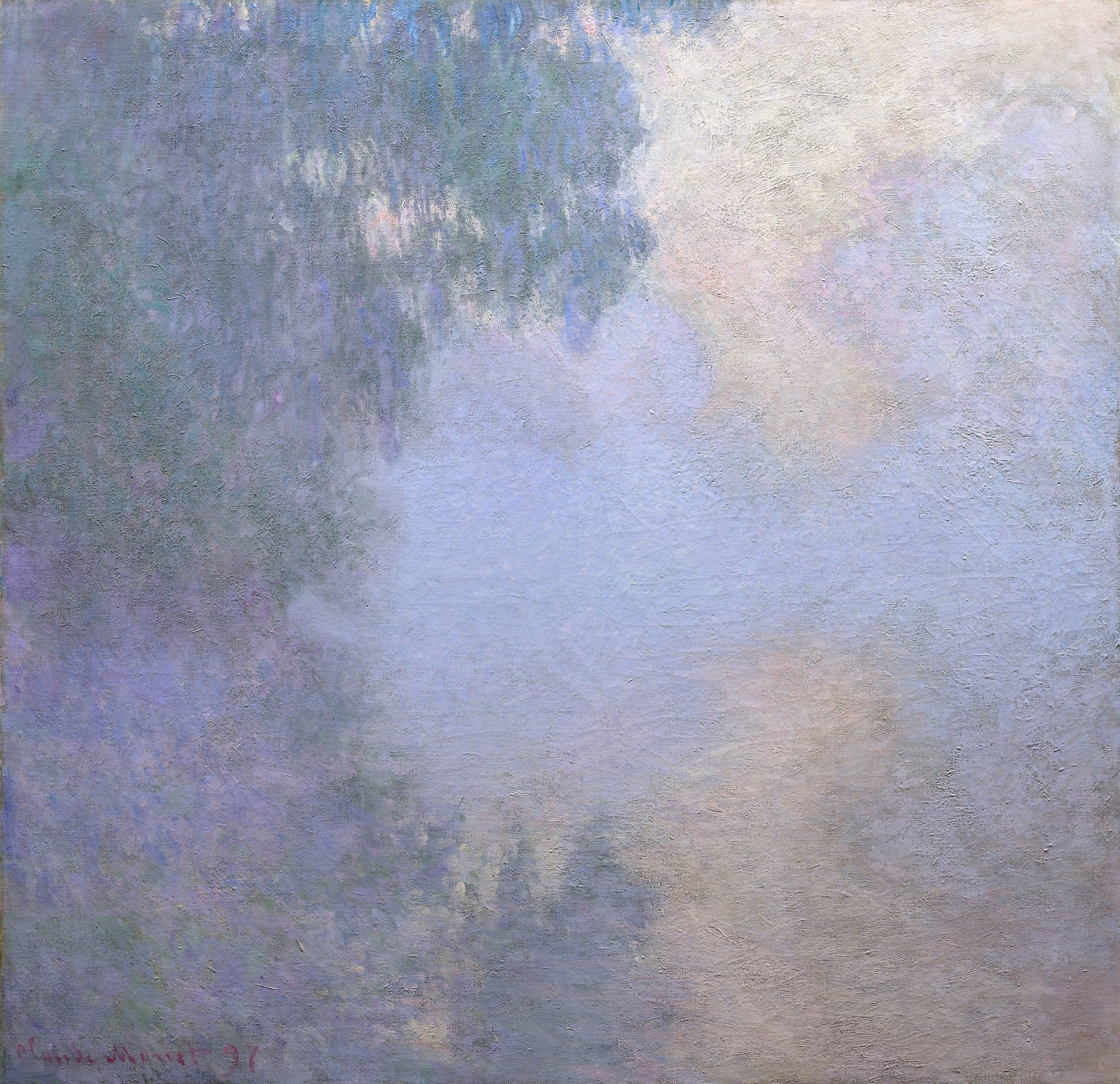
Arm of the Seine:
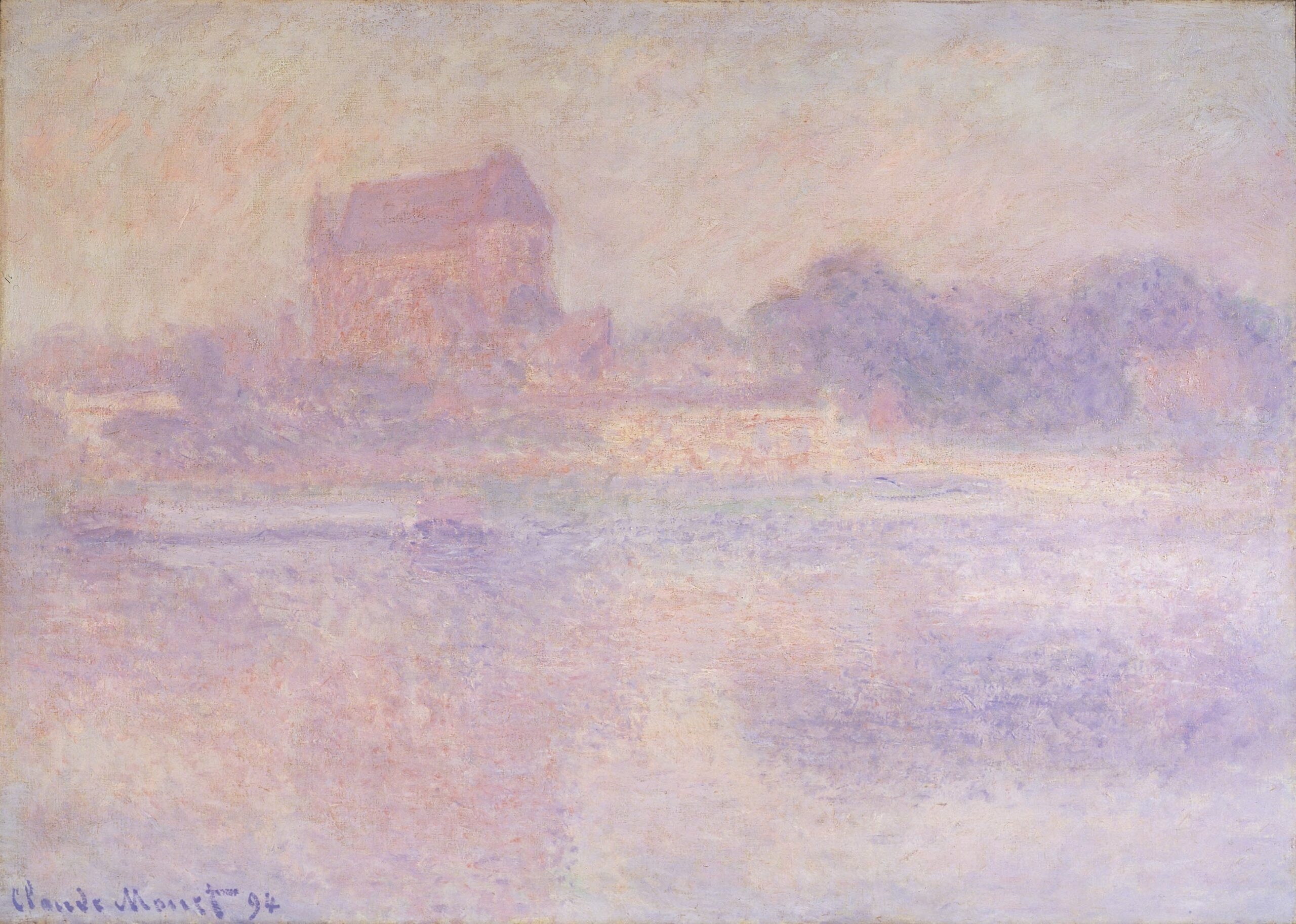
In 1896 +1897 (+1898) Claude Monet depicted an Arm of the Seine, which must be the confluence with the Epte or with the Eure, just south of his estate. He made a serie namely depicting the morning mist (CR1435-1437 +1472-1488 +1499).

Falaise + Val de Falaise:
Just east of Giverny lies the hamlet Falaise (iR468) and it’s valley, the Val de Falaise (or Les Vaux Vailly) (iR9).
Claude Monet depicted this in CR970-979 (1885) +1054.
In CR970 +971 he depicted the road towards Falaise looking east and in CR972 looking west.
In CR973 +974 he rendered a view on Falaise looking north-east.
In CR975 +976 he rendered the Val de Falaise looking north and again in CR977 in the mist.
In CR978 +979 he rendered the Val de Falaise looking north-west.
In CR1054 he depicted Falaise and the valley in the snow, looking north (1886/01).


Limetz:
Just south-east of Giverny at the left (east) bank of the river Epte lies Limetz-Villez. (iR468; iR9; iR3) It is part of the department Yvelines (iR3) and the arrondissement Mantes-la-Jolie (iR3).
He made 4 paintings in this village: CR1056 +1148 +1210 +1210a (R22IV,p1058).
CR1056 depicts the main street in the snow (1886/01).
CR1148 depicts the meadow at Limetz with Alice and Jean-Pierre Hoschedé and Michel Monet.
CR1210 +1210a depict the former windmill downstream a branch of the Epte.
Bennecourt:
More south-east of Limetz lies Bennecourt (iR468; iR9; iR3).
Already in 1868 Claude Monet made a painting in Bennecourt. Monet depicted Camille sitting on an island across from Gloton, a hamlet east of Bennecourt (iR486). Monet stayed here in 1868, Cézanne in 1866 and Zola in 1866 + 1868. (R22,no110)
After Monet moved to Giverny he sometimes painted in Bennecourt, depicting the Saint Ouen church in 1885 (iR9; iR4) (CR989 +990), rendering a distant view from the south-east in 1887 (CR1125 +1126). January 1893 Monet depicted the floating ice in the Seine, as a small serie, with the now disappeared islet of Forée in the middle and Port-Villez at the opposite bank: CR1333-44 (R22IV,p1057).
More to the east of Bennecourt lies La Roche Guyon on further to the east Vétheuil, where Monet lived from 1878/08 till 1881/12 (R464,p13).


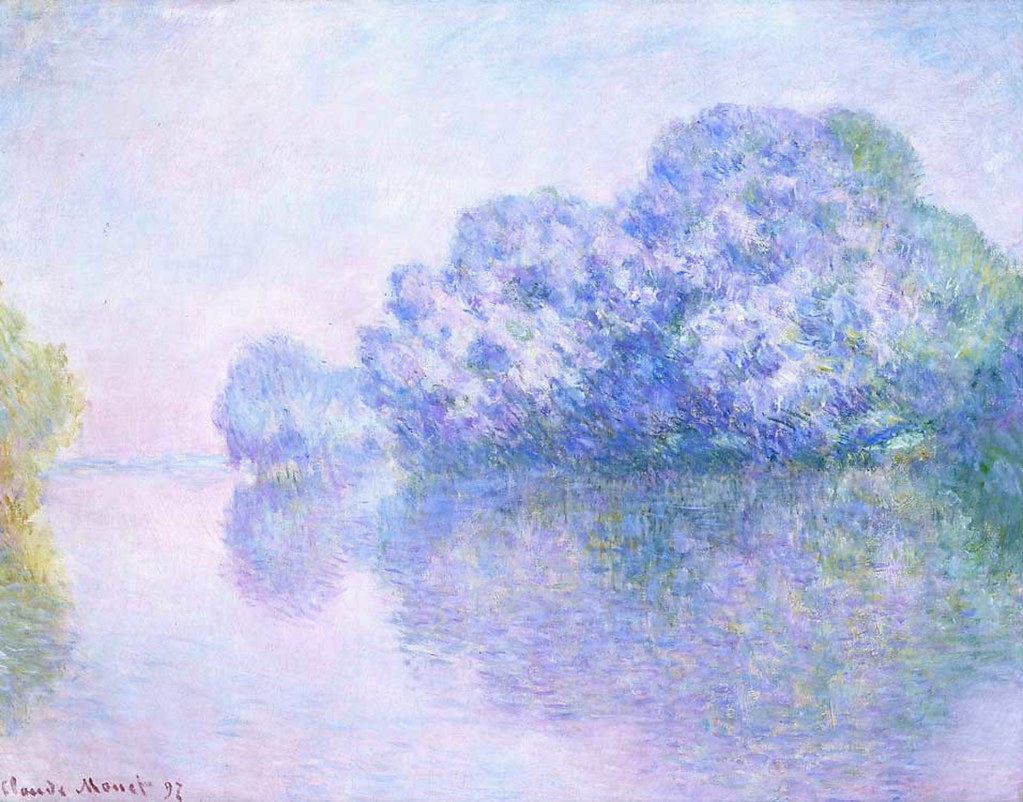
The Islets in the Seine:
In the days of Monet there have been several little islands between Giverny and Limetz-Villez on the right bank and Port-Villez on the left bank of the Seine.
Monet more often depicted L’Île aux Orties (see also his morning mist series), which know seems to be part of the main land (iR468). Other Islands were: Île Hardy, Île des Fourgons, la Mère Île, Îlon, Île des boutiques. Many of them have disappeared after the Port-Villez dam upstream was demolished (R22,no841). More to the east, the Île de la Flotte (iR468) and the Grande Île (with the L’île aux Loisirs and 1 or 2 little islands) (iR468), still exists.
See the Catalogue Raisonné of Wildenstein: CR834 +835 +836 +840 +841 +1489-1494 (R22).

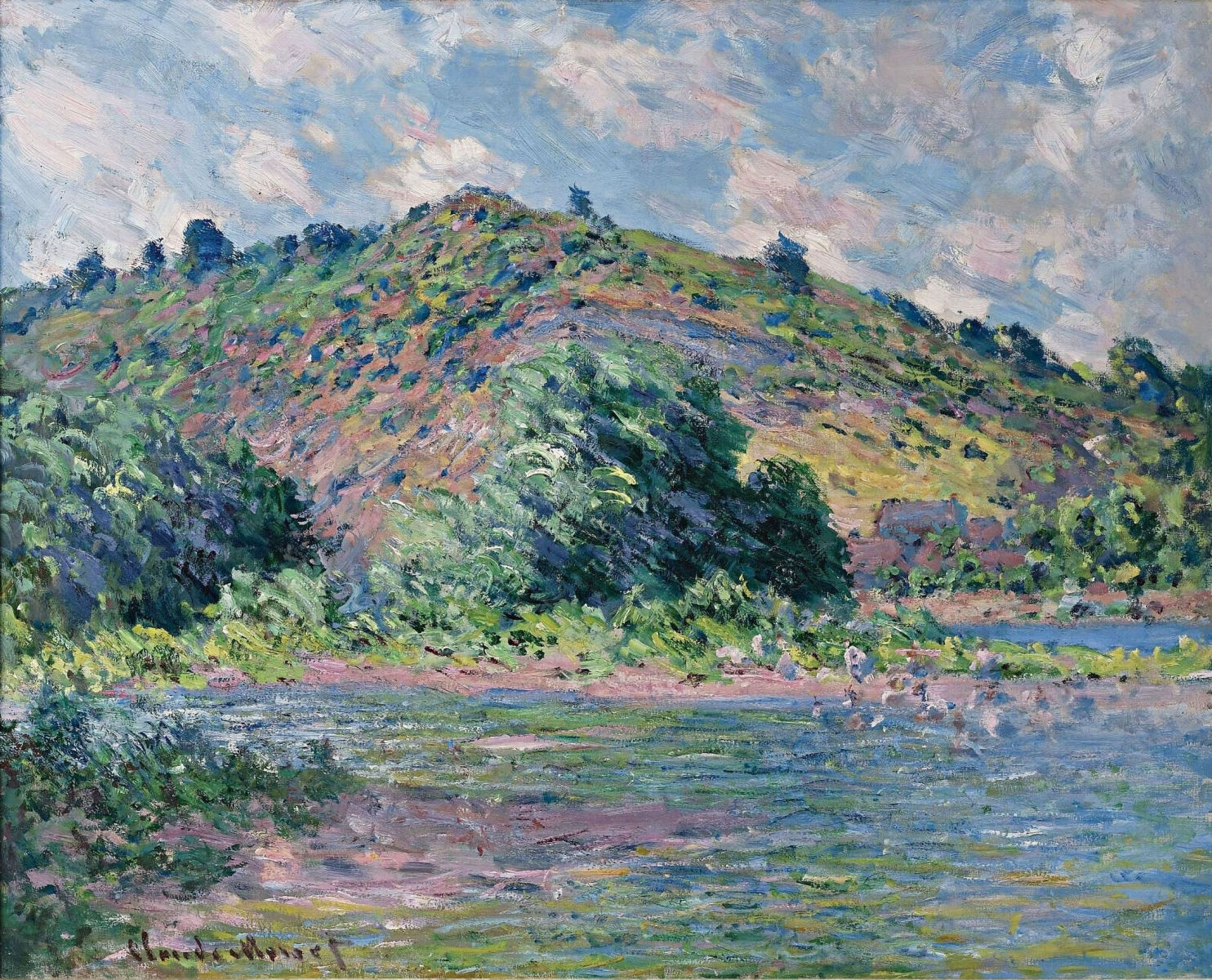
Port-Villez:
On the opposite left bank of the Seine, to the south-east, lies the small village Port-Villez (iR468; iR9; iR3). It is part of the department Yvelines (iR3) and the arrondissement Mantes-la-Jolie (iR3).
Claude Monet namely depicted the hill of Port-Villez, the Coteau du Gibbet, sitting on the opposite riverbank of Giverny or in his studio-boat in the following of his paintings: CR834-836 +1003-1005.
Other pictures he made of Port-Villez were: CR834-839 +841 +962 +1003-1005 +1262-1265 +1341-1344 +1370-1382 +1774-1776 (R22IV,p1059).
CR1001 +1002: road from Port-Villez towards Notre-Dame-de-la-Mer.
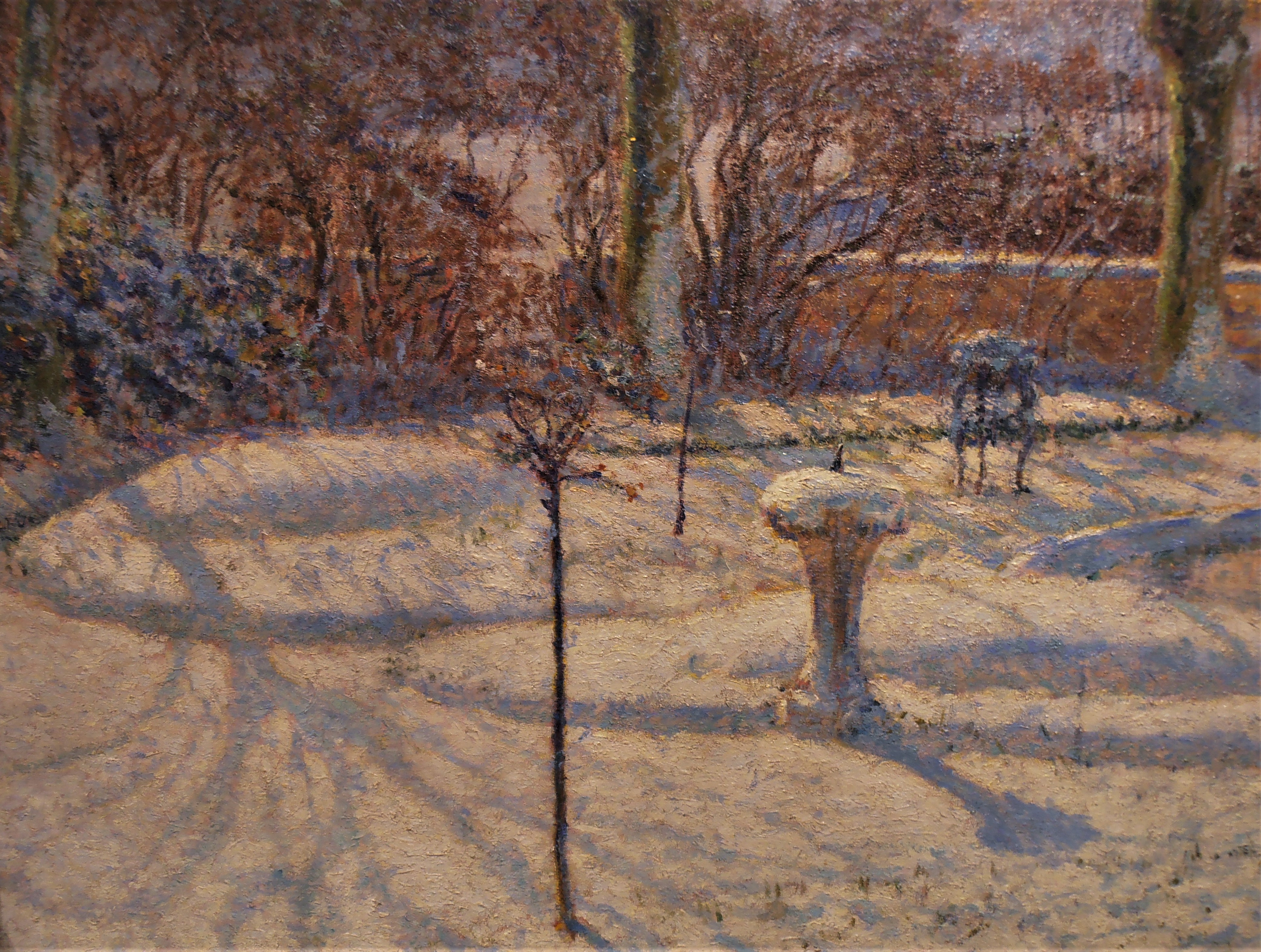
It is unclear if Alphonse Maureau also depicted this scene.

Jeufosse:
More to the east of Port-Villez lies the small village Jeufosse (iR468; iR9; iR3).
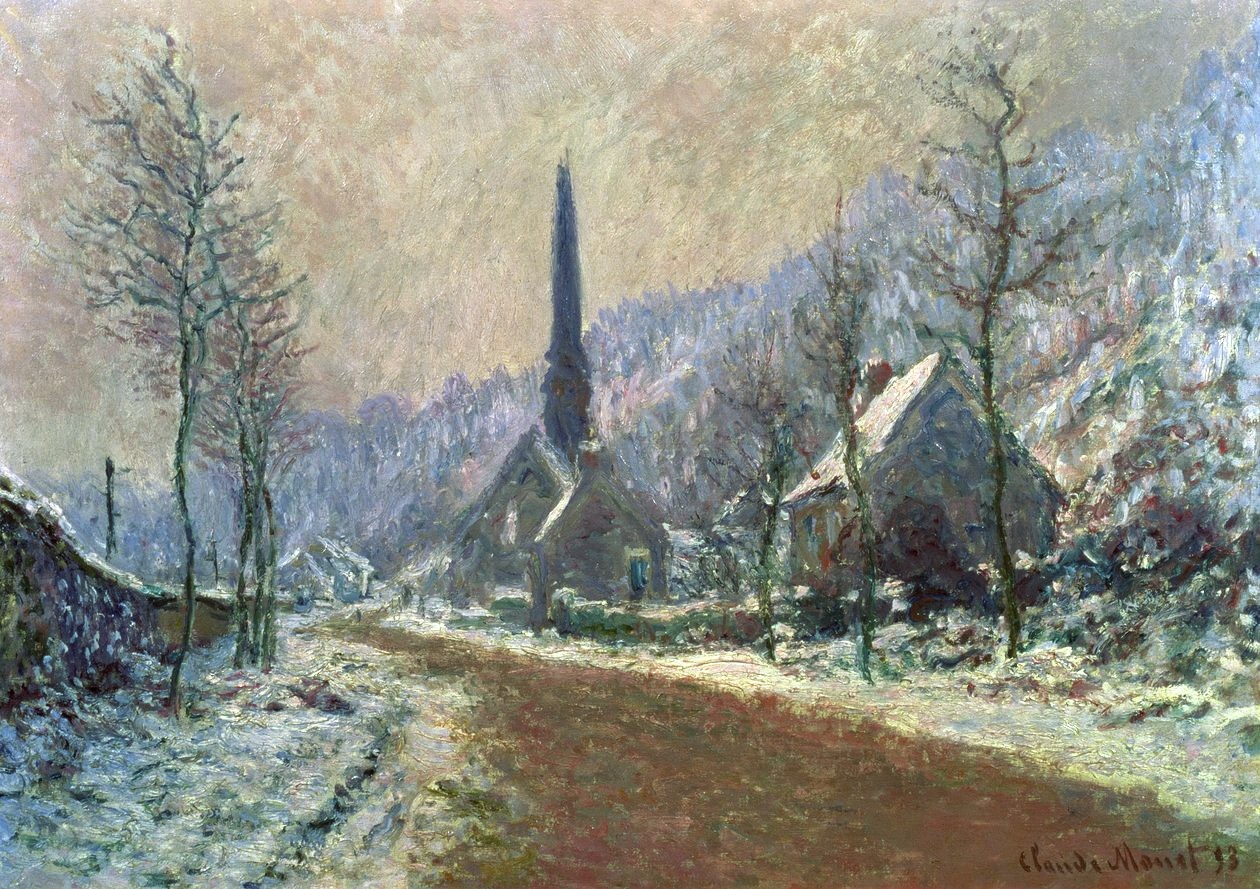
Claude Monet made a few paintings here: CR909-917 +1332 (R22IV,p1058).
CR909-916 depicts (an arm of) the Seine at Jeufosse: Autumn (CR911 +913 +916 +917), late afternoon (CR910), bright weather (CR914), with a train (CR912 +912a), with a rowing boat (CR915).
CR1332 depicts a street in winter with the church of Jeufosse; see photo (iR6).

Le Grand Val + Petit Val:
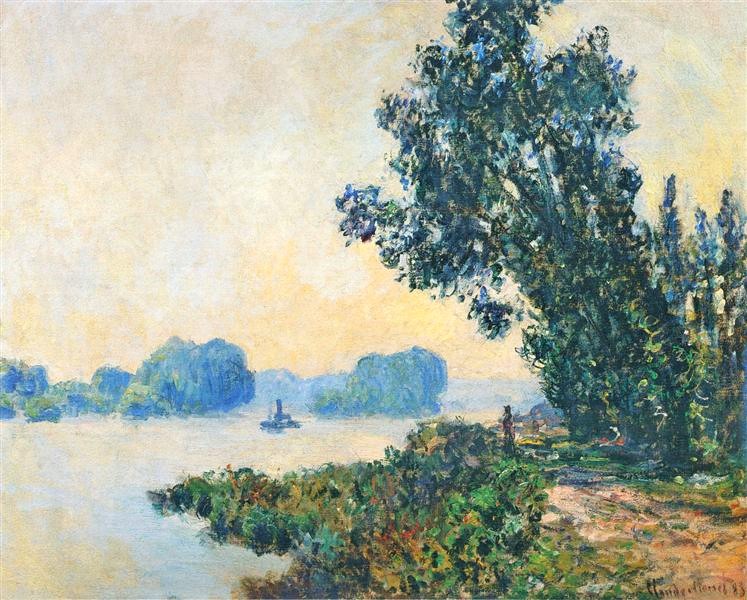
Le Grand Val lies just west of Port-Villez and Petit Val a little further west (iR468). Claude Monet only depicted the towpath at ‘Granval’ looking downstream*.
Note*: according to Wildenstein this was upstream, but I think this is a mistake (R22,no840).
Vernon:
Vernon lies to the west of Giverny, as well on the left as on the right bank, but namely on the left bank, west of Port-Villez. (iR486; iR9; iR3). It is part of the arrondissement Les Andelys (iR3), department Eure (iR3) and the region Normandy (iR3). The right bank part is also called Vernonnet. In the Seine lies the Île Corday.
Monet made the following works of Vernon: CR842-845 +1060 +1061 +1386-1391a (R22IV,p1060).
Claude Monet rendered a view on Vernon in the following of his paintings: CR1060 +1061 ;
Monet explicitly depicted the church of Notre Dame in the following paintings: 842-844 +1386-1391a.
All these paintings were made from the opposite, Vernonnet bank.
In CR845 he depicted the houses on the old bridge.
He made all these pictures from the right bank of the Seine looking south.
Pierre Bonnard lived some time in Vernon.
The local museum is called Musée Blanche Hoschedé-Monet (M289; iR4); see links for the collection (iR6). Note: untill 2024 it was called Musée Municipal Alphonse-Georges Poulain (iR6).

Other French painters:
There were several other French painters that worked in Giverny and it’s surroundings.
Blanche Hoschedé-Monet was one of them. She was the step-daughter of Claude Monet.
See link for several examples of paintings (iR6).
Foreign visitors:
There were several foreign painters that visited Claude Monet in Giverny and wanted to learn from him. Among them were: Mary Fairchild-MacMonnies (1858-1946), Will Hickok (1853-1932), Vaclav Radimsky (1867-1946). Some of their painting can be seen in the Musée Blanche Hoschedé-Monet in Vernon (=M289), close to Giverny.
Background info:
Claude Monet depicted Giverny in the following of his paintings: CRx (R22IV,p1059).
Claude Monet depicted Limetz in the following of his paintings: CR1056 +1148 +1210 +1210a (R22IV,p1058).
Claude Monet depicted Bennecourt in the following of his paintings: CR110 +989 +990 +1125 +1126 +1333-40 (R22IV,p1057).
Claude Monet depicted Port-Villez in the following of his paintings: CR834-839 +841 +962 +1003-1005 +1262-1265 +1341-1344 +1370-1382 +1774-1776 (R22IV,p1059).
Claude Monet depicted Jeufosse in the following of his paintings: CR909-917 +1332 (R22IV,p1058).
Claude Monet depicted Vernon in the following of his paintings: CR842-845 +1060 +1061 +1386-1391a (R22IV,p1060).
Sources:
My main sources are the Catalogue Raisonné of Wildenstein (1996=R22).
See links for other general references (=R), for references to internet sites (=iR), for references to musea (=M). For other additional references (=aR) see below. See links for practical hints and abbreviations and for the subscription of the paintings.
Further readings:
x
Additional references (=aRx):
- en.wikipedia.org//Giverny (English WikiPedia page on Giverny; =iR3)
- fr.wikipedia.org//Giverny (French WikiPedia page on Giverny; =iR4)
- giverny.org//vernon (article on the church and bridge of Vernon painted by Monet)
- x
Recommanded citation: “Impressionism, locations where the ‘impressionists’ did paint: Giverny and surroundings. Last modified 2026/07/08. https://www.impressionism.nl/giverny-2/”
Note: additional info and pictures will follow.