Impressionism, locations
where the ‘impressionists’ did paint:
Paris, Île de la Cité
+ Île Saint-Louis
the picturesque centre of Paris
Introduction:
The Île de la Cité is (probably) the oldest part of Paris (iR9; iR3), first known as Lutetia (iR3). Most known is the cathedrale Notre Dame (de Paris) (iR3). The Notre Dame is maybe the most depicted church there is. The partakers of the ‘impressionist’ expositions did so and also related painters. But also other parts were depicted like the Pont Neuf (iR3).
Just to the east, upstream of the Seine, lies the Île Saint-Louis (iR9; iR3).
On this page you will find some information and pictures on these islands. First on the Notre-Dame, then it’s bridges and quais, first on the Île de la Cité, then on Île Saint-Louis.
Namely Armand Guillaumin, Albert Lebourg, Stanislas Lépine, Camille Pissarro, Jean-François Raffaëlli, Victor Vignon and Jongkind often painted here.
See also Paris along the Seine.
Note: this page has just been started. A more precise arrangement on location still needs to be carried out. Additional info and pictures will be added.

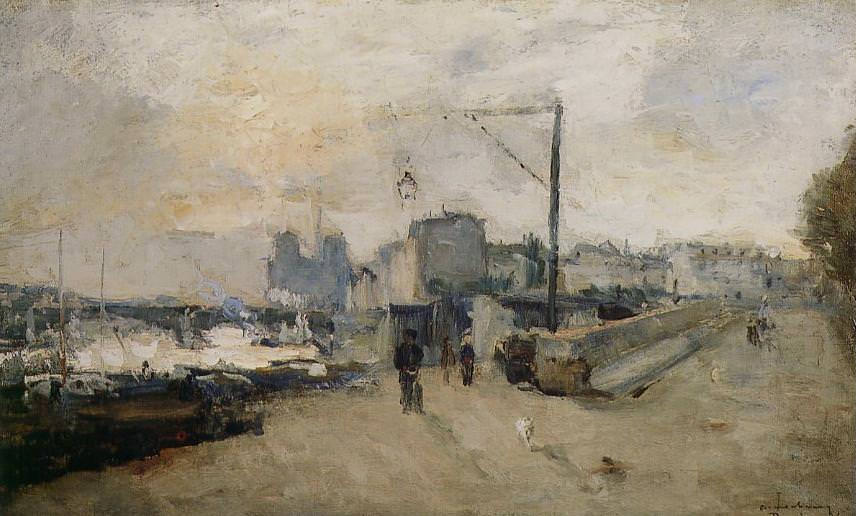
Notre-Dame:
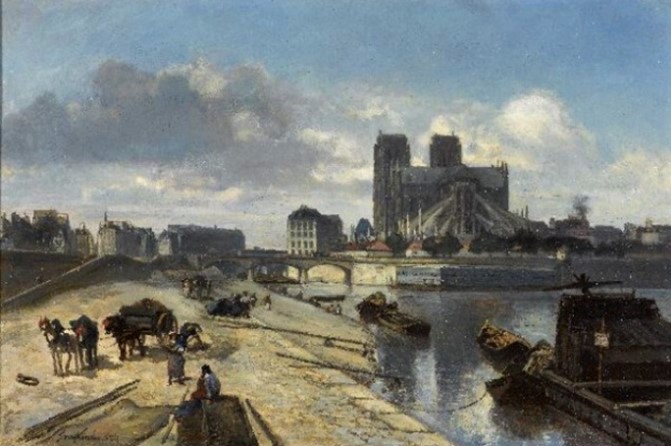
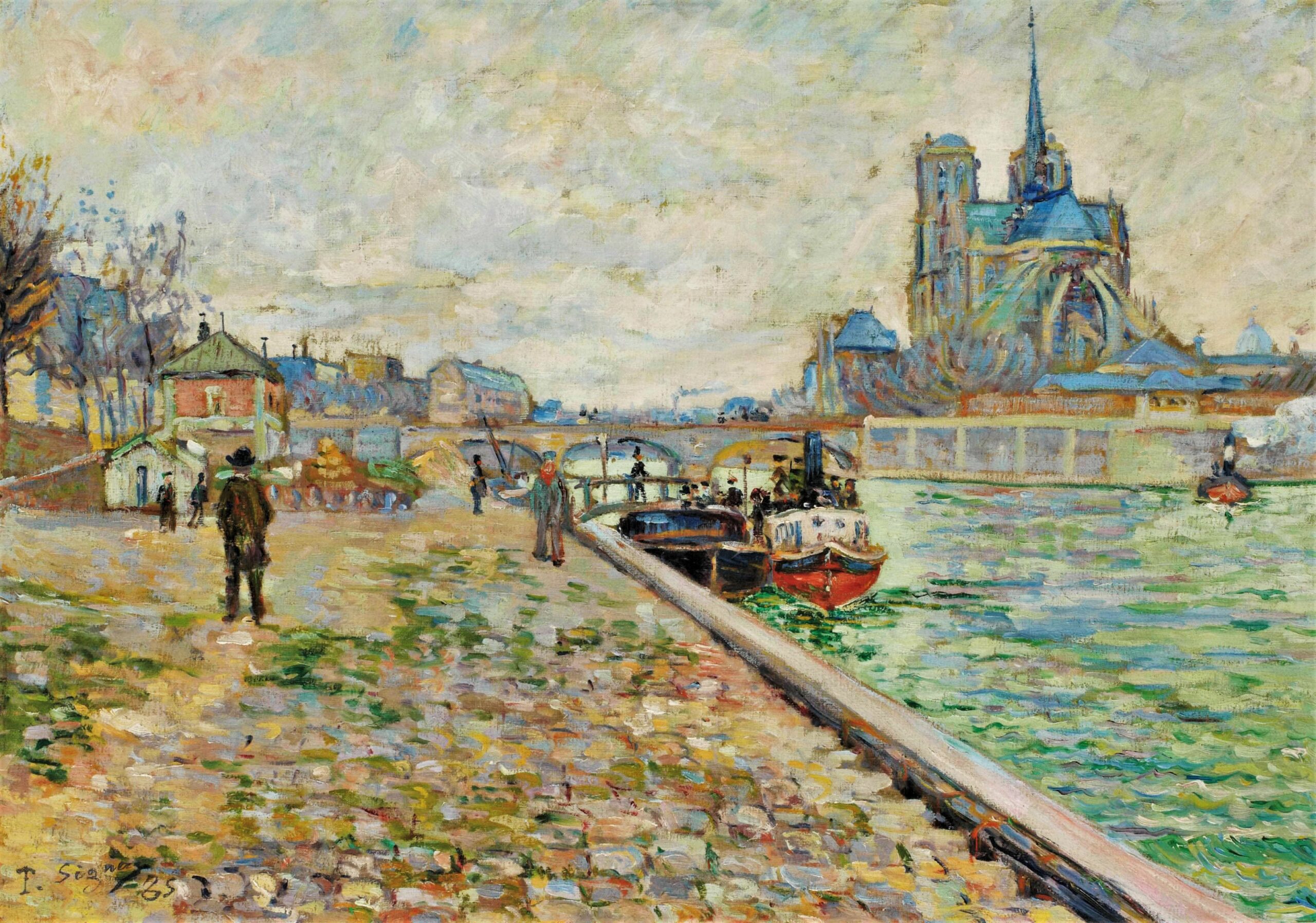
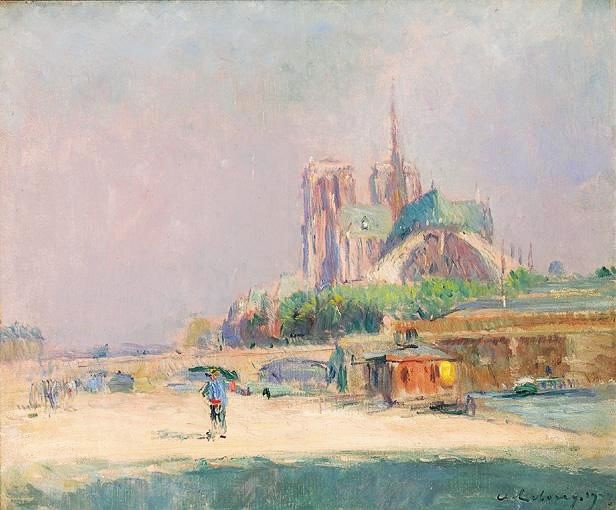
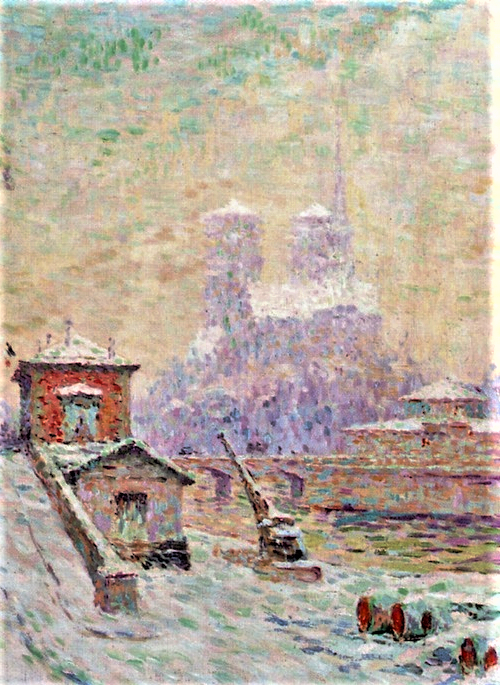
The Notre Dame is maybe the most depicted church there is. The partakers of the ‘impressionist’ expositions did so and also related painters. Here below you will find some examples.


View from the Quai de la Tournelle:
The Notre-Dame is most often depicted from the south-east from the Quai de la Tournelle.




Bridges and Quais
Île de la Cité
The Île de la Cité has many bridges and quais. Many of them are depicted by the partakers of the ‘impressionist’ expositions and related painters. We make a tour around the Island, starting in the north-west with the Pont Neuf heading to the east to the Pont Saint-Louis, then going north-west and ending again at the Pont Neuf in the south-west part of the island.
The Pont Neuf 1:
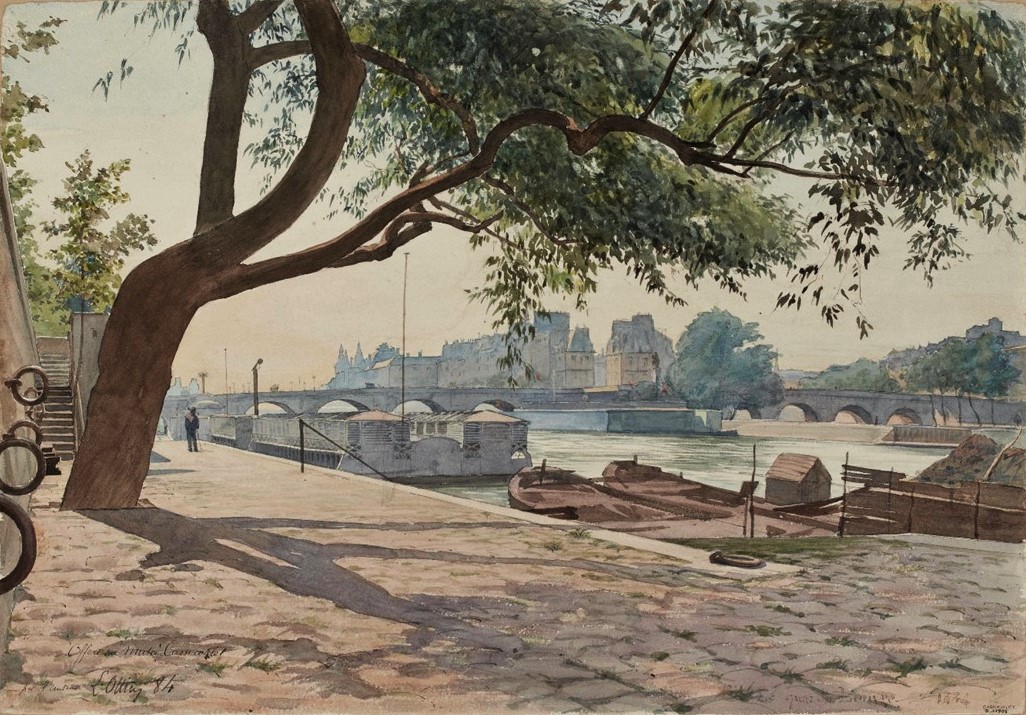
The Pont Neuf, is the oldest bridge of Paris (iR3), it connects the north-west part of the Île de la Cité with the Quai de l’Horloge to the Quai du Louvre (leading to the north-west) and the Quai de la Mégisserie (leading to the south-east) on the right bank of the Seine. Here you find the Samaritaine (iR3), and to the west first the the Saint-Germain-l’Auxerrois (iR3) and more to the west the Louvre.
Along the Quai de l’Horloge you will find the Concièrgerie, the former Royal Palais de la Cité (iR3), also called the Palais de Justice, with it’s towers and the Tour d’Horloge, near the Pont au Change.


Pont au Change:
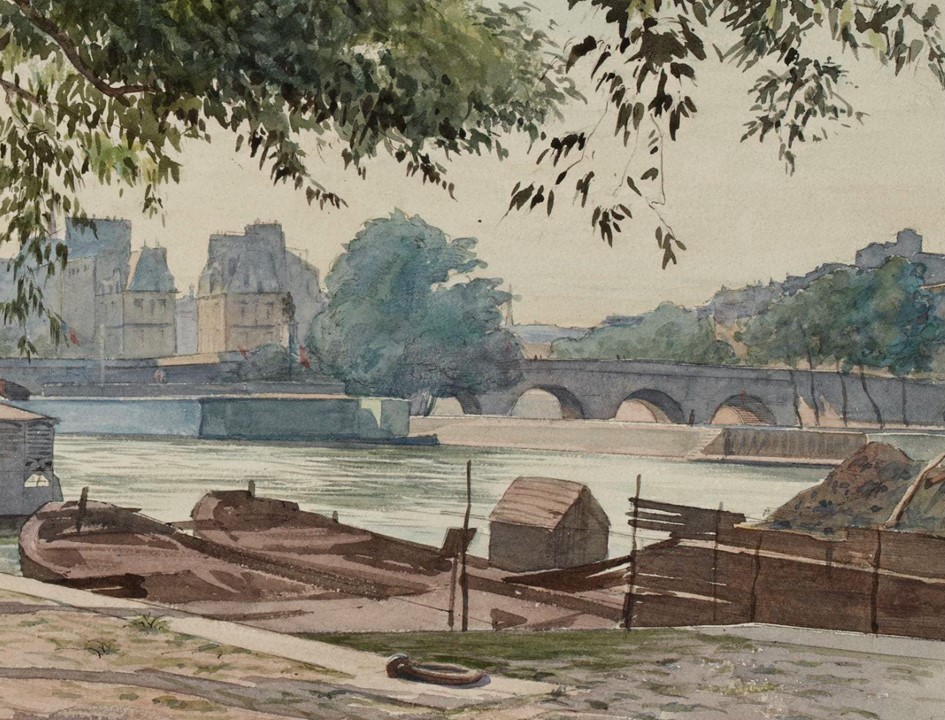
To the east (upstream) the Pont au Change connects the Quai de l’Horloge (leading to the north-west) and the Quai de la Corse (leading to the south-east) on the Île de la Cité with the Quai de la Mégisserie (leading to the north-west) and the Quai de Gesvres (leading to the south-east) on the right bank of the Seine. Behind the Quai de Gesvres, you will find the Tour Saint-Jacques (iR3).
In continuity with the bridge along the Boulevard du Palais you will find on the Île de la Cité the Saint-Chapelle in the middle of Royal Palais de la Cité (iR3).
At the Quai de la Corse close to the Pont Notre-Dame you can find the Marché aux Fleurs.
In the past it was also called Pont aux Changeurs et de la Marchandise and shortly ‘Grand-Pont’. The present bridge was (re)build between 1858-60 and wears the imperial monogram of Napoléon III the ‘N’ (iR4).
Pont Notre Dame:
To the east (upstream) the Pont Notre Dame connects the Quai de la Corse on the Île de la Cité with the Quai de Gesvres on the right bank of the Seine. South-east of the bridge you will find the former hospital Hôtel-Dieu (iR3). This bridge has been destroyed and reconstructed numerous times (iR3).
Pont d’Arcole:
To the east (upstream) the Pont d’Arcole connects the Quai de la Corse (leading to the north-west) and the Quai aux Fleurs (leading to the south-east) on the Île de la Cité with the Quai de Gesvres (leading to the north-west) and the Quai de l’Hôtel de ville (leading to the south-east) on the right bank of the Seine (iR9). Here you find the Hôtel de Ville (iR4). In continuity with the bridge along the Rue d’Arcole you will find on the Île de la Cité the Notre-Dame.
The bridge is build at both ends of stone and the middle part of iron. It was first a footbridge and called the Pont de la Grève; the iron construction was build in 1856 (iR4).
Lépine renders the Pont d’Arcole standing on the right bank looking downstream with in the distance the Tour d’Horloge; left on this painting he depicted the Quai aux fleurs. Lépine also depicted the Apple market several times.


Pont Saint-Louis:
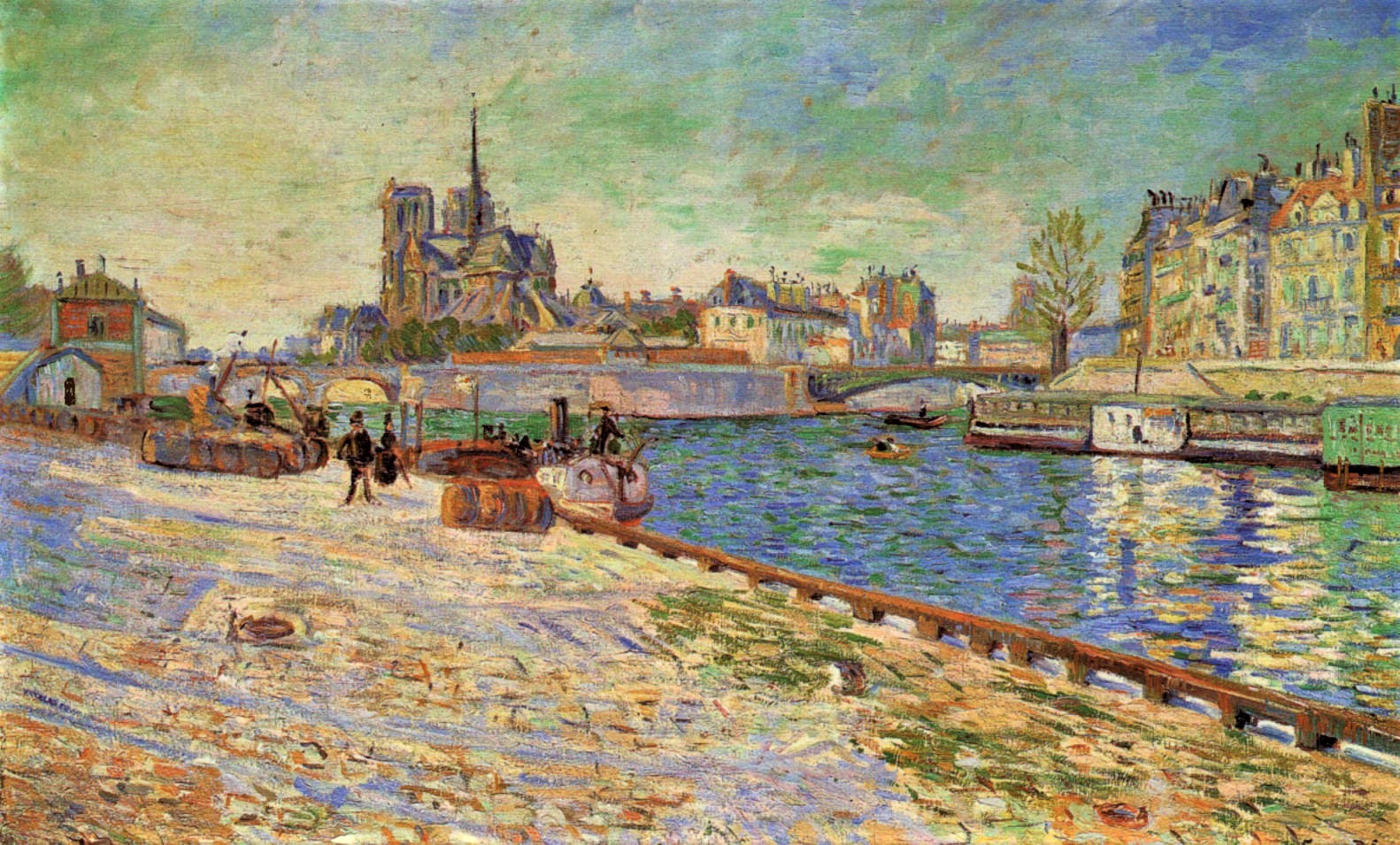
On the east part the Pont Saint-Louis connects the Quai aux Fleurs (leading to the north) and the Quai de l’Archevêché (leading to the south) on the Île de la Cité with the Quai de Bourbons (leading to the north) and the Quai d’Orléans (leading to the south) on the Île Saint-Louis. The Pont Saint-Louis was first build in 1630; it is an iron foot bridge; the present version was made in 1970 (iR3).
Pont de l’Archevêché:
The Pont de l’Archevêché connects the Quai de l’Archevêché on the Île de la Cité with the Quai de la Tournelle (leading to the south-east) and the Quai de Montebello (leading to the north-west) on the left (south) bank of the Seine. This bridge was build 1828 (iR3).
Pont au Double:
The Pont au Double is a footbridge and connects the Promenade Maurice Carême on the Île de la Cité with the Quai de Montebello on the left (south) bank of the Seine. The first bridge was built 1634; the present version was build shortly after 1883 (iR3; iR4).
Petit-Pont:
The Petit Pont-Cardinal Lustiger or in short the Petit-Pont connects the Quai du Marché Neuf – Maurice Grimaud on the Île de la Cité with the Quai de Montebello (leading to the south-east) and the Quai Saint-Michel (leading to the north-west) on the left (south) bank of the Seine. Behind the Quai Saint-Michel you will find the Saint-Séverin church (iR3). In continuity with the bridge along the Rue Saint-Jacques you will find the Panthéon with it’s typical dome (iR3).
Cardinal Lustiger lived from 1926-2007; the bridge was named in the 19th century just simply Petit-Pont. The first bridge was build around 1400; the present bridge in 1853 (iR4).
Note: A daylight version of the Jongkind painting is in the Louvre (M5) and is called ‘Notre-Dame de Paris, vue du quai Saint-Michel avec le Petit Pont’. But, the depicted bridge looks different than the Petit-Pont


Pont Saint-Michel:
The Pont Saint-Michel connects the Quai du Marché Neuf – Maurice Grimaud (leading to the south-east) and the Quai des Orfèvres (leading to the north-west) on the Île de la Cité with the Quai Saint-Michel (leading to the south-east) and the Quai des Grands Augustins (leading to the north-west) on the left (south) bank of the Seine (iR9). The first bridge was built in 1378; the present one in 1857 and has the imperial monogram of Napoléon III the ‘N’ (iR3).
Both pictures below are taken from the left (south) bank looking upstream (east).
Lépine also depicted the Pont Saint-Michel.


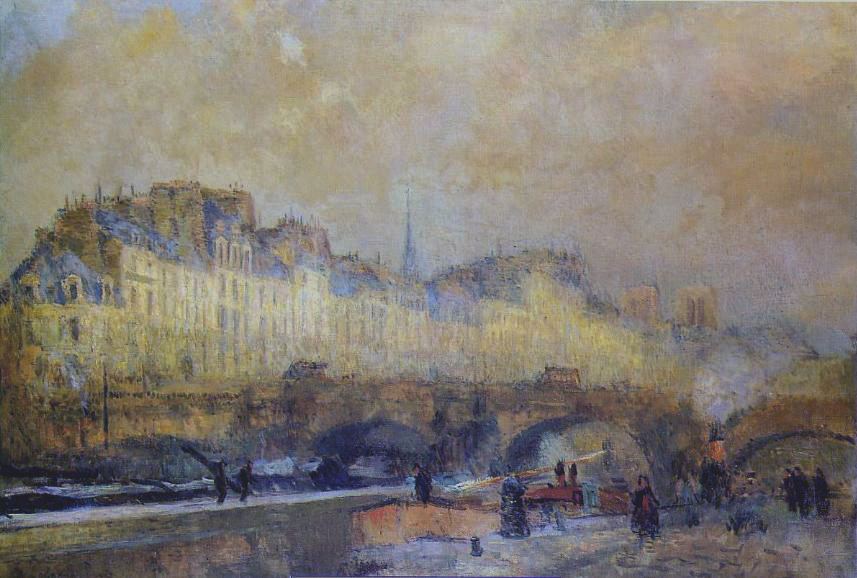
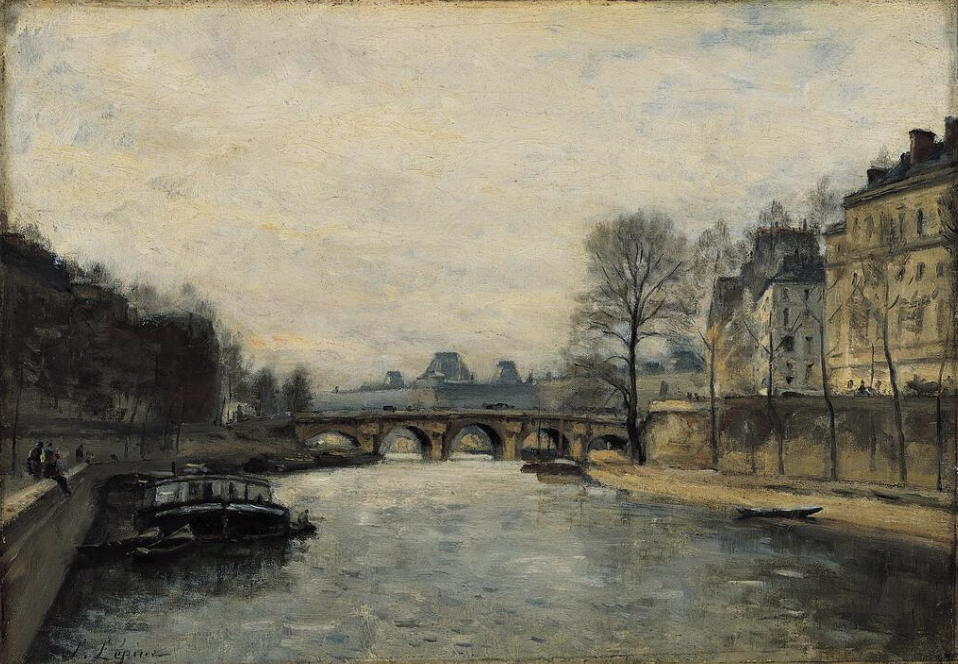
The Pont Neuf 2:
On the south-west part the Pont Neuf connects the Quai des Orfèvres on the Île de la Cité with the Quai des Grands Augustins (leading to the south-east) and the Quai de Conti (leading to the north-west) on the left (south) bank of the Seine.
Along the Quai des Orfèvres you will find the southern entrance of the Palais de Justice (iR3).
Behind the Quai de Conti you will find L’Institut with it’s typical Dome.
First you will find some pictures with a view downstream (towards the east) and then upstream.



Quai de l’Horloge:
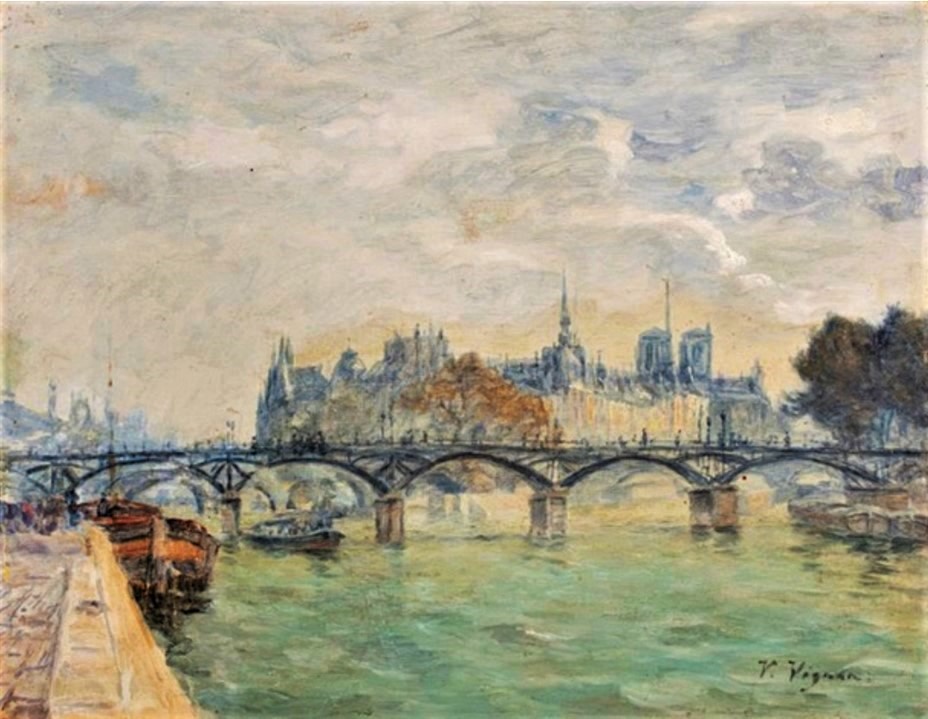
On the most west part of the Île de la Cité you have the Quai de l’Horloge. There you can find a statue of Henri IV. To the west you will see the Pont des Arts and to the north-west the Louvre and to the south-west L’Institut with it’s typical dome.
Camille Pissarro rented in 3 stays an apartment at 28 place Daupine (iR9) from 1900/11 to 1903/10. From his window he painted series of his views. To the west the equestrian statue of Henri-IV and the Square du Vert-Galant, with in the distance the Pont des Arts. To the south-west the Hôtel de la Monnaie (iR3) and the Dome of L’Institut. To the north-west the Louvre. To the north the Pont-Neuf and the Samaritaine (iR3) on the right bank. (R116III,p826) The first serie he made from 1900/11/06 till 1901/04/25 (R116,CCP1343-1363). The second serie from 1901/10/31 till 1902/05/17 (R116,p859+CCP1400-1425). The third serie from 1902/11/13 till 1903/05/29 (R116,p894+CCP1473-1485); the last 2 months he continued his serie from a hotel at 19 quai Voltaire (iR9), this is on the left bank, west of the Pont du Caroussel in the 7th Arrondissement. Here he made CCP1486-1499.

Île Saint Louis
Introduction:
Just to the east of the Île de la Cité, upstream of the Seine, lies the Île Saint-Louis (iR9; iR3).
First you will find some general (or not-located) pictures on the Île Saint-Louis. Then we will make a tour around the island starting in the west with the Pont Saint-Louis, heading south towards the Pont de la Tournelle, then east towards the Pont de Sully and then north-west towards the Pont Louis Philippe.


Pont Saint-Louis:
On the west part the Pont Saint-Louis connects the Quai de Bourbons (leading to the north) and the Quai d’Orléans (leading to the south) on the Île Saint-Louis with the Quai aux Fleurs (leading to the north) and the Quai de l’Archevêché (leading to the south) on the Île de la Cité. See above.
Pont de la Tournelle:
The Pont de la Tournelle connects the Quai de Béthune (leading to the east) and the Quai d’Orléans (leading to the west) on the Île Saint-Louis to the Quai de la Tournelle on the left (south) bank of the Seine. The Pont de la Tournelle was first build in 1620; the present bridge was build in 1928.
Lépine depicted this bridge several times.

Pont Sully 1:
The Pont Sully connects the Quai de Béthune on the Île Saint-Louis to the Quai de la Tournelle (leading to north-west) and the Quai Saint-Bernard (leading to the south-east) on the left (south) bank of the Seine. This southern part of the Pont Sully was a footbridge till 1872 and called Passerelle de Constantine (iR3).
1848 and called Passerelle Damiette; the current bridge was build 1876/77 (iR3).


Pont de l’Estacade:
The Pont de L’Estacade or the Passarelle de L’Estacade was an ancient bridge for pedestrians that was build in 1770 and destroyed in 1932 (iR4). It connected the right bank with the Île Saint-Louis and was located about the same spot as where now is the Pont de Sully (iR9). Mostly Lépine depicted in the distance the church of St. Louis and St. Paul (iR6). He made more than 10 paintings of this spot (M103), see also.


Pont Sully 2:
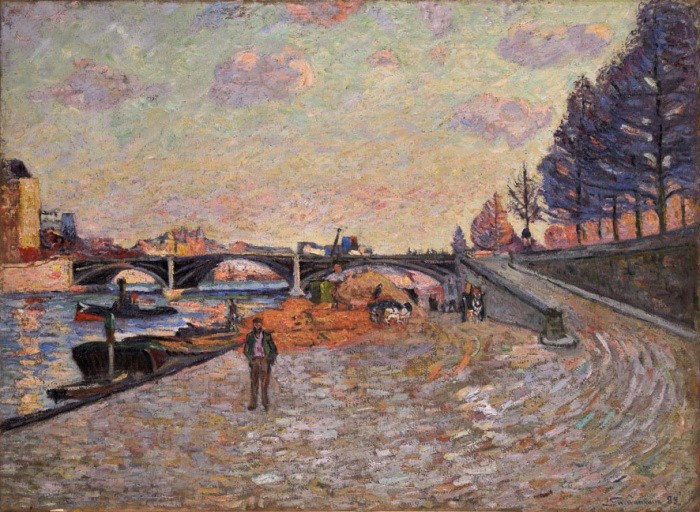
The Pont Sully is a bridge on the east part and it connects the Quai d’Anjou on the Île Saint-Louis to the Quai des Célestins (leading to the north-west) and the Quai Henri IV (leading to the south-east) on the right bank of the Seine. This northern part of the Pont Sully was a footbridge till 1848 and called Passerelle Damiette; the current bridge was build 1876/77 (iR3).
Guillaumin lived (?1873-77) at 13, Quai d’Anjou, Île Saint-Louis, Paris (iR1) or at least rented the old studio of Daubigny, here he would work together with Cézanne, who would rent a studio at no. 15 untill 1890 (R179,p24+33+34+47).
Lépine also depicted the Pont de Sully that connected the Île Saint-Louis with the left bank (see CR107+113+114). Probably here the harbour ‘au Vin’ was located (see link), but maybe this was also located at the opposite bank of the Seine at the Quai Henri IV.


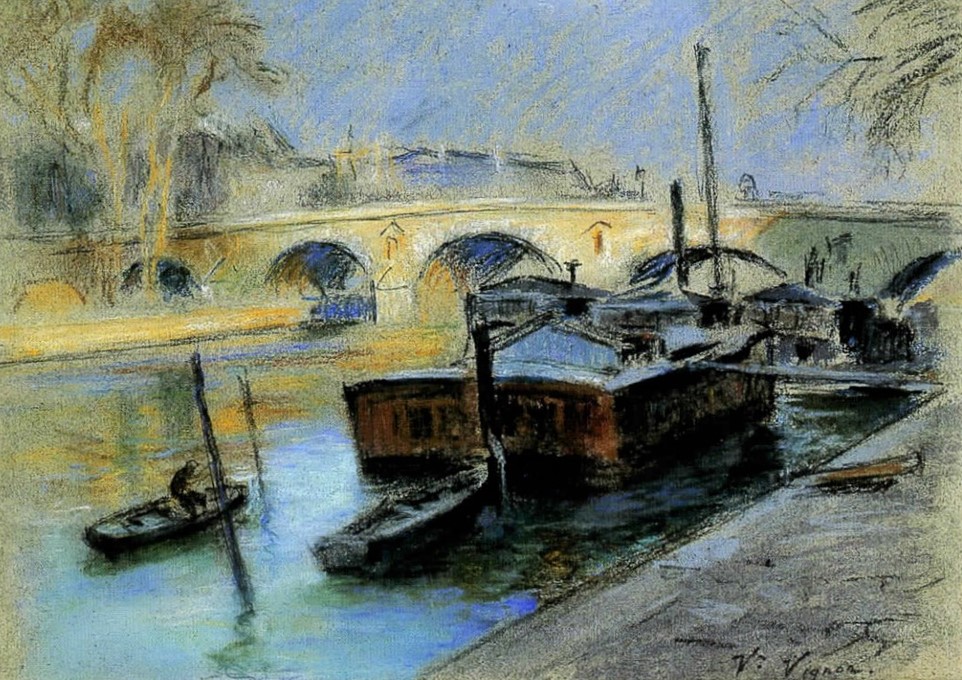
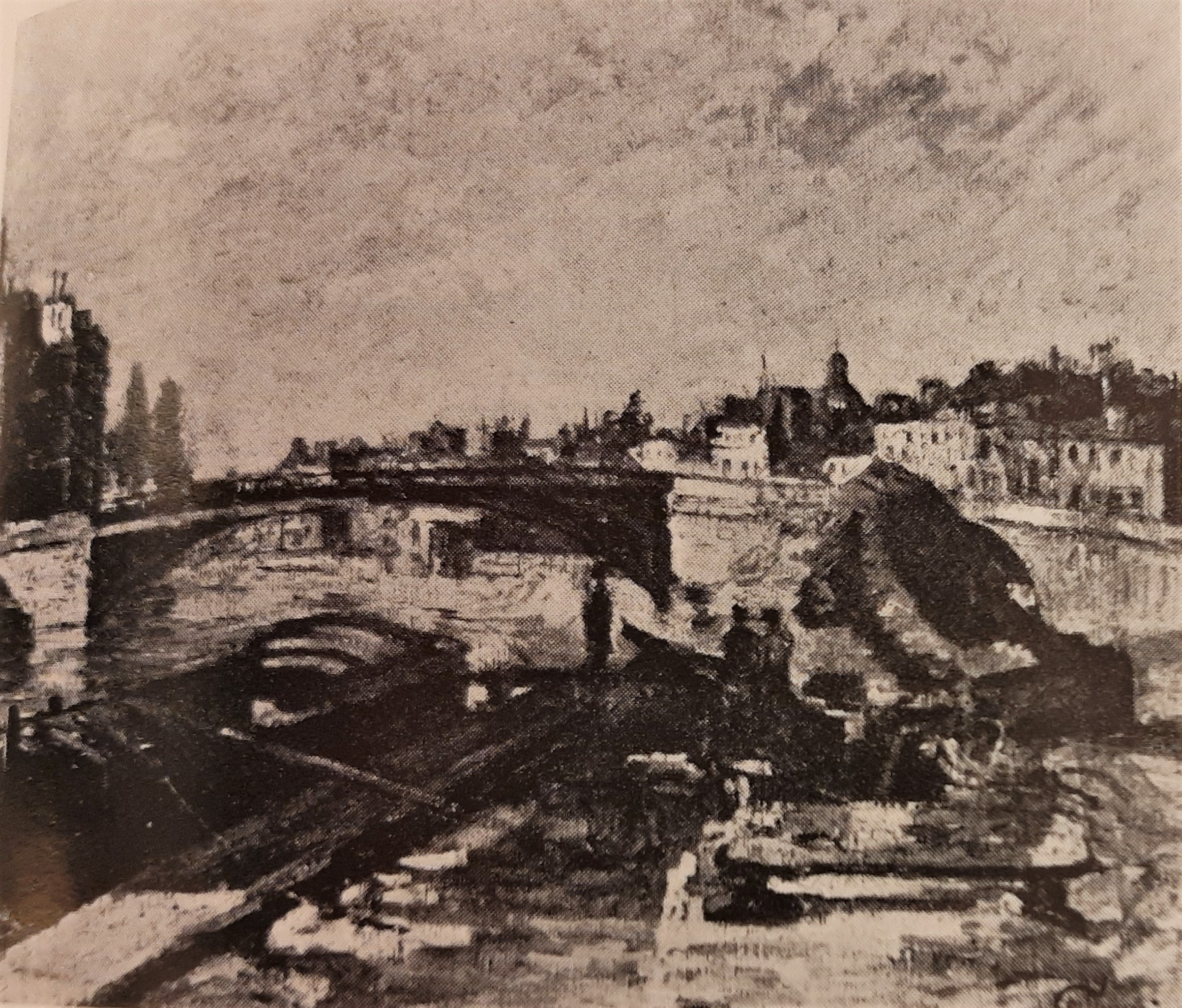
Pont Marie:
The Pont Marie connects the Quai d’Anjou (leading to the south-east) and the Quai de Bourbon (leading to the north-west) on the Île Saint-Louis with the Quai des Célestins (leading to the south-east) and the Quai de l’Hôtel de ville (leading to the north-west) on the right bank of the Seine.
The Pont Marie connects the the Quai des Célestins at the right bank with the Île Saint-Louis. At the other side the Pont de la Tournelle connects the Île Saint-Louis with the left bank of the Seine. Lépine also depicted this bridge several times.
From 1870-73 Lépine lived at rue des Rosiers, 12 (in the 4th arrondissement), an 8 minutes walk from the Pont Marie.




Pont Louis-Philippe:
The Pont Louis-Philippe is on the north-west part and connects the Quai de Bourbon on the Île Saint-Louis to the Quai de l’Hôtel de ville on the right bank of the Seine.


Recommanded citation: “Impressionism, locations where the ‘impressionists’ did paint: Paris, Île de la Cité. Last modified 2026/09/19. https://www.impressionism.nl/paris-ile-de-la-cite/”
Note: additional info and pictures will be added.