Meta-Impressionism / Other exhibitions
Universal Expositions
(World Exhibitions / World Fairs / International exhibitions)
A universal recognition (of French art)
1851 – 1913
Introduction:
The Universal Expositions showed the latest achievements in science, technique, industry, agriculture, public health, hygiene, labor, education, culture and also art. It showed industrial and agricultural products. It also showed (in special halls) manufacturing machines and tools. Several countries had there own pavillions. Their products could be compared. Their were also pavillons for colonies, showing ethnographical peculiarities, like clothing, ritual objects and even native people.
These exhibitions represent a faith in ongoing progress (R472,p55).
In English these expositions were also called the World Exhibitions or World Fairs (R1,p13) and in French the Expositions Universelle*. Part of the Universal Expositions (since 1855) was the exhibition of Fine Arts. This website has seperate pages on the Expositions Universelle held in Paris in 1855 +1867 +1878 +1889 +1900.
This page provides a short overview of Universal Expositions held from 1851 till 1913 (and some relevant expositions held later). It will render some general information, but the focus is on the art exhibitions and mainly on the contribution of French art. These sendings can be seen as the presentation of the top of French art (in that year). Which artists were presented as the top of French art? Which art-works were presented as the top of French art? Can we discern a development in these sendings? More specific we will focus on which sendings were presented of the partakers of the ‘impressionist’ expositions held from 1874 till 1886. All these sendings can be seen as a universal recognition of French art.
Note*: These exhibitions stood in a broader tradition of international World fairs (iR3). There were also specific international exhibitions focused on education, furniture, industrial products, agricultural products and so on (R231/1889). The Universal Expositions were large scale expositions held during half a year or longer, including many countries and showing a broad range of achievements (including art). Often it is unclear is an exhibition was an acknowledged Universal Exposition or ‘just’ an international World fair.
1851 in London:
The first* Universal Exposition was held in 1851 in London in the famous Crystal Palace (R3,p704). It was called the ‘Great Exhibition of the Works of Industry of All Nations’. Many manufacturing machines related to textile production. It also showed consumer products and decorative objects. A novelty was the gas lamps.
There was no art exhibition (R116I,p106).
Note*: There have been earlier other international exhibitions, but this one is often seen as the first true Universal Exposition (iR3).
More info: WikiPedia (iR3).
1853 in New York:
The second Universal Exposition was held in New York from 1853/07/14 tilll 1854/11/14. It was called the Exhibition of Industry of All Nations and was held in the New York Crystal Palace in what is now Bryant Park.
More info: WikiPedia (iR3).

1855 in Paris:
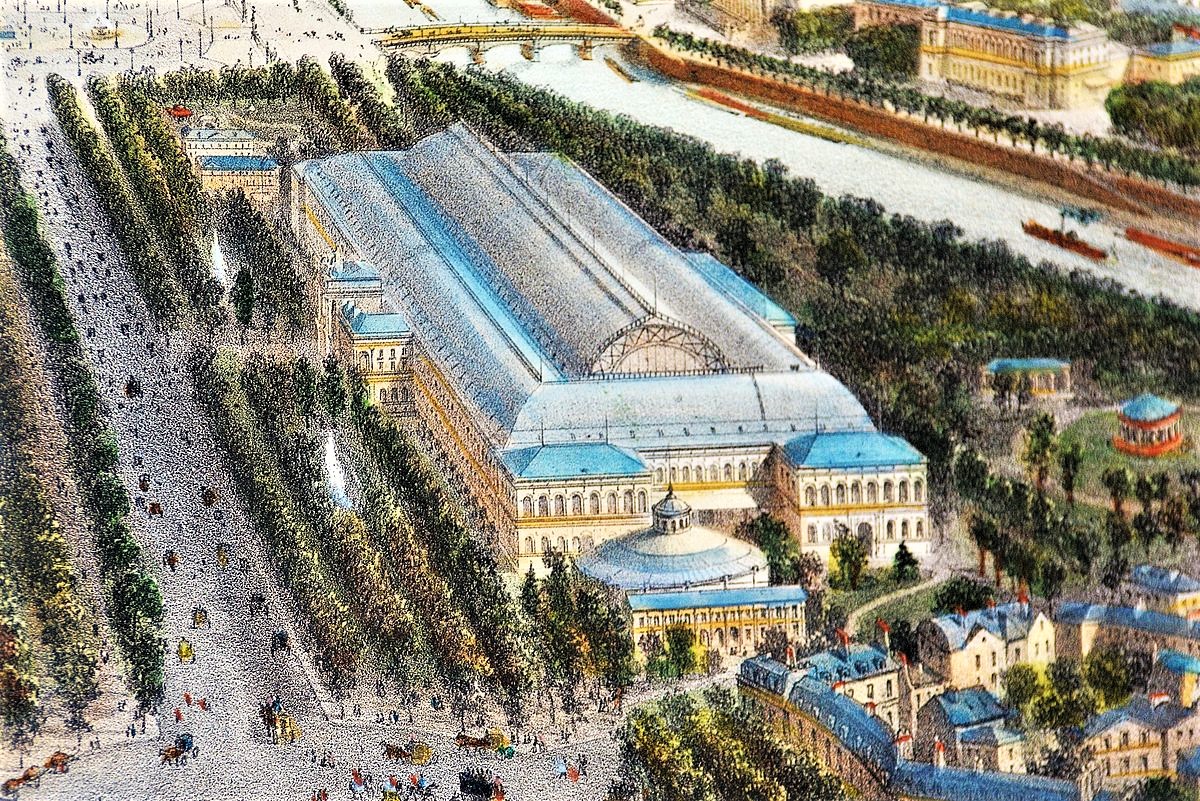
The third World Exhibition was held in Paris in 1855 (see gallica (=iR40) for several data). The Palais de l’Industrie* was specially build for it and here the most attractions were assembled (iR3;iR4;M291;R1,p16;R231/1878,p88). But, there also were some other buildings on the right bank of the Seine, including a long Hall of machines. 28 nations were represented. Part of this exhibition was dedicated to the Fine Arts. This was the first Exposition Universelle that did so (R1,p13;R116I,p106;R3,p704).
See seperate pages for the art exhibitions at the Expositions Universelle in general and specific on the one in 1855.
Note*: The Palais de l’Industrie housed the art-exhibitions of the Exposition Universelle in 1855, 1878 and 1889 and of the Salon 1855 onwards. It was destroyed in 1897. (M291).


1862 in London:
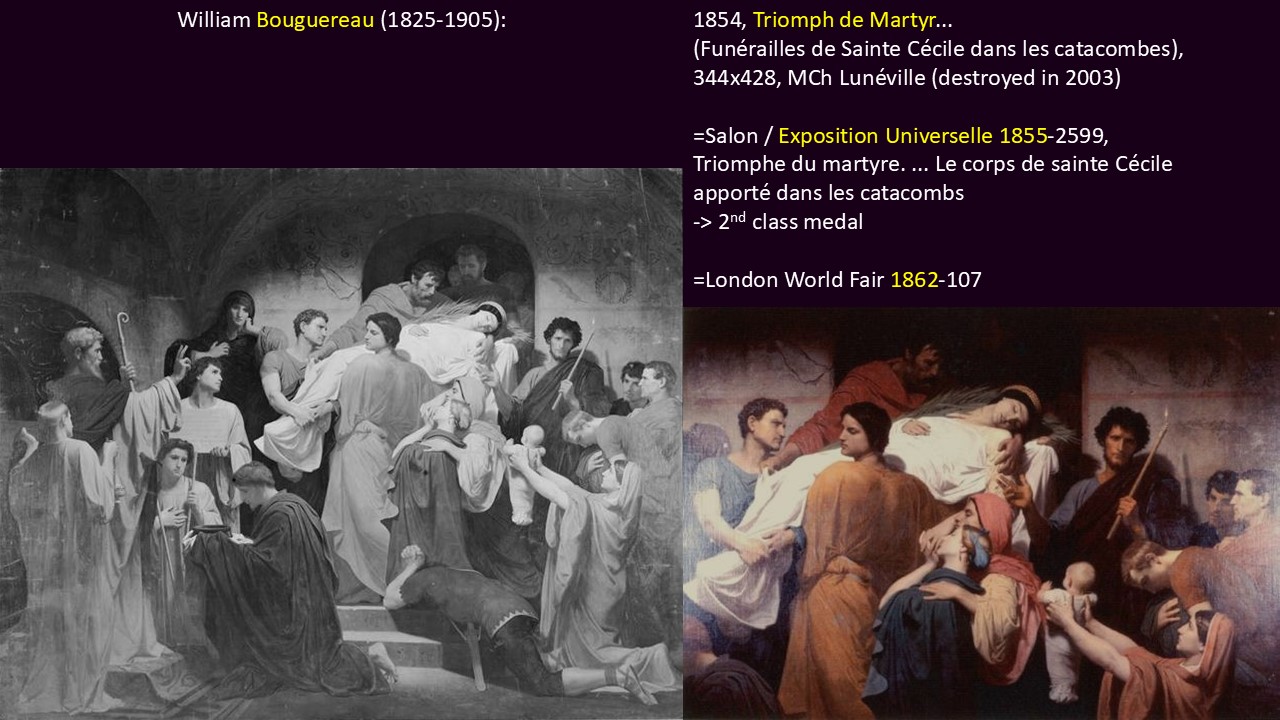
The 4th Universal Exposition was held in London in South Kensington from the 1st of May till the 1st of November. A section was dedicated to of the Far East, including contributions from India, China and Japan. Many consumer goods were shown. There also was an extended art gallery. It was one of the most important World Exhibitions.
More info and pictures: WikiPedia (iR3); WikiMedia (iR6).
1863-1866:
The 5th Universal Exposition was held in Constantinople in 1863 (R88). Afterwards there was one in Porto and Dublin (1865). (R88) In 1865 in Rome there also was an exhibition including (Roman Catholic) objects of art (R231/1878,p79), but it doesn’t seem to have been part of a Universal Exposition. WikiPedia doesn’t render additional info on the Constantinople and Dublin exhibition (iR3), but has a seperate page on the Porto exhibition (iR3).
1867 in Paris:
The ‘L’Exposition Universelle’ was held in Paris at the Champ-de-Mars (on the left bank of the Seine) and the Île de Billancourt the 3rd of May onwards (R88;R5,p43). Central was an ellipse formed new build building with 7 galleries, depicting machines, clothing, furniture, raw materials, the history of work, fine arts and a garden (R322,p367). See gallica (iR40) for several data. It was one of the most important World Exhibitions (R3,p704). Japonese art was extensively exhibited, including works of Hokusai (1760-1849). Some countries showed their art-works in their national pavilions. There were about 11 million visitors and only 98.000 for the Fine Arts (R5,p43).
See seperate pages for the art exhibitions at the Expositions Universelle in general and specific on the one in 1867.


1873, Weltauststellung in Vienna:
In 1873 in Vienna there was a ‘Weltausstellung’. The Universal Exposition held in Vienna in 1873 was one of the most important (R3,p704;R231/1878,p76;R322,p360). Zandomeneghi exhibited (probably) 1 work (R204,p397+CG28). The Paris art-dealer Durand-Ruel had sent in two works of Sisley and mabye a work of Monet (R166,p36;R22IV,p1016+no213). Several French painters exhibited, including the Barbizon painters Chintreuil, Corot, Daubigny, Diaz, Jules Dupré (R231/1878,p113).
More info: WikiPedia (iR3).
1876, Philadelphia:
In 1876* there was a ‘Centennial Exhibition’ held in Philadelphia (USA). It lasted from the 10th of May till the 10th of November (R231/1878,p76+115;R5,p110;iR3). There was a special pavilion highlighting the achievements of women in all areas (R322,p517). It was one of the most important Universal Expositions (R3,p704;R322,360).
Note*: Walther wrongly mentions it was held in 1878.
More info: Wikipedia (iR3).
1878 in Paris:
The 16th ‘Exposition Universelle International’ was held in Paris. The opening was the 30th of July (R1,p419). The scope of the exhibition included the Champ de Mars, the Trocadero and the Esplanade des Invalides (R5,p110;iR19/R231/1878,p169;R88). And also the Palais de l’Industrie build in 1855 (M291). There were sixteen million visitors. There was extra attention for Japonism. (R88;R1,p207).
See seperate pages for the art exhibitions at the Expositions Universelle in general and specific on the one in 1878.
1889 in Paris:
In 1889 the ‘Exposition Universelle Internationale’ was held in Paris. It was one of the most important World Exhibitions (R3,p704). See gallica (iR40) for several data. Again part of the exhibitions were held at the Palais de l’Industrie build in 1855 (M291). Notable was the Eiffel tower that was exhibited (painted by Seurat; R162,p85). Many countries had their own pavillion, see photo album (iR19). It was a centennial exhibition 100 years after the French revolution of 1789. Some countries were not charmed by these republican sympathies and (partly) avoided this exhibition (R472,p56).
See seperate pages for the art exhibitions at the Expositions Universelle in general and specific on the one in 1889, namely also the Centennial exposition.

1893 in Chicago:
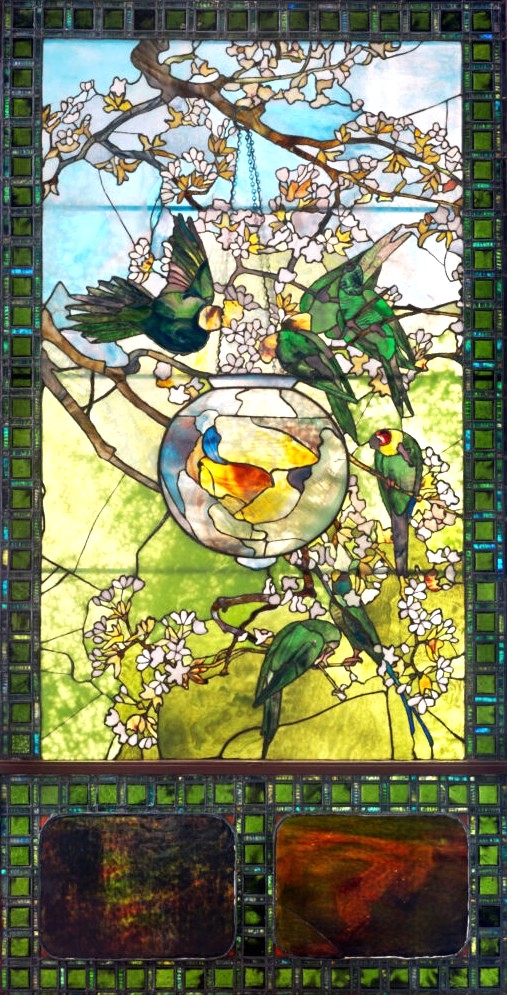
The Chicago World Fair was held in 1893. This was also named the World’s Columbian Exposition held the 1st of May onwards. There was a special pavilion highlighting the achievements of women in all areas (R322,p517). Tiffany showed a chapel, liturgical works and 3 domestic windows and won 54 medals (R505,p157+141).
Monet exhibited 4 works (CR297+360+711+724?). Pissarro exhibited 3 works (CCP703+800+933?). They were not included in the official French section, but in an exhibition of works from private collections. Works of Degas, J.F. Raffaëlli, Renoir and Sisley also were present, aswell of Cazin and Manet (18 works) (R88). At the woman’s building female artists from many countries exhibited, there also was a French Women painting, where Marie Bracquemond exhibited, other partakers were Para-Impressionists as Rosa Bonheur and Marie Cazin. Marie Cassatt didn’t exhibit. (iR3).
More info: WikiPedia (iR3); arcadia (iR414).
Catalogue: iR19. The catalogue describes all the sections and on the pages 331-388 the fine art section. There are many enumerations of works shown by artists per country. There are also some pictures reproduced.

1872-1897, other international exhibitions:
There were also some smaller international exhibitions held: in Lima (Peru) in 1872; in Santiago (Chili) in 1875; in Cape Town (South-Africa) in 1877; in Sydney (Australia) in 1879; in Melbourne (Australia) in 1880*; in Antwerp (Belgium) in 1885; in Glasgow (Scotland) in 1888; in Barcelona (Spain) in 1888; in Antwerp (Belgium) in 1894; in Brussels (Belgium) in 1897**.
See links for more info on WikiPedia for the exhibitions in Lima, Santiago, Cape Town, Sydney, Melbourne, Antwerp (1885), Barcelona, in Antwerp (1894), Brussels, .
Note*: this exhibition is also called the 8th World Fair or International Exhibition and probably was larger.
Note**: At this exposition Art Nouveau architecture was presented.
1900 in Paris:
The ‘Exposition Universelle’ was held in Paris 1900/04/03* onwards. It was one of the most important World Exhibitions (R3,p704). It consisted of more than 70 acres between the Pont de la Concorde and the Pond d’Iéna. There were 210 pavillions. France namely presented the ‘Palais de l’Electricité’, the ’trottoir roulant’ and the first subway (the Metropolitan) (R472,p56). Art Nouveau had a promenant place (namely at Maison Bing). At the Palais de l’Esplanade des Invalides, the Manufacture nationale de Sèvres had shown their recent pieces of ceramics (iR19). The dancer Loie Fuller had her own theater.
Several countries had there own pavillion (iR19). In the architecture of their pavillions many countries referred to their past, thus depicting a form of Nationalism. In these pavillions also art-works were represented, like works of Turner and Constable in the British pavillion.
There were all kinds of expositions divided in 18 groups, like education, instruments, machines, electricity, transport, agriculture, mining, decoration, garments, chemicals, labour relations, colonisation, armies. Each group was divided within several classes (121 in total). The ‘Oeuvres d’art*‘ (group II) was divided in 4 classes: 7. Peintures – Cartons – Dessins; 8. Gravure et lithographie; 9. Sculpture et gravure en médailles et sur pierres fines; 10. Architecture.
See seperate pages for the art exhibitions at the Expositions Universelle in general and specific on the one in 1900, namely also the Centennial exposition, the Decennial exposition and more background information (from the catalogues).
Note*: or the 14th (R472,p57).
1904 in Saint-Louis:
The ‘Louisiana Purchase Exposition’ or ‘World’s fair’ was held in the Art Palace in Saint-Louis from the 1st of May till the 1st of December. It was one of the most important World Exhibitions (R3,p704).
Monet exhibited 3 works (CR639+840+1039). Pissarro exhibited 1 work (CCP717 or 741). Sisley at least CCPP155 (loan DRNY) (R396,p528;R166,p296). Tiffany showed 27 pieces (M23).
More info: Wikipedia (iR3).


1905 – 1911:
In 1905 there was the Exposition Universelle et Internationale de Liège (Belgium).
Including Sisley CCPP 171 +227 (R396,p528).
In 1906 in Milan (Italy) the ‘L’Esposizone Internazionale del Sempione’ was held; 2 works of Zandomeneghi were shown, he didn’t achieve success (R204,p71).
In 1910 there was the Exposition Universelle et Internationale de Bruxelles was held (see also iR19). Works were shown of Signac. (R106,p420)
In 1911 the ‘Esposizone Internazionale d’arte’ was held in Rome; works of Zandomeneghi were exhibited (R204,p398).
See the links to mainly WikiPedia (iR3) for more info.


1913 in Ghent:
In 1913 there was the Exposition Universelle et Internationale in Ghent (Belgium) in the Palais des Beaux-Arts.
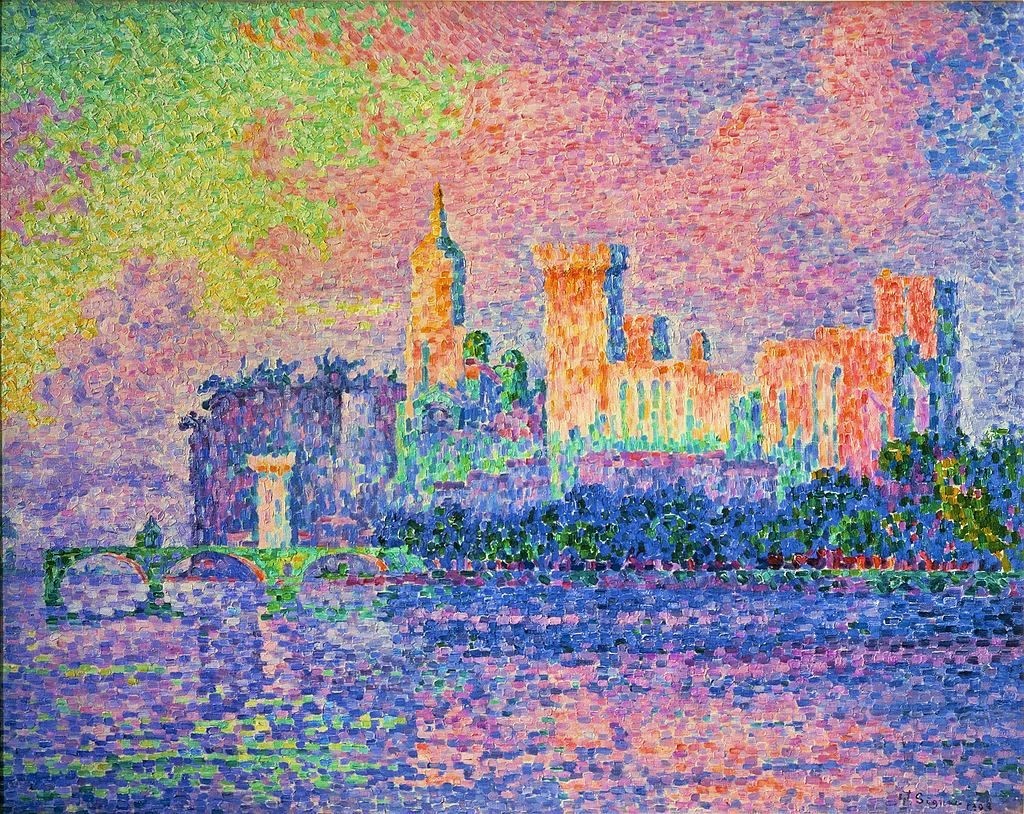
At groupe II “Oeuvres modernes” at the French section works were shown of Colin (a portrait), Forain (5 drawings), Guillaumin (2 landscapes), Monet (2 landscapes), Raffaëlli (2 views of Paris), Redon (8 paintings), Renoir (4 paintings) Signac (a painting and a watercolour).




1939-40, New York:
The World Fair in New York lasted from 1939?/04/30 till 1940/10/27.
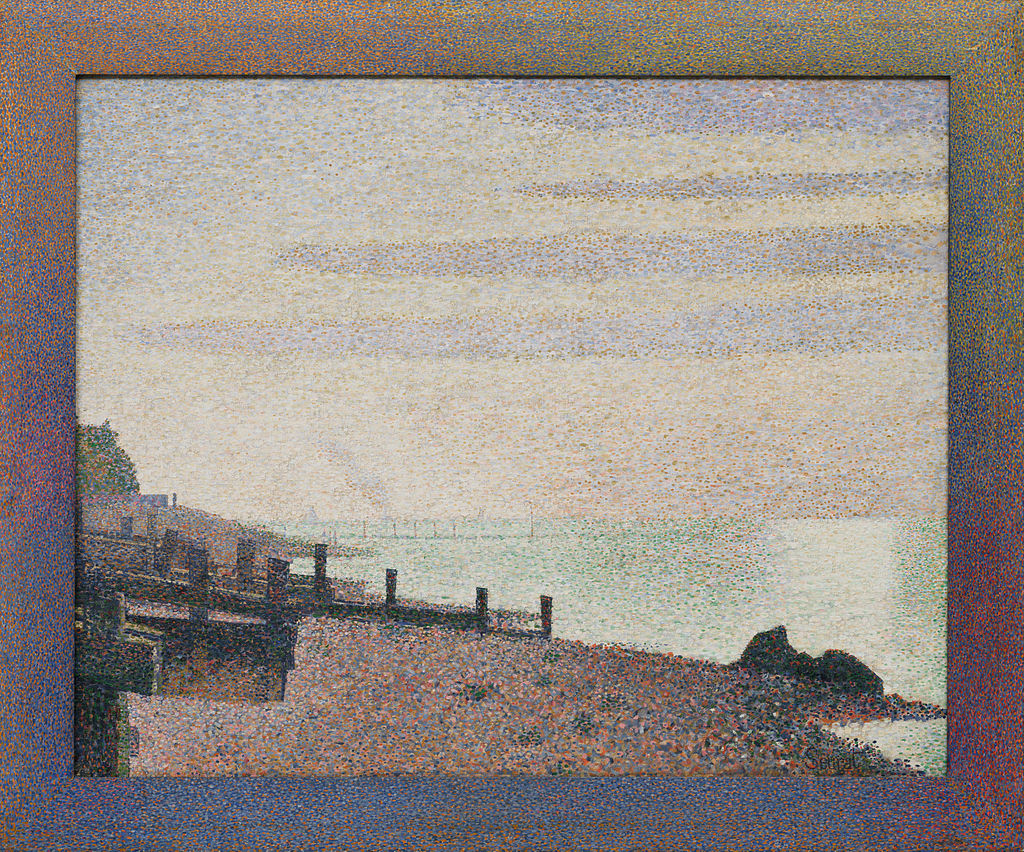
In the French section some works of Degas, Seurat and Signac were exhibited (aR23=MS2774;R183,no186;R106,no572). More precisely the works of Seurat were exhibited at the exhibition called ‘Masterpieces of Art from May till October 1940 (R183,p284).
More info: See the link to WikiPedia (iR3).
Sources:
My main sources pages from WikiPedia (see links above).
Some books give special attention to the Universal expositions:
Nineteenth -Century European Art (R322,chapter 15 and pages 459 +517-521). And also Monneret (1878-81=R88II,p253-258), Walther (2013=R3,p704), Denvir (1993=R5,p42/3+168).
The catalogues (raisonné) on artists provide info on exhibited art-works: of Monet (by Wildenstein, 1996=R22IV,p1017/8), Signac (by Cachin, 2000=R106), Pissarro (by Pissarro & Durand-Ruel, 2005=R116I,p363-6).
Catalogues:
1913, Ghent. “Exposition Universelle et Internationale de Gand en 1913: Groupe II. Beaux-Arts: Œuvres modernes..” In Database of Modern Exhibitions (DoME). European Paintings and Drawings 1905-1915. Last modified Aug 5, 2022. http://exhibitions.univie.ac.at/exhibition/580. (iR261)
Recommanded citation: “Meta-Impressionism / other exhibitions: Universal Expositions (1851-1913); a universal recognition of French art. Last modified 2025/08/30. https://www.impressionism.nl/universal-exhibitions/”
Note: This page has just started; additional info and pictures will be added.