Meta-Impressionism
Neo-Classicism
a dominant art-movement
in the 19th century (in France)
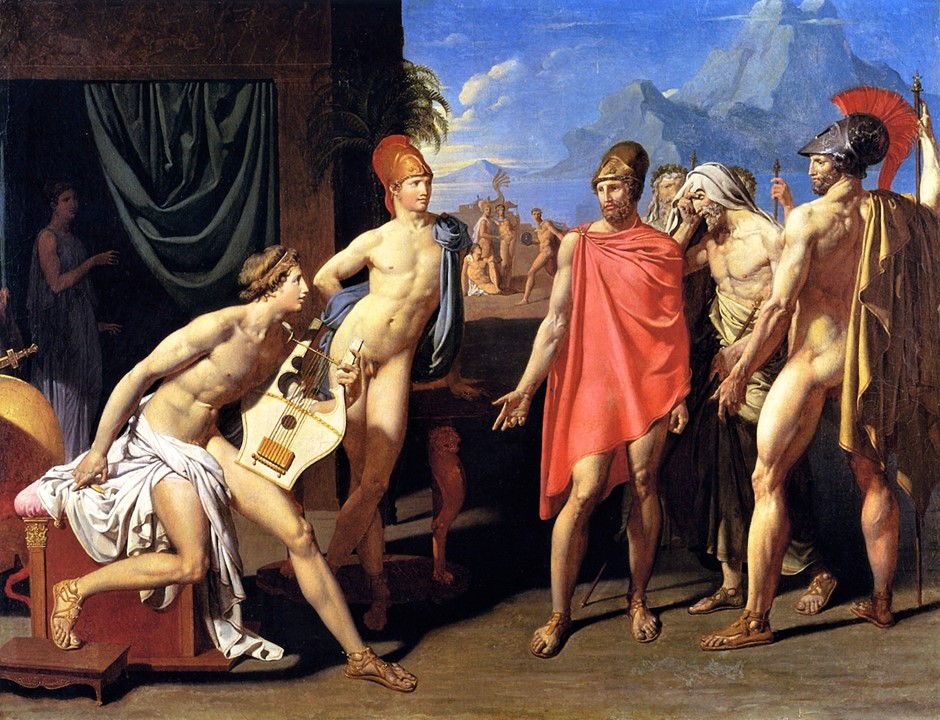
Neo-Classicism:
Neo-Classicism was a dominant art-movement in the 19th century in France and in many ways opposite to Impressionism.
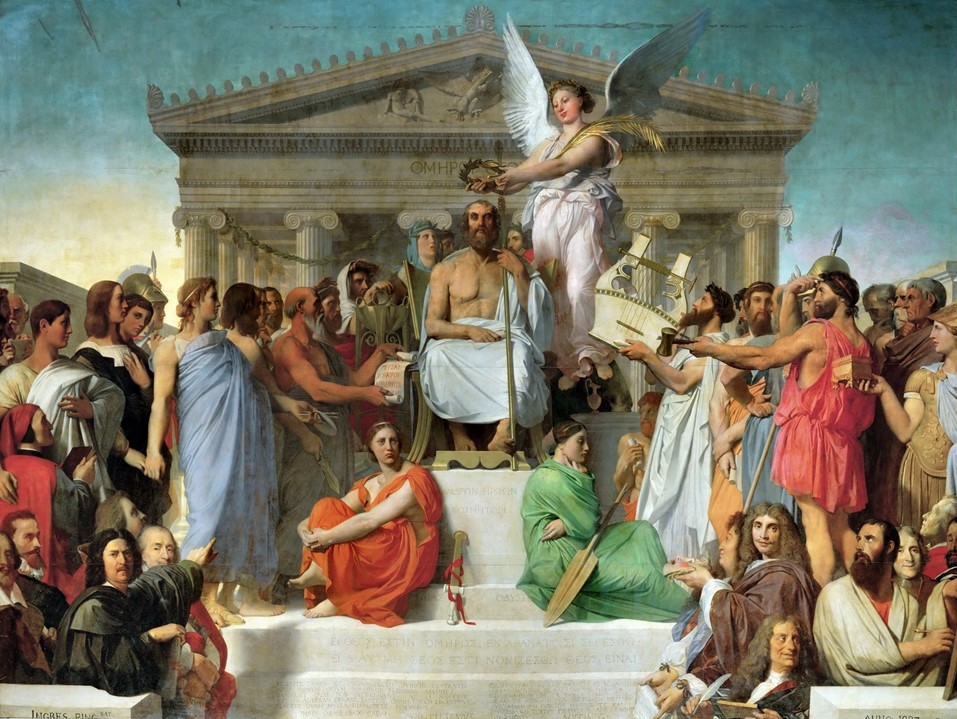
Like the Renaissance, Neo-Classicism found it’s inspiration from the ancient Greek and Rome art, culture and mythology. This was partly inspired by archaeological discoveries. The highpoint of this art-movement was from about 1780 till 1830, but in the teachings of the Ecole des Beaux-Arts the ideals of Neo-Classicism stayed central throughout the whole of the 19th century. This is also called Academicism*.
Central stood the idealized human body and historical, heroic, mythological, moralistic and religious themes. Landscapes were just a background for these themes, more idealised and copied from old masters in the Louvre, than observed in real nature. Art had to be beautiful and educational. The emphasize lay on line and composition. They used very smooth brushstrokes, rendering pinpoint details and letting the colours blend. It was a more rational form of art. With Romanticism it (sometimes) has in common a sense of drama and heroism and an interest for oriental themes (Orientalism).
The most important representatives were David (1748-1825), his pupil Ingres (1780-1867) and later painters like Bouguereau, Cabanel and Gérôme. Most of them also were teachers at the École des Beaux-Arts and members of the Institut.
Note*: I think Academicism must be clearly discerned with Néo-Classicism. Within the Academic teachings, for example seen in the Prix de Rome, we can discern a mixture of Néo-Classicism and Romanticism. More recent historical paintings, like Mediaval scenes or battle fields, are also typical Academic themes, but not Néo-Classicism in a strict way. The same applies to religious paintings, such as scenes from the bible, depicting saints or (contemporary) pious people.
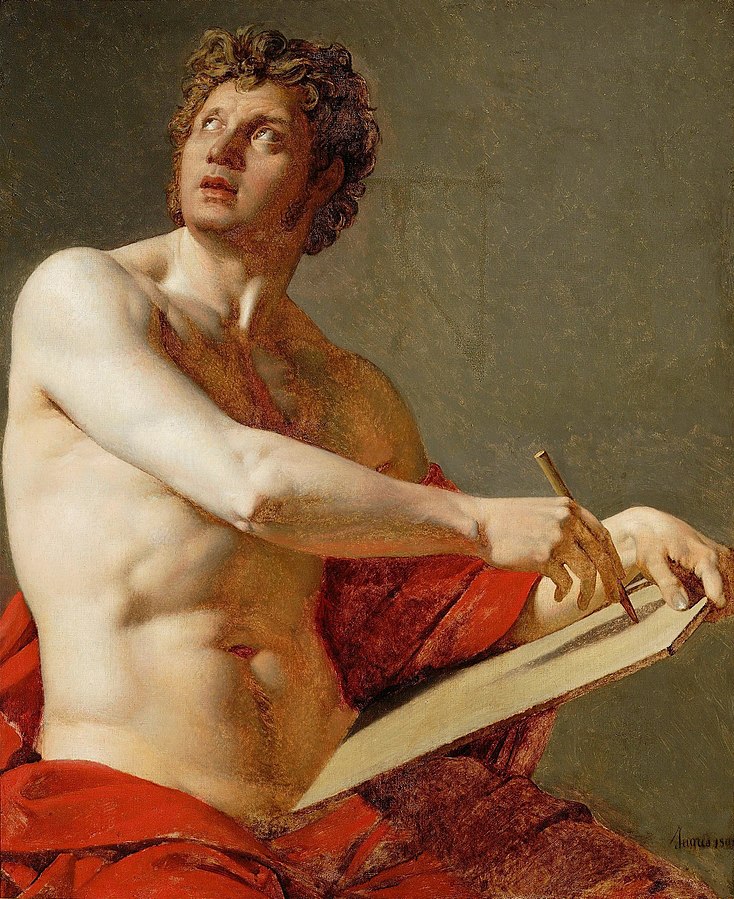
The ideal male body:
In the earlier years of Néo-Classicism the ideal male muscular body was often depicted.

The ideal female body:
In the later years of Néo-Classicism the ideal female body became more dominant.


Rome or Greece:
Neo-Classicism found it’s inspiration from the ancient Greek and Rome art, culture and mythology. In the earlier years of Néo-Classicism the emphasize is on scenes from Roman history. Later on scenes from ancient Greece became more dominant (Gérôme had a role in that).
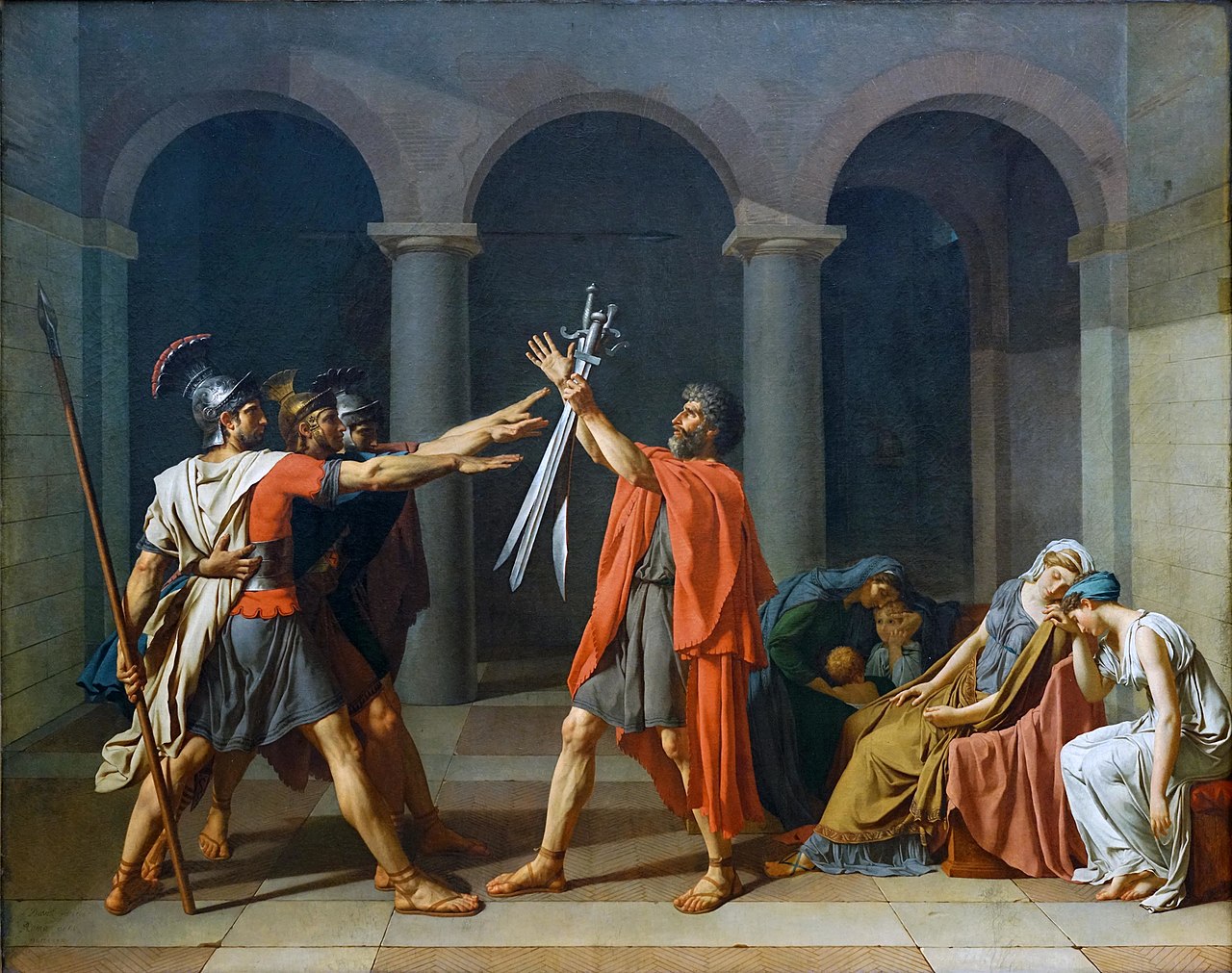

Dramatic scenes:
Many scenes told a story and were rendered in a quite dramatic way. Many death scenes are depicted. Here is a similarity with Romanticism. This often is the case with the paintings made for the Prix de Rome.

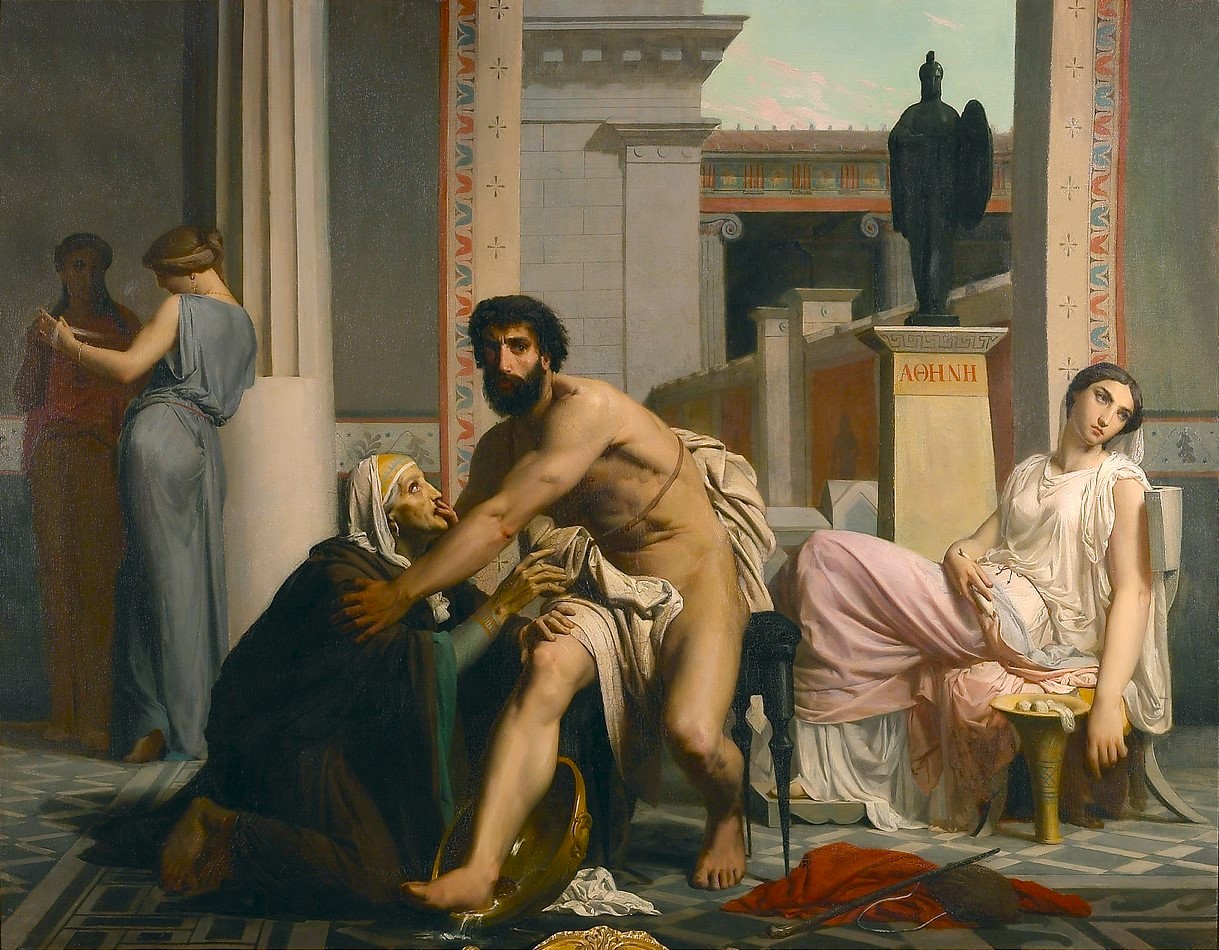
Composition:
The emphasize lay on line and composition. The pirimade form is an often used composition, compare Ingres and Gérôme.
Note: strictly the work of Gérôme is not a néo-classical theme.

Sources:
My main sources are Walther (2013=R3,p16), Schilderkunst van A tot Z (1987=R13,p136/7); Monneret (1978-81=R88), Cuzin (1982=R97,p85/6), Krausse (=R172,p51-53); Rauch (2000=R293,p366-412);
Catalogues of the Salon (R337; R338; iR1).
Catalogues of the Expositions Universelle (R231).
Info and pictures on the internet: WikiPedia (iR3; iR4; iR5), Joconde (iR23).
See the link for other general References (=Rx) and to the internet references (=iRx).
See links for practical hints and abbreviations and for the subscription of the paintings.
For further reading:
See links for more info and info + pictures.
Additional references:
Recommanded citation: “Meta-Impressionism: Neo-Classicism. Last modified 2025/11/18. https://www.impressionism.nl/neo-classicism/”
Note: additional info will be added.