Impressionism: a painting style
Sketchlike painting
capturing the fleeting moment
Introduction:
In many reviews the ‘impressionists’ were criticised for their ‘lack of finish’.
But Castagnary (1874) found this an important caracteristic of Impressionism, though not original because Courbet, Daubigny and Corot already painted that way (R88II,p235). Mallarmé (1876) wrote about ‘contours consumed by the sun’ (R2,p54).
Rendering the impression of the ensemble:
Camille Pissarro adviced his son Lucien 1883/07/25 ‘you must accustom yourself to seeing the ensemble in a flash, to render its character at once’ (R312,p37). Lucien recalled (around 1914) that his father Camille painted instinctively and that Monet had said that he painted ‘as a bird sings’. His own best things, he writes, ‘have always been entirely subconscious’. (R312,p148+149) Rewald writes “Their technique was the logical result of their work out-of-doors and their efforts to see in subjects not the details they recognized but the whole they perceived.”
Thoré-Bürger (1807-69) already already stimulated to ‘strive for an effect of the whole’, not to render details, but only ‘shapes of objects’ and to leave ’the rest to conjecture’ (R1,p210). All forms submerge in the reigning atmosphere and it’s play of light and shadows.
Rendering the impression of a fleeting moment:
John Constable (1776-1836) painted his (full-scale) oil-paint studies en-plein-air (R60,p47;R58,p145-149). Constable his brushstroke was more expressive in his studies, trying to catch a casual effect. He wrestled with loosing this effect when he added details, which he did with the finished paintings he submitted to the Royal Academy (the British equivalent of the Paris Salon). (R58, p145-149;R290,p38). Lucien Pissarro later around 1914 wrote: ‘Did you notice how convincing Constable’s little oil paintings (from nature) in the National Gallery are compared with his more elaborate large pieces (from the studio)? (…) The large pictures in comparison look like frozen enlargements. (…) the large pictures are self-conscious, and the little nature studies subconscious’ (R312,p149)
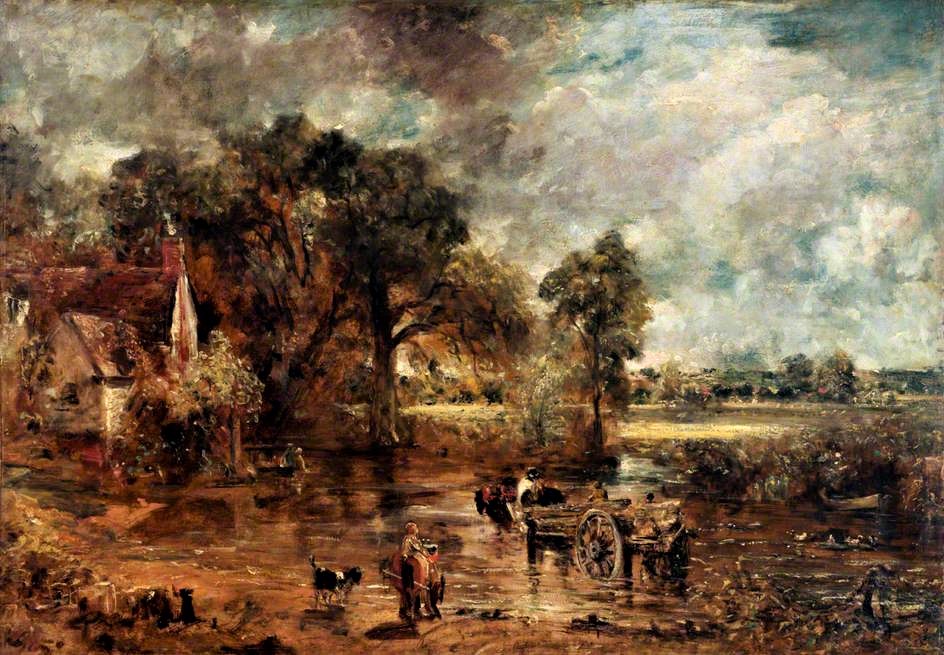
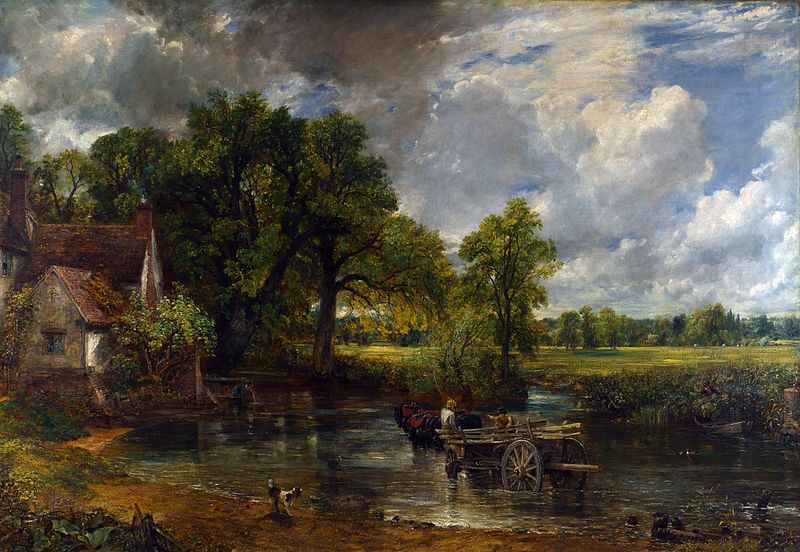
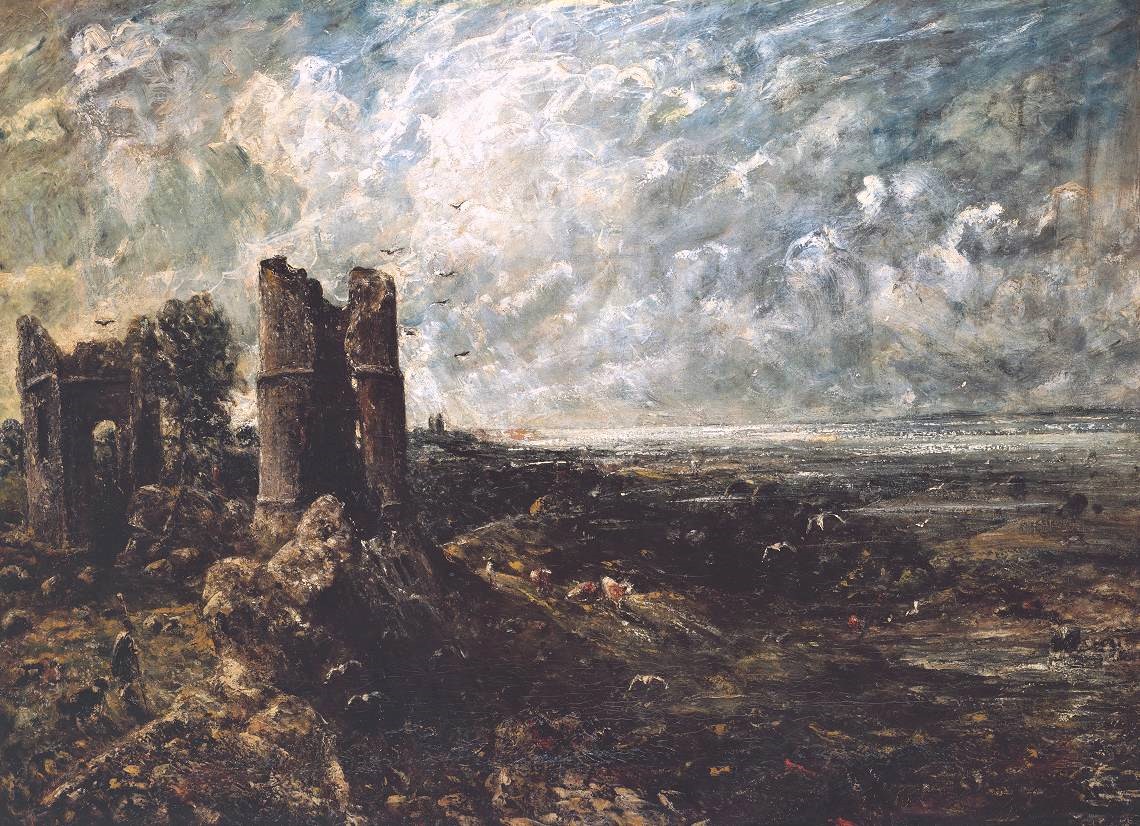
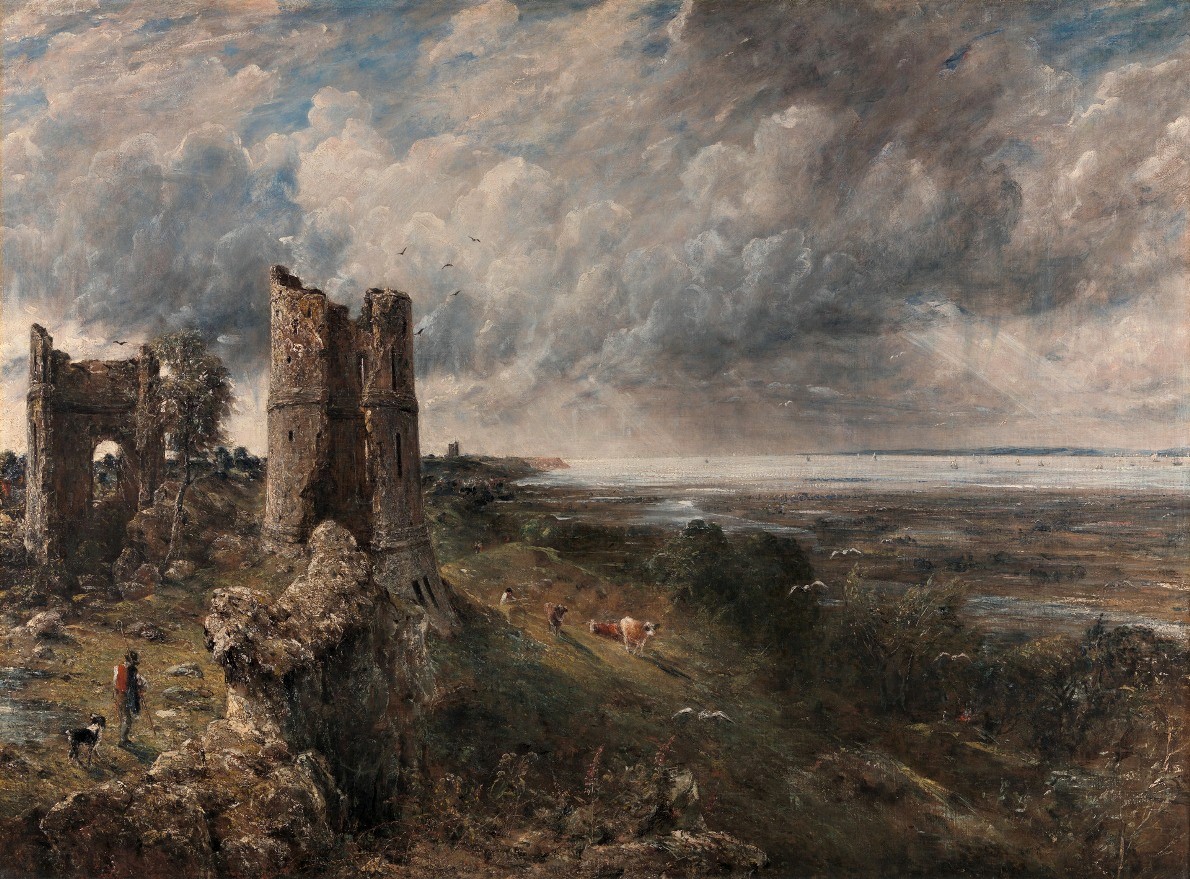
I think that a main carateristic of the Impressionist painting style is that they thought that this rendering of the fleeting moment is best done in a more sketchy way of painting. Or as Charles Harrison put it ‘defending … lack of finish as the neccessary means to preserve the integrity of their working procedure and the immediacy of their visual sensations’ (R2,p145).
Rendering a fleeting moment is a mission impossible:
When we look more closely we must acknowledge that the rendering of a fleeting moment is impossible to achive. People get up and go away, the sun moves, shadows change, colours alter (R61,p16). In 2018 I made pictures of a sunset at Fécamp at the Normandy coast. Here below you will find two pictures I made with just two minutes as interval. So, if an impressionist painter would like to render this fleeting moment, what moment would that be? The impression at 20:45h or at 20.47h?
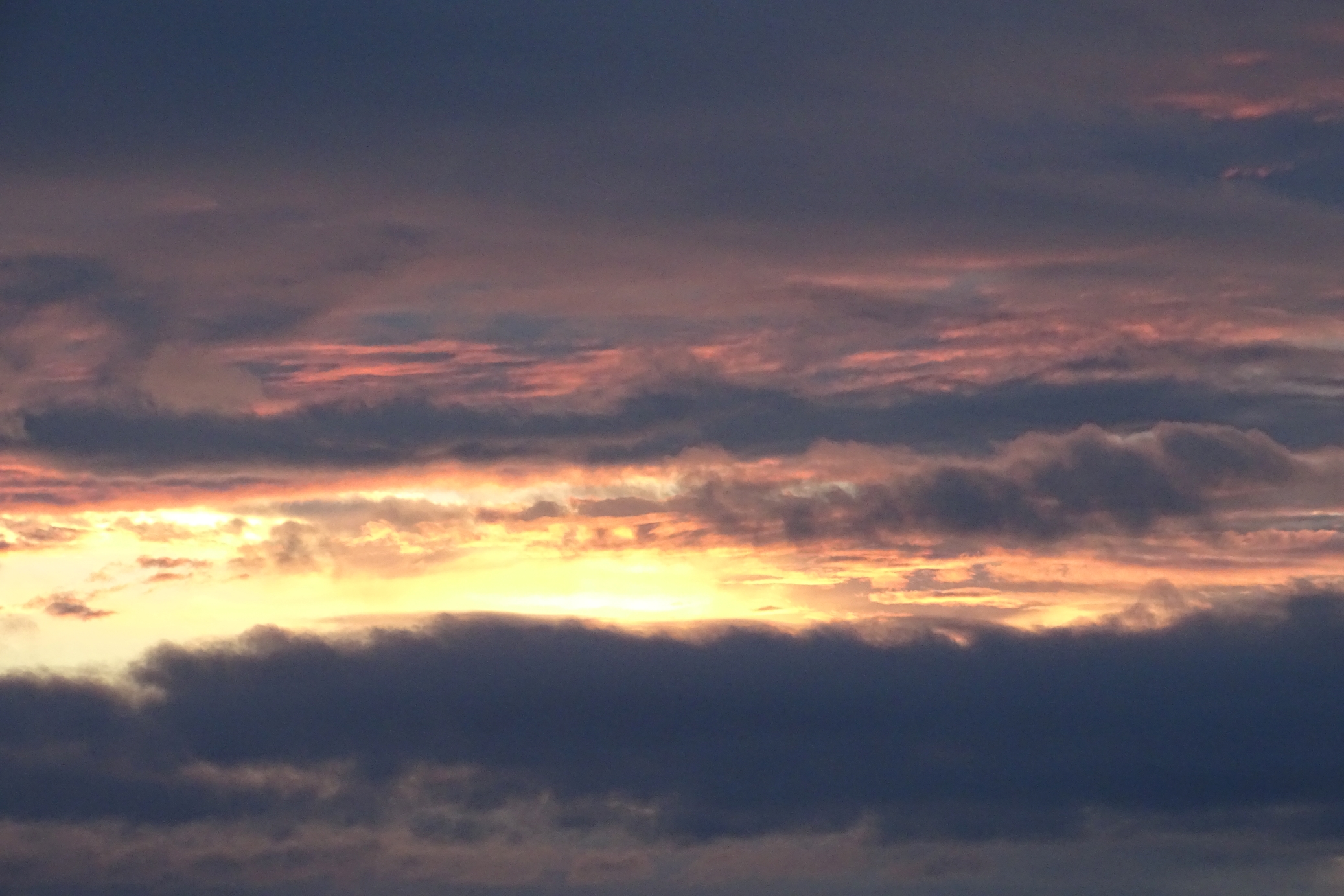
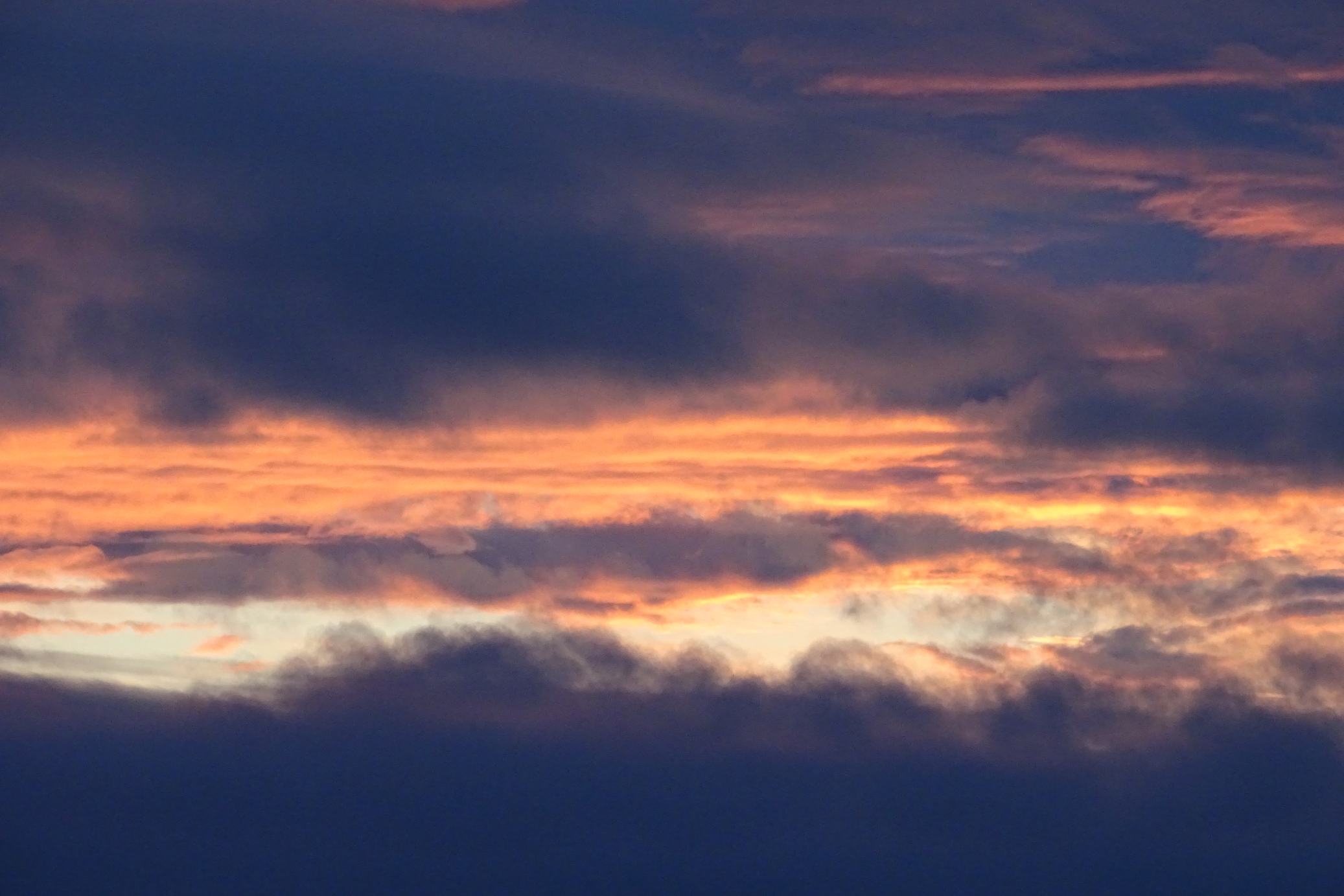
When we look at the paintings that Monet made of the Rouen cathedral the same question rises. What moment did he render? We know that he worked at several paintings during one day. And that he would work further on them the next days around the same time. And also that he was irritated that the weather conditions had changed. So, it is never one specific moment, but an overall impression of the Cathedral at about the same time of day and at about the same weather conditions. We also know that Monet finished this serie of the Rouen Cathedral in his studio. But how could he discern in 1894 the impression of the Cathedral in the sun in the early afternoon in 1892 (CR1322) with that of 1893 (CR1360+1361)?
So it is always a later recontruction from the memory of an earlier impression.
Academic painting:
This sketchy, impressionist way of painting was opposed to the teachings at the École des Beaux-Arts. Here pupils were taught first to make many preparatory drawings / pastels / watercolours / oil sketches. First of details and later of the whole painting. A good example is Ingres: 1827, Apotheosis of Homer, 386×515, Louvre (iR6), shown at the Salon of1827 and of 1833.
Note: in the future I will render some pictures of prepatory drawings and sketches.
Academic painting of the Impressionists:
When we look closer, we can see that also the Impressionists also applied an academic painting. Monet made many preparatory sketches for his large painting Déjeuner sur l’herbe (1865). Renoir did the same for his Moulin de la Galette (1876).
Note: in the future I will render some pictures of prepatory sketches.
Well thought-out compositions:
This rendering of a fleeting moment is like a snapshot photo. It is more random, not well thought-out, so you also expect a composition that is not well thought-out. But, when we look more closely, we see that arbitrary paintings of the Impressionists have well thought out compositions.
Note: in the future I will render pictures of Monet and Sisley made in Argenteuil added with compository lines.
The critic of Zola: make more finished paintings:
Is his reviews on the 2nd ‘impressionist’ exposition of 1876 Zola critised Gustave Caillebotte and Degas for finishing their works. Referring to the exhibited numbers 17+18+20 of Caillebotte, Zola reviewed ‘But, because of their precision, the paintings are entirely anti-artistic, clear as glass, bourgeois*. The mere photography of reality is paltry when not enriched by the original stamp of artistic talent.’ On Degas he reviewed: ‘What is annoying, though is the way he spoils everthing by finishing his work. As a result, his best paintings are only sketches. As he completes his work, his draftmanship becomes blurred and pathetic.’ (Zola refers to Nouvelle-Orléans, 2IE-1876-36) (R90I,p111-113)
But, later on (1879?) Zola would urge the ‘impressionist’ partakers to make more finished paintings.
Note: in the future I will add some remarks on this theme.
For further reading:
Bretell, Richard R.: Impressionisme; de vrijheid van de losse toets. Van Gogh Museum, Amsterdam, 2000. (=M73; R328)
=Impressionism; Painting quickly in France, 1860-1890; exhibition catalogue. Yale + Clark Art Institute, 2001. (=M33+M26)
Sources:
Moffett (1986=R2,p145-186=aR1), Berson (1996=R90), Rewald (1973=R1), Walther (2013=R3), Roe (2006=R4), Denvir (1993=R5), Monneret (1978-81=R88), Adler (1998=R89). See the link for other general References (=Rx) and to the internet references (=iRx). See here below for additional references (=aRx). See links for practical hints and abbreviations and for the subscription of the paintings.
Recommanded citation: “Impressionism, a painting style: Sketchlike painting, capturing the fleeting moment. Last modified 2026/04/01. https://www.impressionism.nl/sketchlike-painting/”
Note: this page is under construction.
Please be reluctant when you site from this page, for the information is incomplete and maybe incorrect.