Meta-Impressionism:
Mythological themes
from ancient Greece and Rome
19th century paintings in France
Introduction:
In the 19th century in France many paintings depicted mythological themes from the ancient Greece and Rome. Themes mainly depicted in a Néo-Classical painting style. This page renders some of these paintings and sums up often used themes and figures.
The Impressionists exceptionally also depicted mythological themes.
Note: additional info and pictures will be added.
Classical mythology:
Mythology consists primarily of narratives that play a fundamental role in a society (iR3). You will find it in all countries (iR3). The classical mythology refers to the ancient Greek and Rome myths. “Classical mythology is a collection of ancient stories, legends, and beliefs that were created by the people of ancient Greece and Rome to explain aspects of the world around them, express cultural values, and provide a framework for understanding their existence. These myths often involve gods, heroes, goddesses, afterwar appearances, and other supernatural beings, and they were an integral part of the religious and cultural practices of the time. While these myths are not considered historically accurate, they hold cultural and literary significance.” (iR3, referring to Catherine Hezser).
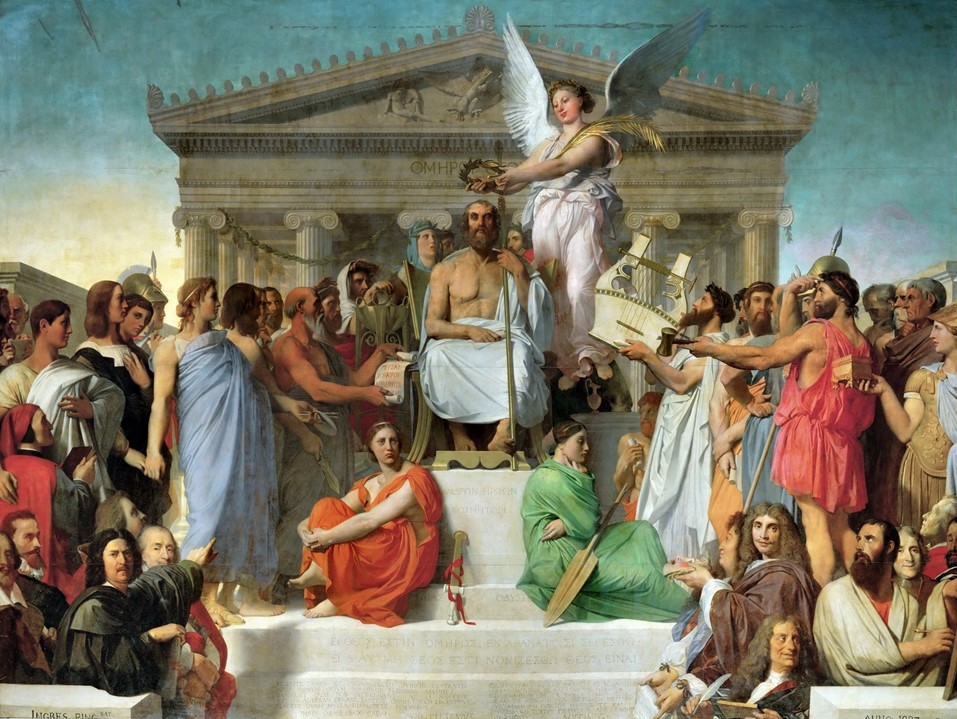

Greek mythology:
The Greek mythology had an oral origin, but is namely known from Ancient Greek literature (iR3). Most important is the Greek writer Homer (or Homeros) probably born in the 8th century BC (iR3). And most known are his books the Iliad and the Odyssey.
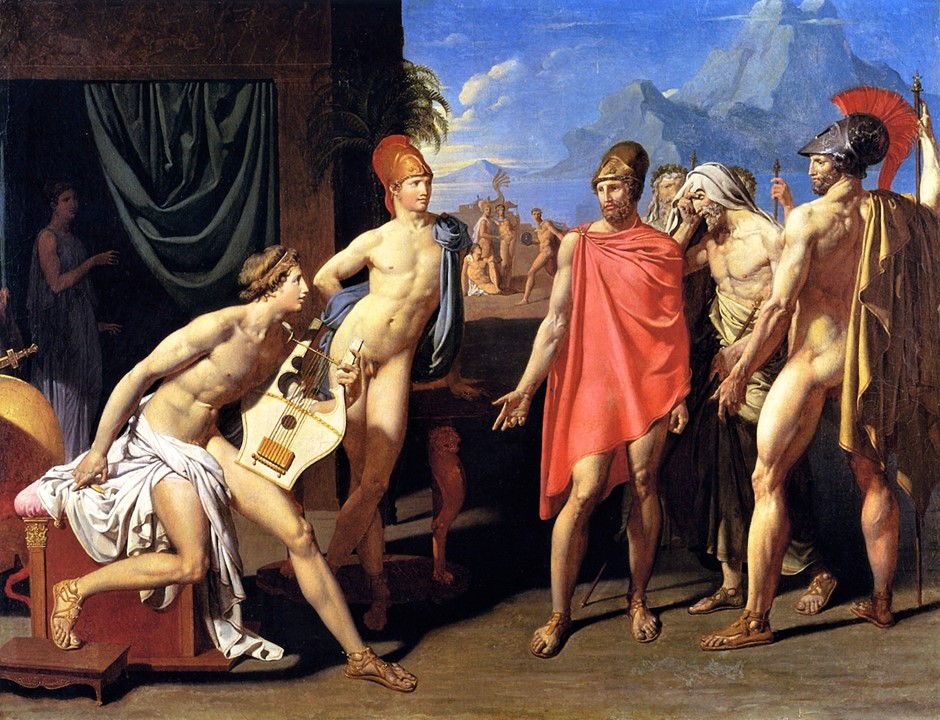
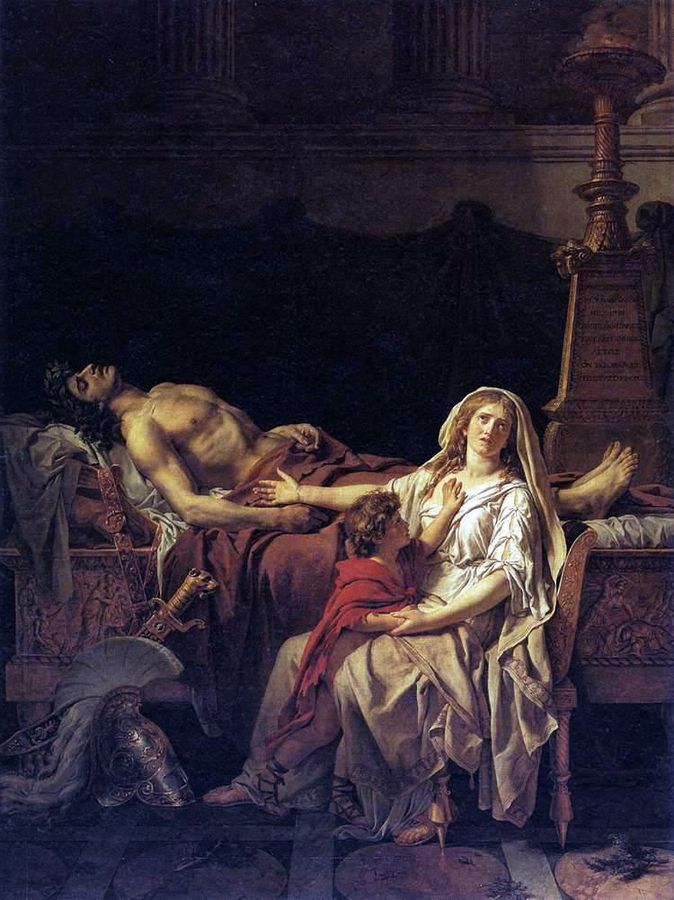
The Iliad is an epic poem divided into 24 books. The narrative moves between wide battleground scenes of (the end of) the Troyan war and more personal interactions. (iR3). The city Troy, that lay in the north-west of contemporary Turkey (iR9; iR3), was besieged by armies from Mycenaean Greece (iR3). With the Trojan horse the Greek knew to enter the well defended city of Troy (iR3).
Important figures are:
Achilles (Achilleus): the greatest of all the Greek warriors (iR3) and known for his week spot the Achilles’ heel (iR3)
Agamemnon (iR3): the king of Mycenae (iR3; iR9)
Priam (iR3): king of Troy.
Hector: a Troyan prince / hero / warrior (iR3)
Paris (iR3): younger brother of Hector; the judgement of Paris refers to his choice for Helen↓, being the fairest one and giving her a golden apple (iR3).
Cassandra (Kassandra; Alexandra): daughter of Priam; Troyan priestess (iR3)
Odysseus (Ulysses): king of the ancient Greek city Ithaca (iR3; iR9); key figure in the Ilias, main figure in the Odyssey (iR3)
Menelaus (iR3): king of the Mycenaean Greece city Sparta (iR3; iR9); younger brother of Agamemmon.
Helen (Helena): first married to Menelaus, later to Paris; this latter fact was the most immediate cause of the Trojan war (iR3)
The Odyssey tells the story of Odysseus who returns from the Trojan war to Ithaca. This journey takes 10 years during which time he encounters many perils and experiences all kinds of adventures. It contains 24 books.
Important figures are:
Odysseus (Ulysses): king of the ancient Greek city Ithaca (iR3; iR9); key figure in the Ilias, main figure in the Odyssey (iR3)
Penelope (Arnacia; Arnaea): the faithful spouse of Odysseus (iR3)
Telemachus: son of Odysseus and Penelope (iR3)


Roman mythology:
The Roman mythology contain narratives about the concerning the foundation and rise of the city of Rome. The stories are often concerned with politics and morality, and how an individual’s personal integrity relates to their responsibility to the community or Roman state. Heroism is an important theme. These narratives focus on human actors, with only occasional intervention from deities but a pervasive sense of divinely ordered destiny. It is influenced by Greek mythology. (iR3) These myths are namely written down namely in the Aeneid by Virgil (Vergil; 70BC – 19AD; iR3) and books of Titus Livius (or Livy; 59BC – 17AD) (iR3). The Aeneid (iR3) is an epic poem about Aeneas (iR3), a Trojan who fled the fall of Troy and travelled to Italy, where he became the ancestor of the Romans.
Important figures are:
Aeneas (iR3): a Trojan who fled the fall of Troy↑ and travelled to Italy, where he became the ancestor of the Romans.
Dido (Elissa): the legendary founder and first queen of the Phoenician city-state of Carthage (iR3; iR9). She had an affair with Aeneas.
Romulus and Remus: twin brothers whose story tells of the events that led to the founding of the city of. They were suckled by a wolf in their infancy. (iR3)
Rhea Silvia (Ilia) (iR3): mythical mother of Romulus and Remus; a vestal virgin (iR3); raped by the god Mars.
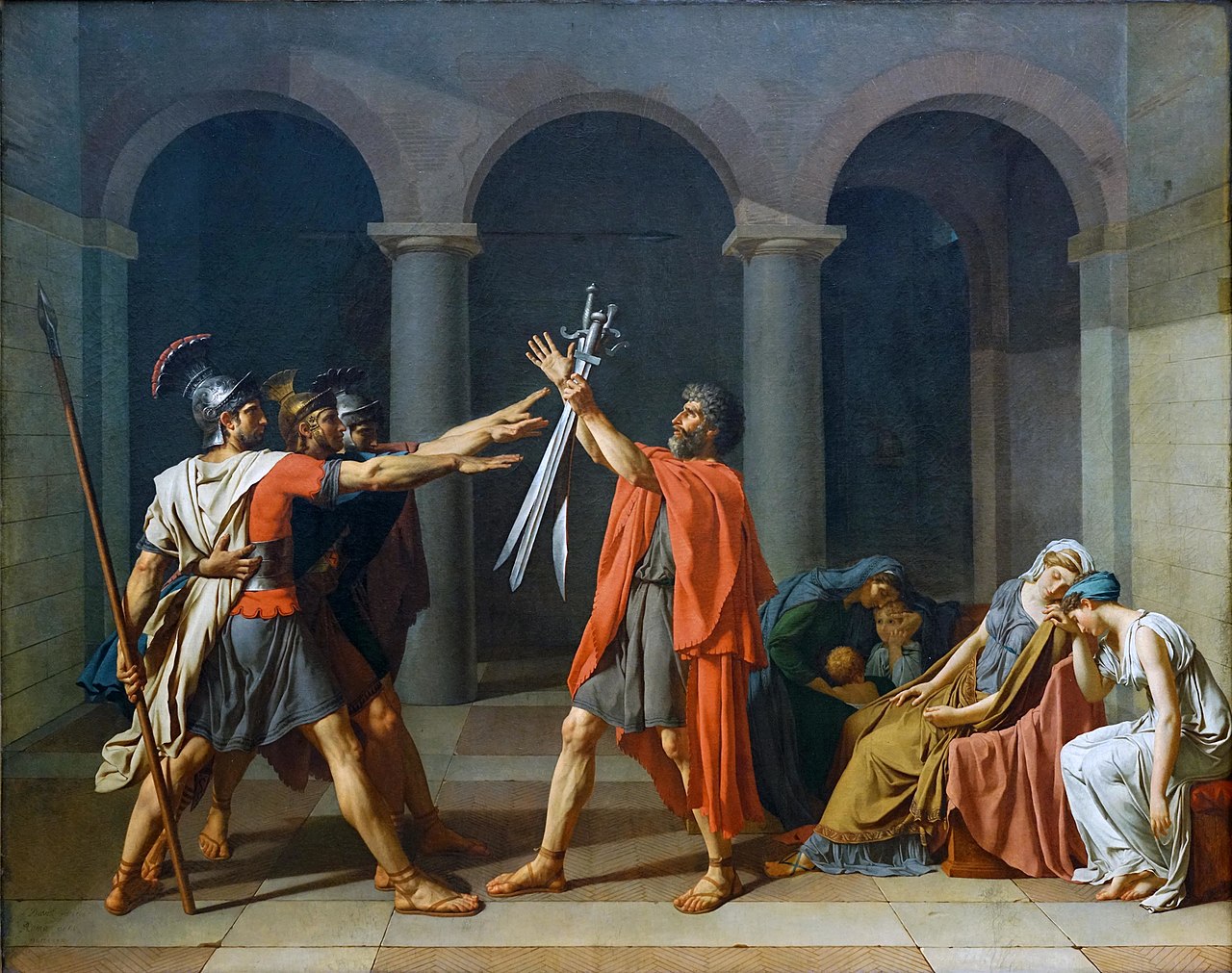
The Horatii: were three sibling warriors, sons of Publius Horatius, that fought the Curiatii (iR3).
The rape (or abduction) of the Sabine women: mass abduction of women from other cities in the region by Romen men for the purpose of marriage (iR3).
Greek and Roman gods:
In ancient Greece, deities were regarded as immortal, anthropomorphic, and powerful. They are described as being similar to humans in appearance, albeit larger and more beautiful. (iR3). The principal deities of the pantheon were the twelve Olympians, thought to live on Mount Olympus (iR9). You will also find their Roman counterparts.
Note: there are variations found int the different ancient sources.
Zeus: Greek king of gods; god of the sky and thunder; had children with various wifes (iR3)
Jupiter (Jove): the chief deity of Roman state religion; roman counterpart of Zeus (iR3)
Hera: Greek goddess of marriage, women, and family, and the protector of women during childbirth; last (or only) wife of Zeus (iR3)
Juno: protector and special counsellor of the state; roman counterpart of Hera (iR3)
Poseidon: Greek god of the sea, storms, earthquakes and horses; brother of Zeus (iR3)
Neptune: roman counterpart of Poseidon; (iR3)
Demeter: goddess of the harvest, agriculture and the fertility of the earth; sister and wife of Zeus; mother of Persephone (iR3)
Ceres: roman counterpart of Demeter (iR3)
Hestia: Greek goddess of sacrificial fire; eldest sister of Zeus (iR3)
Vesta: the virgin goddess of the hearth, home, and family; entry to her temple was permitted only to her priestesses, the Vestal Virgins; roman counterpart of Hestia (iR3)
Hades: Greek god of the dead and riches and the King of the underworld; older brother of Zeus (iR3)
Pluto: roman counterpart of Hades (iR3)
Eras: Greek god of war and courage; son of Zeus and Hera; (iR3)
Hebe: daughter of Zeus and Hera; goddess of eternal youth; cup-bearer; wife of Heracles (iR3)
Juventas (Juventus): roman counterpart of Hebe (iR3)
Eileithyia: daughter of Zeus and Hera; Greek goddess of childbirth and midwifery (iR3)
Athena: Greek goddess of wisdom, warfare, and handicraft; daughter of Zeus (iR3)
Minerva: the Roman virgin goddess of wisdom, justice, law, victory, and the sponsor of arts, trade, and strategy; roman counterpart of Athena (iR3)
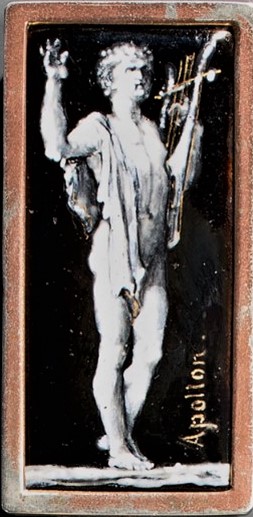
Apollo: Greek and Roman god of archery, music and dance, truth and prophecy, healing and diseases, the Sun and light, poetry, and more; son of Zeus and Leto (iR3)
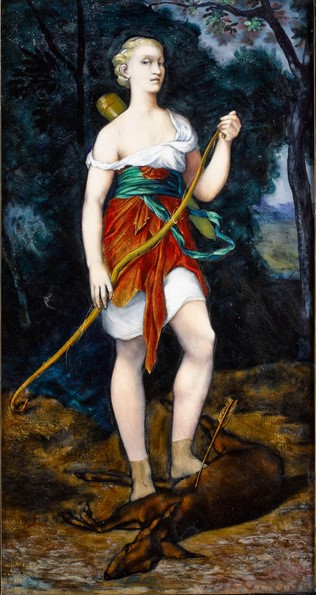
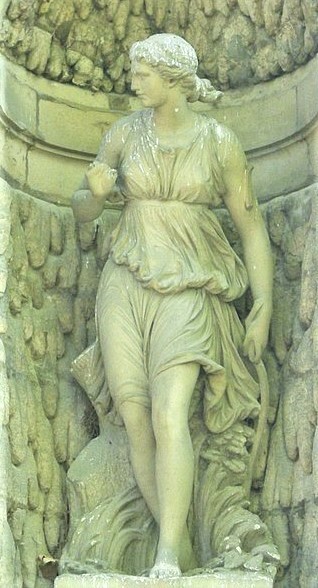
Artemis: Greek goddess of the hunt, the wilderness, wild animals, transitions, nature, vegetation, childbirth, care of children, and chastity; daughter of Zeus and Leto (iR3)
Diane: roman counterpart of Artemis; patroness of the countryside and nature, hunters, wildlife, childbirth, crossroads, the night and the moon; daughter of Jupiter and Latona; twinsister of Apollo (iR3)
Hephaestus: the Greek god of artisans, blacksmiths, carpenters, craftsmen, fire, metallurgy, metalworking, sculpture, and volcanoes; son of Hera (iR3)
Vulcan: Roman god of fire; roman counterpart of Hephaestus (iR3)
Aphrodite: Greek goddess of love, lust, beauty, pleasure, passion, procreation; daughter of Zeus and Dione (iR3)
Venus: roman counterpart of Aphrodite (iR3)
Dionysus (Bacchus): Greek god of wine-making, orchards and fruit, vegetation, fertility, festivity, insanity, ritual madness, religious ecstasy, and theatre; son of Zeus and Semele (iR3)
Heracles: son of Zeus and Alcmene (iR3)
Hercules: roman counterpart of Heracles (iR3)



Other Greek and Roman mythological figures:
Titans: deities that preceeded the Olympian Greek gods (iR3).
Prometheus: a titan that took fire from the Olympian gods and gave it to humanity in the form of technology, knowledge and, more generally, civilization (iR3).
Phoebe: a titanes; goddess of intellect and prophecy (iR3).
Pandora (Anesidora): the first human woman, who was given all kinds of gifts; by opening the Pandora’s box, she released evils to humnaity (iR3)
Cyclopes: giant one-eyed creatures (iR3)
Sources:
Several WikiPedia pages (see links).
See the link for other general References (=Rx) and to the internet references (=iRx).
See links for practical hints and abbreviations and for the subscription of the paintings.
For further reading:
Additional references:
Recommanded citation: “Meta-Impressionism: Mythological paintings. Last modified 2025/11/21. ”
Note: additional info and pictures will be added.