Para-Impressionism:
Naturalism
Introduction:
In 1863 Castagnary was the first to use the term ‘Naturalism’. Zola would pick it up in 1865 (R3,p68). The terms Realism and Naturalism are used in an interchanging way (R3,p214;R170,p345;R172,p65). Others differ that in Naturalism there is an emphasis on a very detailed rendering of the observed reality (R170,p394). Others see the en-plein-air painting and the ‘paysage intime’ of the Barbizon painters as the first form of Naturalism (R172,p64). In Naturalism is a tendency toward the idyllic (R172,p66). It has no political message (R13,p598). In Naturalism the technique is used to render an illusory perfection (R13,p598).
1873/05 the art-critic Paul Alexis named the group around Monet, who was preparying an independant exhibition ‘naturalists’ having the ‘ambition of painting nature and life in their large reality’ (R2,p17). Art-critics more than once called the exhibited art-works at the ‘impressionist’ expostions naturalistic, even La bal du Moulin de la Galette of Renoir (3IE-1877-186). Goes to show how hard it is, to discern between Realism, Naturalism and Impressionism.
When we compare important representatives of Naturalism with Impressionism, we see that they both depicted every day life. The naturalists often depicted large figures, the Impressionists lay more emphasize on the landscape. The naturalist often rendered details and the brushstroke was more smooth. The naturalist could use bright colours, but often they used browns, greys and blacks.
Naturalist artists:
Bastien-Lepage, Jules (1848-84):
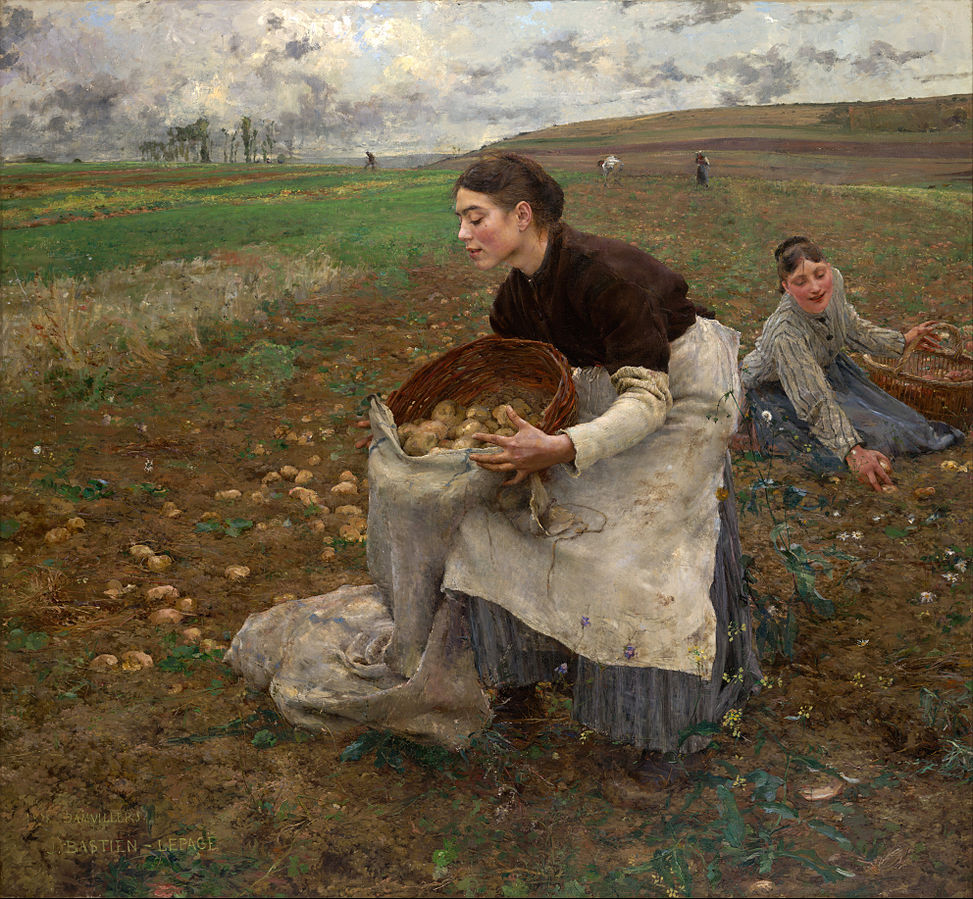
Bastien-Lepage is mainly seen (1878 onwards) as Naturalist. He was famous for his peasant scenes. His colours are consistently subdued, his brushstroke smooth and he rendered selective details. See seperate page.

Breton, Jules (1827-1906):
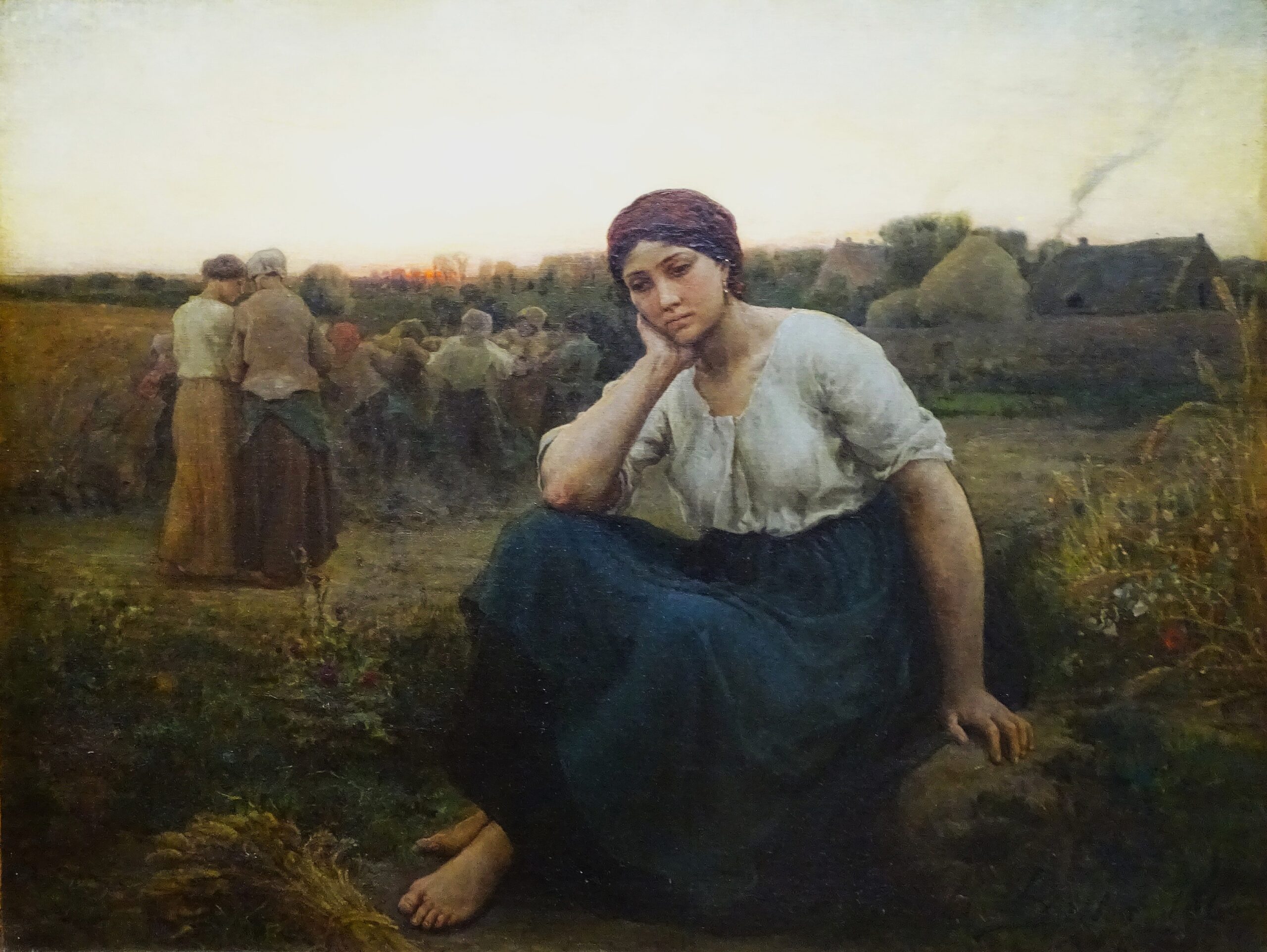
Jules Breton namely depicted large figures within landscapes, shown in detail. Namely peasants working in the fields, who look more like freshly washed models. He depicted an idyllic vision of rural existence. In these landscapes he also depicted twilight scenes. He was a most awarded and most honoured artist. He became member of l’Institute in 1886. See seperate page.

Léon Lhermitte (1844-1925):
Léon Lhermitte is seen as a Naturalist (R472,p68).


Dagnan-Bouveret, Pascal-Adolphe-Jean (1852-1929):
Dagnan-Bouveret was a most highly awarded painter. He was befriended with Bastien-Lepage and Gustave Courtois. He was one of the leading members of Naturalism. He was member of l’Institute since 1900. See seperate page.


General sources:
My main sources are Walther (2013=R3), Monneret (1978-81=R88), the Exposition Universelles catalogues (R231), Explication des Salons (R337+R338), the Salon database (iR1), WikiPedia (iR3-5), WikiMedia (iR6), Joconde (iR23). See the link for other general References (=Rx) and to the internet references (=iRx). See links for practical hints and abbreviations and for the subscription of the paintings.
For further reading:
x
Additional sources (=aRx):
- x
Recommanded citation: “Para-Impressionism: Naturalism. Last modified 2025/11/18. https://www.impressionism.nl/naturalism/”
Note: additional info and pictures will follow.
Note: this page is under construction.
Do not site from this page for the information is incomplete and maybe incorrect.